
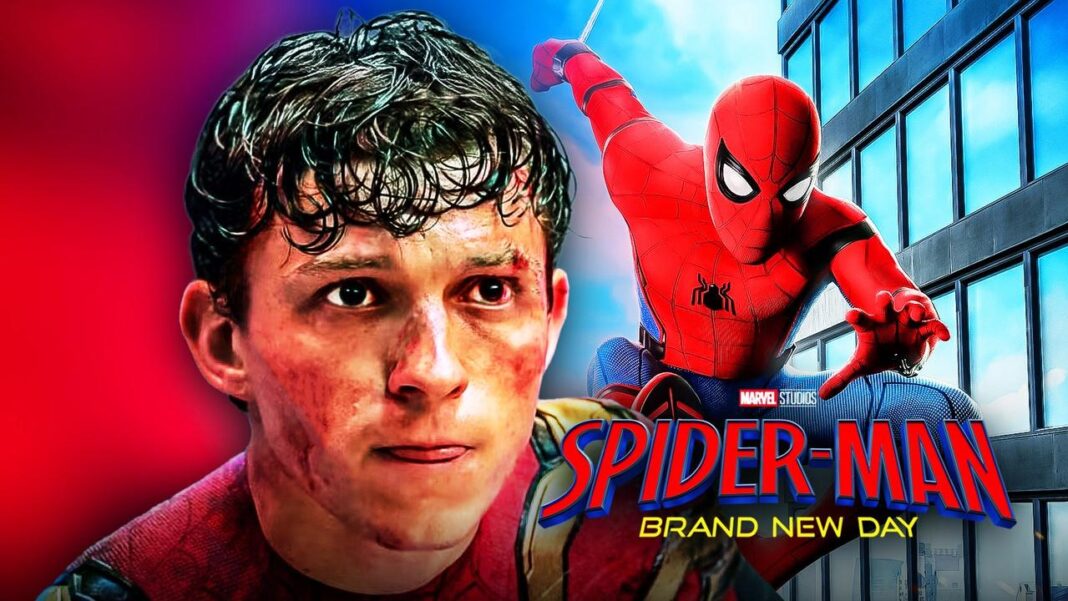


The first time we see him, he’s crouched on a water tower in Queens, mask on, heart somewhere down on the street below. No one remembers his name. Not the bodega owner who once poured his coffee, not the girl who used to call him “Underoos,” not even the aunt who raised him. Four years have passed since the world forgot Peter Parker, and the silence has settled into his bones like winter fog. Spider-Man: Brand New Day—slated to swing into theaters July 31—doesn’t open with a bang but with a hush, the kind that follows a funeral. Director Destin Daniel Cretton wants us to sit in that hush, to feel the ache of a hero who saved everyone yet lost himself. Because under the spandex and the quips, this is the story of a twenty-something who wakes up anonymous and wonders if he still matters.
The Man Who Erased Himself
Try to picture it: you undo one spell meant to protect the people you love, and the universe hits Ctrl-Alt-Del on your entire life. Your best friend eyes you like a stranger; your girlfriend’s smile holds no history. That’s the bruise Brand New Day keeps pressing. Cretton calls the four-year gap “a gift”—time enough for grief to scar over, for Spider-Man to become an urban myth whispered among rooftop cops and deli owners. By day, Peter crashes in a railroad apartment the size of a postage stamp, freelancing for the Bulletin under a fake byline. By night, he patrols in a homemade suit stitched from necessity, because who designs gear for a ghost?
The early footage Sony teased at CinemaCon is almost cruel in its intimacy: rain-slick alleys, the rasp of web-shooters firing, a single beat where Holland’s eyes flicker behind cracked lenses—hope, fear, and bone-deep exhaustion trading places in a heartbeat. No sky portals, no alien armadas, just a kid—now a man—trying to outrun the echo of his own absence. It’s the most human Spider-Man has felt since 2017’s Homecoming, and that’s precisely the point. Cretton, best known for grounding cosmic Marvel in the family drama of Shang-Chi, says he pitched the film as “a crime novella wearing a cape.”
The Crime That Pulls Him Back Into Daylight
Of course, peace never lasts in Marvel’s New York. A string of impossible thefts—museums, federal labs, even a Stark-archive vault—leaves investigators baffled. Security footage shows nothing but a blur of red. Rumor labels it the “Ghost Spider,” a moniker Peter hates until he realizes the cops are talking about him. Someone is wearing the brand, framing the forgotten hero, and the trail ends where his old life used to live: Midtown High.
Enter Sadie Sink’s character, rumored to be a transfer student with a knack for cold-case hacking. She partners with Peter after an alley confrontation—he saves her from a D-list villain, she offers a lead: every stolen item connects to research on memory alteration. “If you could wipe Spider-Man’s identity once,” she teases, “maybe someone’s trying to put the genie back in the bottle—permanently.” Their chemistry crackles with the screwball rhythm of 1940s caper films, a welcome spark against the story’s existential gloom.
Jon Bernthal’s Punisher shows up as uneasy backup, convinced the conspiracy reaches deeper than a frame-job. Michael Mando’s Mac Gargan—still nursing scars from Homecoming‘s ferry debacle—slithers through the margins, trading villain-for-hire intel for reduced sentencing. And somewhere off-screen, Krondon’s undisclosed power-player stalks the board, collecting the remnants of erased histories like trophies. Each breadcrumb forces Peter to confront the wreckage of choices he made when the universe still knew his name.
This is a Spider-Man who can’t Google himself, can’t vote, can’t even buy a phone contract without a fake ID. Yet the city still needs saving, and the mystery keeps widening until it threatens the only thing he has left: the anonymity that keeps his friends safe. Every clue he unravels risks reminding the world he exists, and every swing across skyscrapers rekindles the question that haunts him at 3 a.m.: if Peter Parker is truly gone, who’s wearing the mask when the mask comes off?
The Four-Year Silence: What Peter Learned When No One Knew His Name
Four years is long enough for a tree to grow rings, for a city to forget a face, for a man to become a myth. In the quiet aftermath of the spell that erased him, Peter Parker didn’t vanish—he evolved. The footage Sony screened for select press reveals a hero who’s traded quips for questions, who listens more than he speaks. When a bodega owner calls Spider-Man “the night guy,” there’s no correction, no wink to camera. Just acceptance.
This isn’t the Peter we knew. He’s learned to survive on scraps: $47 in cash, a laptop held together with electrical tape, a landlord who accepts half-rent because “you keep the drug dealers off my block.” The Bulletin pays him $200 per photo set—always cash, always under the table. His byline? “P. Parker” in 8-point font, buried beneath city council minutes and subway alerts. Yet somehow, this anonymity has sharpened him. Without the weight of being Peter Parker: Tony Stark’s Protégé, he’s become something purer: a witness to a city’s pain, documenting what others overlook.
The four-year gap serves as both punishment and purification. Like a monk’s silent retreat, it’s stripped away everything except the essential question: if no one remembers your heroism, was it still heroic? The answer, whispered through Holland’s performance, is devastating in its simplicity. When Spider-Man saves a woman from a mugging and she flees without a thank you, his shoulders don’t slump. Instead, he web-slings away with something approaching peace. The deed is its own reward now. This is Spider-Man as urban bodhisattva—liberation through anonymous service.
The Mystery That Pulls Him Back Into Light
But even ghosts can only haunt for so long. The crime trail that drags Peter from shadows into harsh fluorescent light begins with something small: a series of ATM withdrawals from accounts that don’t exist. Then buildings that appear on no city planner’s map. Finally, bodies—each missing their shadows, as if someone collected them like stamps. It’s Krondon’s mysterious crime boss operates from a bookstore that exists in the gaps between buildings—literally. You can only find it when you’re lost. eternal September.
The film’s quiet radicalism lies in suggesting that heroism doesn’t require recognition. When Spider-Man finally faces the villain harvesting memories, the confrontation isn’t about power but about permission—permission to let go of who we were, to become who we need to be. The villain wants to live forever through stolen memories. Peter chooses to live moment by moment, saving people who’ll never know his name.
This is Spider-Man stripped to his essence: not the billionaire’s protégé, not the Avenger, not the kid with the Stark internship. Just a man in a mask who keeps getting up. The final shot Sony teased says everything: dawn breaking over Queens, Peter perched on the same water tower from the opening, but something’s changed. He’s still anonymous. Still broke. Still alone. Yet he’s smiling—not the cocky grin of previous films, but something softer. Wiser. The smile of someone who’s learned that being forgotten isn’t the same as being nothing. Sometimes, it’s the first step toward becoming who you were meant to be.
As the credits roll on Brand New Day, we’re left with a profound truth: sometimes the greatest power isn’t the strength to save the world, but the courage to keep saving it when no one remembers your name. In forgetting Peter Parker, the world hasn’t lost its friendly neighborhood Spider-Man. It’s finally met him.