
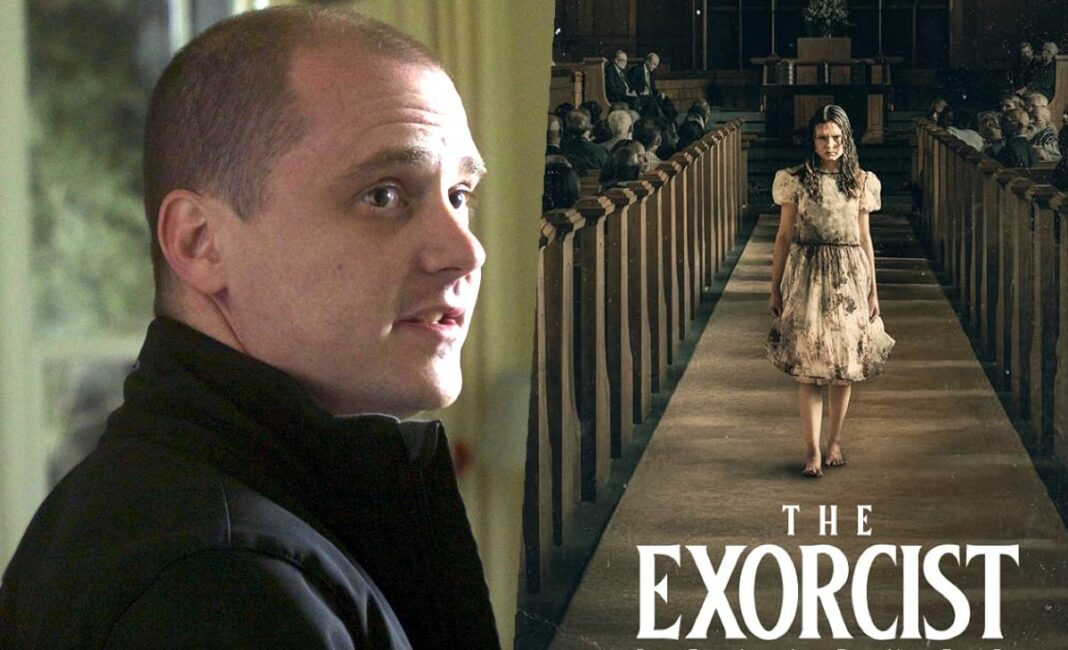


The pea-soup projectile vomiting. The 360-degree head swivel. That bone-chilling voice rasping “The power of Christ compels you!”—images seared into our collective cinematic nightmares since 1973. William Friedkin’s The Exorcist didn’t just redefine horror; it became cultural scripture, the film against which all possession stories are measured. Now, nearly five decades later, another director has stepped into those hallowed (and haunted) footsteps, armed not with a crucifix but with something potentially more powerful: a deep respect for character-driven terror and a track record of turning supernatural fare into soul-searching experiences.
Mike Flanagan, the horror auteur behind The Haunting of Hill House and Doctor Sleep, isn’t remaking Friedkin’s masterpiece—he’s crafting something altogether different. While details remain shrouded in mystery tighter than a priest’s collar, whispers from production suggest this isn’t your grandmother’s exorcism story. The filmmaker who made us weep over a haunted hotel and reconsider every childhood shadow has set his sights on reimagining possession for the digital age, promising to peel back layers of faith, family, and fear that the original only scratched.
The Modern Possession: Technology Meets Tradition
Picture this: instead of Father Karras wrestling with his faith in a dimly lit study, a young priest scrolls through Reddit threads about demonic possession at 3 AM, questioning whether that viral video of a contorted teenager is CGI or something far more sinister. Flanagan’s version reportedly trades the analog dread of the original for a world where evil doesn’t just knock on your door—it slides into your DMs, hijacks your smart home, and turns your child’s Instagram into a portal to hell.
The director’s approach centers on how ancient evil adapts to modern technology, making the demon’s presence feel less like a supernatural anomaly and more like a logical extension of our hyper-connected lives. Where Friedkin’s entity needed only to possess a single 12-year-old girl, Flanagan’s horror spreads like malware through a family, infecting their digital footprint until reality itself becomes questionable. Think Hereditary meets Black Mirror, but with Flanagan’s signature emotional gut-punches that leave you staring at your ceiling at night, wondering if that shadow moved or if you just need to update your phone’s security settings.
This technological twist isn’t just window dressing—it’s fundamental to how the story unfolds. Early script leaks suggest scenes where priests conduct virtual exorcisms via video chat, only to discover the demon can travel through Wi-Fi like a supernatural computer virus. One particularly chilling sequence allegedly involves a smart speaker that begins reciting the Lord’s Prayer backward, its LED ring pulsing red as the family realizes their entire home has become consecrated ground for something that views their security cameras as its personal windows into their souls.
Family Ties That Bind (and Break)
While Friedkin focused on a single mother’s desperation as her daughter transformed into something unholy, Flanagan—true to form—widens the lens to examine how evil ripples through generations. The new film centers on a blended family, where a father’s attempts to merge his tech-savvy teenage daughter with his new wife’s deeply religious 10-year-old son becomes the perfect breeding ground for something that feeds on their fractures.
What makes this approach particularly Flanagan-esque is how the supernatural horror serves as metaphor for real family trauma. The possessed child here isn’t just a vessel for evil—she’s a walking embodiment of every ignored cry for help, every therapy session dodged, every time her parents chose their phones over family dinner. Where Regan’s possession shocked because it seemed to come from nowhere, this new iteration builds slowly, the demon initially masquerading as typical teenage angst until selfies start showing eyes that aren’t quite aligned and voice messages arrive with timestamps from conversations that haven’t happened yet.
The emotional core revolves around the father’s crisis not just of faith, but of parenthood itself. A lapsed Catholic who left the church after his first wife’s death, he must confront not only whether he believes in demonic possession, but whether he’s been possessed by the modern parent’s greatest demon: the fear that he’s failing his children. One particularly devastating scene involves him discovering that the demon’s voice isn’t using his daughter’s vocal cords—it’s using the exact tone of disappointment he employed every time he chose work over her school play, a supernatural manifestation of his deepest parental shame.
The Possession Paradigm: From Catholic Crisis to Existential Epidemic
William Friedkin’s masterpiece unfolded within the marble corridors of Catholic authority, where priests debated doctrine while a single demon ravaged a single child. Flanagan’s vision explodes that intimate framework into something more insidious: a world where possession spreads like a psychological pandemic, jumping between belief systems faster than you can say “religious trauma syndrome.”
Instead of Father Merrin’s archaeological dig unearthing one ancient demon, imagine a digital archaeologist—perhaps a former priest turned podcaster—discovering that every major religion’s possession mythology points to the same entity wearing different masks. The demon that tormented Regan MacNeil was merely testing humanity’s defenses, like a hacker running reconnaissance before the main attack. Now, it’s learned from our responses, adapted to our skepticism, and weaponized our collective abandonment of organized religion.
This isn’t about pea soup and crucifixes anymore. It’s about the demon that whispers through your anxiety meds when you’re scrolling at 2 AM, the ancient evil that understands your childhood wounds better than your therapist does. Flanagan’s working with religious scholars who’ve traced possession accounts across cultures, revealing patterns that suggest we’re dealing with a cosmic parasite that feeds on the space between what we believe and what we fear.
The Family Fracture: When Evil Wears Your Mother’s Face
Ellen Burstyn’s Chris MacNeil fought external evil threatening her daughter. Flanagan’s protagonist—rumored to be a single father raising a non-binary teenager—faces something far more devastating: the possibility that the demon isn’t possessing his child, but revealing who they truly are when all social masks dissolve. What if possession isn’t about foreign invasion, but about the parts of ourselves we’ve exorcised through years of therapy, medication, and polite society?
The director’s previous work obsesses over family as both sanctuary and prison. In The Haunting of Hill House, the Crain siblings carried their haunted childhood like genetic inheritance. Here, possession becomes the ultimate family secret passed between generations, a spiritual STD contracted through bloodlines and birthday parties. The demon doesn’t just target the possessed—it weaponizes the family’s love against them, turning every protective instinct into another chain binding them to evil.
Picture dinner scenes where a father realizes his child’s “episode” syncs perfectly with his own repressed memories. Flashbacks revealing Grandma’s “migraines” were actually battles for her soul, fought while she folded laundry and packed school lunches. This isn’t about saving your child from Satan—it’s about confronting the hereditary trauma that made them vulnerable to possession in the first place.
The Faith Frontier: From Sacred to Scared
Friedkin’s film asked whether faith could survive confrontation with absolute evil. Flanagan’s asks whether evil even needs faith anymore when it has algorithms. The original’s power lay in watching a priest’s certainty crumble; the new version’s horror emerges as characters realize their certainty about everything—science, psychology, spirituality—was just another form of denial.
Instead of Father Karras wrestling with his dying mother’s faith, imagine a former evangelical influencer whose entire identity collapsed when their prayer app started praying back. Someone who built a career on spiritual certainty now confronting evidence that their beliefs were just demons playing 4D chess with human neurochemistry. The exorcism doesn’t happen in a bedroom with priests and police—it unfolds across social media, in therapy sessions, during late-night Wikipedia spirals that reveal possession symptoms matching every psychiatric diagnosis in the DSM-5.
Technology becomes both the demon’s playground and its prison. Smart homes record conversations that haven’t happened yet. Fitness trackers monitor heart rates during conversations with people who died years ago. The demon doesn’t need to speak through your daughter when it can deepfake your dead mother’s voice calling from beyond, apologizing for every childhood wound before revealing the cosmic joke: there is no beyond, just different levels of hell we’ve mistaken for reality.
Flanagan’s genius lies in understanding that modern horror isn’t about losing faith—it’s about realizing faith was never the point. The demon isn’t here to test your beliefs; it’s here to reveal that your beliefs were just another possession, another voice whispering lies you mistook for truth. In a world where reality itself feels negotiable, where every notification might be the beginning of your personal apocalypse, the most terrifying possession isn’t losing control of your body.
It’s losing control of your story about who you are, what you believe, and whether any of it matters when something ancient and hungry decides you’re worth consuming.