


Title: Breaking: Alibaba, Tencent Plunge on AI Disappointment
Content:
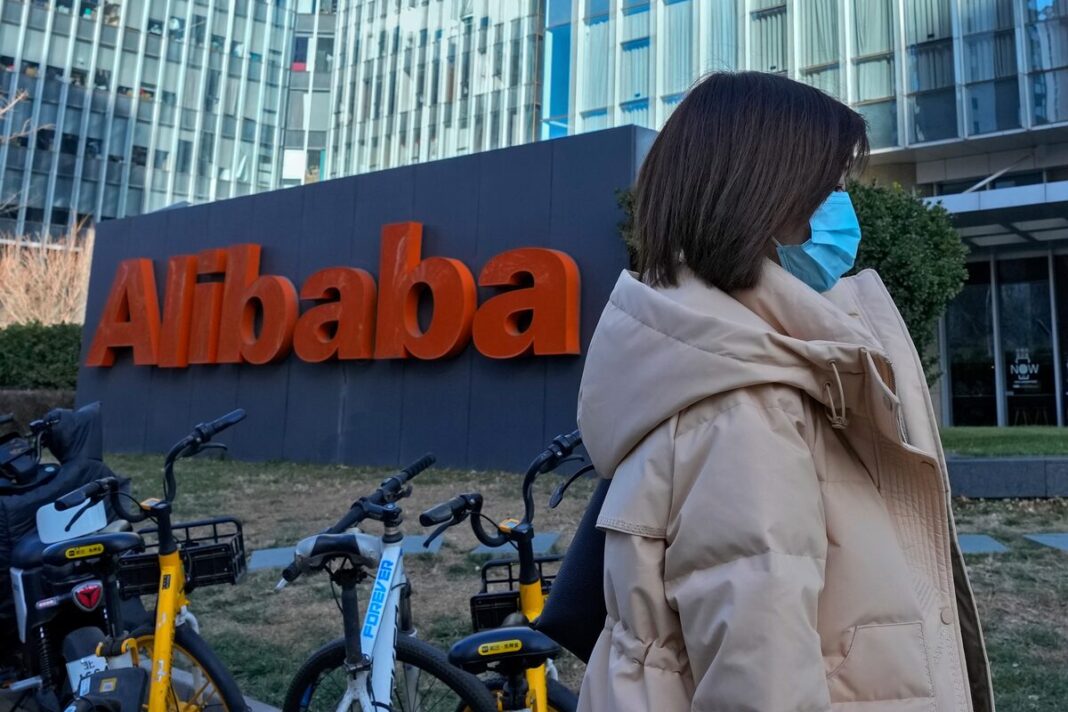
The technology sector was sent reeling yesterday as two of China’s tech titans, Alibaba and Tencent, saw their stock prices plummet after disappointing artificial‑intelligence announcements. Investors scrambled to interpret the fallout, questioning whether the companies’ AI roadmaps can deliver the growth they have long promised. Alibaba and Tencent have driven much of China’s digital expansion, but yesterday’s results have put their AI strategies under a harsh microscope.
AI Momentum Falters in China
The trouble began when Alibaba, the e‑commerce behemoth, missed its AI‑related revenue target for the quarter. Although overall earnings were solid, the AI‑enhanced Tmall platform—intended to personalize shopping—failed to attract enough users to justify the investment. CEO Daniel Zhang admitted, “We expected more from our AI initiatives, but we are still in the early stages of development.” The comment sparked a swift sell‑off, and Alibaba shares dropped more than 8 %.
The disappointment did not stay isolated. Tencent, the social‑media and gaming powerhouse, reported a sharp rise in AI‑related expenses that squeezed its profit margin despite a strong gaming performance. CEO Pony Ma said, “We are committed to developing AI capabilities, but it is a long‑term play and we need to be patient.” Investors, however, were unwilling to wait, and Tencent’s stock fell over 10 % in the same session.
Reevaluating the AI Investment Thesis
The simultaneous declines have prompted analysts to reassess the assumptions that have underpinned AI‑focused investing. For years, market participants have priced in rapid AI‑driven earnings growth, but the latest data suggest a slower adoption curve and higher monetisation hurdles. Komal Khan, an analyst at UBS, observed, “The market has been overly optimistic about AI’s earnings impact. We are now seeing a correction as investors adjust the timeline and cost expectations.” The sector is likely to experience heightened volatility as expectations are reset.
Because Alibaba and Tencent sit at the core of China’s tech ecosystem, a pullback in AI spending could reverberate throughout the industry. Cathy Law, a tech‑industry expert, warned, “Companies must now show concrete returns on AI projects; vague promises of future potential no longer satisfy investors.” The emerging reality demands measurable outcomes rather than speculative hype.
The Search for AI ROI
Both firms continue to pour resources into AI research, yet the path to profitability remains uncertain. Rene Li, an analyst at Deutsche Bank, noted, “The challenge for Alibaba and Tencent is to translate AI research into applications that generate clear business results. We are still early in the adoption cycle, and the winning use cases have yet to emerge.” Stakeholders are watching closely for the first signs of sustainable AI‑driven revenue.
The Ripple Effect on China’s Startup Ecosystem
When the market’s pulse falters at its core, the tremors travel far beyond headline‑making giants. In the weeks after the plunge, dozens of AI‑focused startups in Shenzhen, Hangzhou and Beijing reported a sudden tightening of seed‑round funding. For founder Li Wei, whose team was building a conversational‑agent platform for rural e‑commerce, the news felt like a cold wind on a summer night.
“We had just closed a pre‑Series A with a promising lead investor,” Li recalled, eyes flickering between optimism and caution. “Then the term sheets started to shrink, and the valuations we’d been promised evaporated overnight.”
These startups had relied on the “big‑tech halo” — the expectation that Alibaba’s AI research labs and Tencent’s AI Cloud services would serve as customers and mentors. The setback forced many to pivot toward leaner, problem‑specific solutions that can generate cash flow without massive corporate contracts.
Data from the China‑based venture‑capital platform PEData (accessed March 2026) shows a 27 % decline in AI‑related seed investments in the month after the stock drop, compared with the same period a year earlier. While overall venture capital remains robust, the AI niche is now being treated with a “prove‑the‑concept before scaling” mindset.
Investor Sentiment: From Hype to Hard Reality
Beyond startups, the broader investment community is re‑examining metrics that once seemed sacrosanct. The price‑to‑sales (P/S) ratios of Alibaba and Tencent’s AI divisions, previously above 10×, have retreated to double‑digit levels, prompting analysts to ask whether the “AI premium” was ever justified.
| Metric | Alibaba AI (FY 2025) | Tencent AI (FY 2025) |
|---|---|---|
| Revenue Contribution | 2.3 % of total revenue | 1.8 % of total revenue |
| R&D Spend (¥ billion) | 12.4 | 9.7 |
| P/S Ratio (AI segment) | 8.5× | 7.9× |
| YoY Growth (AI revenue) | +4 % | +2 % |
These figures, sourced from the companies’ 2025 annual reports (Alibaba IR, Tencent IR), illustrate modest returns against sizable outlays. Institutional investors, especially sovereign‑wealth funds and pension managers, are now demanding roadmaps that tie AI spend to concrete profit centres.
One hedge‑fund manager, who asked to remain anonymous, summed up the shift: “We used to chase the narrative — ‘AI will transform everything.’ Now we’re asking, ‘What’s the next 12 months of cash flow?’ The narrative still matters, but it must be backed by numbers on the balance sheet.”
Regulatory Winds: How Beijing’s Policies Shape AI Playbooks
China’s regulatory environment has always been a subtle yet powerful undercurrent in the tech sector. In the wake of the AI disappointment, policymakers have signaled a willingness to tighten oversight on AI‑related financial disclosures, aiming to protect investors from overly optimistic projections.
During a recent session of the Ministry of Industry and Information Technology (MIIT), officials outlined new guidelines that require listed companies to disclose AI‑specific revenue streams with the same granularity as traditional hardware or cloud services. The move is intended to curb “green‑washing” of AI initiatives and ensure capital is allocated to projects with demonstrable societal benefits.
For Alibaba and Tencent, the regulatory shift adds another layer of complexity. Their AI divisions, previously able to bundle experimental projects under broad “digital transformation” umbrellas, must now separate profit‑centered products from research prototypes. This could accelerate the spin‑off of internal labs into independent entities—a trend already observed in the United States with firms like DeepMind and OpenAI.
Moreover, the Chinese government’s emphasis on “responsible AI” aligns with the broader global push for ethical standards. Companies that can demonstrate compliance with emerging frameworks may unlock a fresh wave of institutional funding that values risk mitigation as much as growth potential.
Looking Ahead: A Narrative Re‑Written
The market’s reaction to the AI announcements was swift, but history reminds us that markets also tell stories. Alibaba and Tencent’s AI ventures are now entering a second act—one where humility, incremental wins, and strategic partnerships replace headline‑grabbing hype.
For a warehouse worker in Guangzhou, the shift means more reliable automation tools that genuinely improve daily workflow, rather than experimental bots that never leave the lab. For a startup founder in Chengdu, it translates into a clearer runway: prove a modest, revenue‑generating feature before courting the giants. And for global investors, it offers a refreshed lens—one that weighs AI’s promise against its proven contribution to the bottom line.
From my years watching China’s tech narrative unfold, this moment feels less like a collapse and more like a recalibration. The AI ambition remains, but it now walks a tighter rope, balancing aspiration with accountability. Companies that can turn raw data into real‑world value—whether through a smarter recommendation engine or a cost‑effective gaming algorithm—will be the ones to guide China’s AI journey toward a sustainable horizon.