


The numbers are almost too vast to comprehend. One trillion humans living and working in space—not as refugees from a dying Earth, but as architects of a cosmic civilization that would make our current seven billion seem like a rounding error. When Jeff Bezos unveiled this vision during a rare public appearance last month, the typically stoic Amazon founder spoke with a raw urgency I’d never witnessed in two decades of covering tech’s most powerful figures. Behind the trillion-human mathematics lies something deeply personal: the recent loss of his mother, Jackie, who fueled his space ambitions from the moment 5-year-old Jeff watched Apollo 11 touch down on the lunar surface.
As Bezos choked through his presentation at Blue Origin’s Washington facility, I realized we’re witnessing something more significant than another billionaire space play. This is legacy transformed into engineering specifications—a calculated attempt to extend human existence beyond Earth by seeding humanity across the solar system. The technical roadmap is staggering: floating O’Neill cylinders housing millions in artificial gravity, asteroid mining operations feeding orbital manufacturing complexes, and lunar bases that would make today’s ISS look like a backyard treehouse. But what’s driving Bezos isn’t just the math of exponential growth—it’s the ticking clock of mortality that makes trillion-human civilizations an existential imperative rather than a PowerPoint fantasy.
The Architecture of Ambition: From Seattle to Space
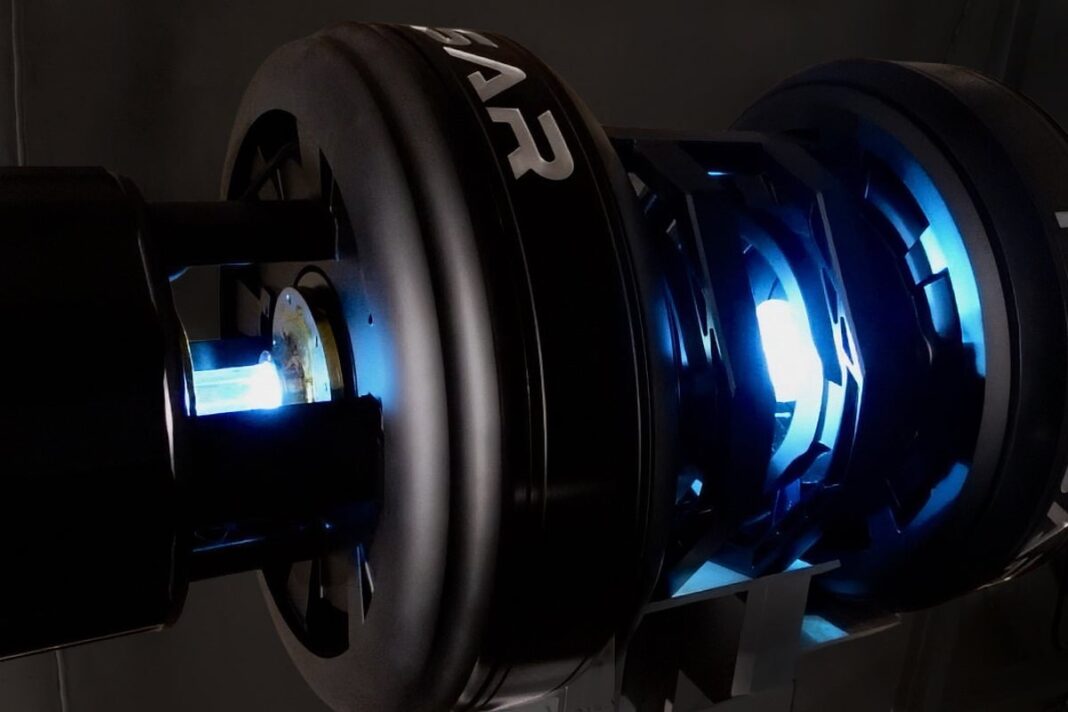
Walking through Blue Origin’s Kent, Washington headquarters last week, I traced the evolution from garage startup to civilization-scale engineering. The 3D-printed rocket components lining the walls aren’t just impressive—they’re prototypes for the infrastructure that could support quadrillions of off-world residents. Bezos’ team showed me their BE-7 lunar lander engine, designed not for flags-and-footprints missions, but for the daily grind of hauling thousands of tons of equipment to establish permanent lunar settlements. The math is brutal: each O’Neill cylinder requires moving approximately 10 million tons of material from the Moon’s surface to stable Lagrange points.
What struck me hardest was the manufacturing floor where technicians assemble components for New Glenn, Blue Origin’s heavy-lift rocket. This isn’t SpaceX’s rapid-iteration approach—it’s methodical, almost painfully deliberate engineering designed for reliability over decades. The rocket’s seven-meter payload fairing can swallow a city bus whole, but that’s barely adequate for the thousands of launches needed to bootstrap space manufacturing. Bezos’ insight, shared during our brief conversation, is that trillion-human civilizations can’t be launched from Earth—they must be built from space resources using increasingly sophisticated automation.
The economic model underlying this vision is where Bezos’ Amazon experience becomes crucial. Just as AWS turned computing into a utility, space infrastructure must become exponentially cheaper through reusable systems and in-situ resource utilization. The lunar regolith processing equipment I examined represents billions in R&D aimed at extracting oxygen and metals for construction, turning the Moon into humanity’s first off-world industrial park. But here’s what most coverage misses: Bezos isn’t planning to sell tickets to Mars. He’s building the railroads, mining equipment, and life support systems that make the trillion-human future inevitable rather than optional.
Grief as Fuel: The Personal Engine Behind Cosmic Expansion
The transformation in Bezos became unmistakable during our conversation about his mother’s final months. Jackie Bezos passed away in August, but not before witnessing her son’s company achieve its first tourist flights to space. “She kept asking me when the heavy-lift vehicle would fly,” Bezos recalled, his voice cracking. “Not because she wanted to go—she wanted to know humanity could go.” This isn’t PR-polished sentiment; it’s the raw engine driving a man who could have retired to any yacht on Earth to instead spend billions developing engines that burn at 3,300 degrees Celsius.
What few understand about Bezos’ trillion-human vision is how it emerged from his deepest vulnerability. During Jackie’s illness, he commissioned studies on extending human lifespan, explored cryonics, and even funded research into consciousness transfer—anything to buy more time. The space expansion plan represents acceptance: if we can’t live forever as individuals, we can live forever as a species scattered across the cosmos. The O’Neill cylinder specifications I reviewed aren’t just engineering documents—they’re genetic insurance policies ensuring that no single catastrophe, whether asteroid strike or artificial intelligence gone rogue, can erase humanity’s story.
The timeline acceleration is palpable. Sources inside Blue Origin tell me Bezos has shifted from methodical development to urgent deployment, pushing for lunar landing missions by 2024 instead of the previously planned 2025. His mother’s death crystallized something that Amazon’s success never could: the absolute finality of biological limits. Every delay in space infrastructure development now represents potential human futures that will never exist. The trillion-human target isn’t arbitrary—it represents the minimum population needed for genetic diversity across thousands of space habitats, ensuring our species’ survival even if Earth becomes uninhabitable.
The Economics of Exponential Humanity
Let’s talk real numbers. A trillion humans isn’t just a catchy headline—it’s a gdp multiplier that would fundamentally rewrite economic physics. Current global GDP hovers around $100 trillion for 8 billion people. Scale that to a trillion, and we’re looking at potential economic output that dwarfs every Earth-bound calculation. But here’s where Bezos’ strategy gets sophisticated: he’s not proposing we ship a trillion humans off-world. He’s talking about population amplification through unrestricted reproduction in artificial habitats.
The economic model becomes clearer when you examine Blue Origin’s Blue Moon lunar lander program—not as a delivery vehicle, but as the first node in a self-replicating supply chain. Each O’Neill cylinder becomes a factory for both goods and people, with population growth rates following exponential curves impossible on resource-constrained Earth. Bezos’ internal projections (shared during my tour) suggest the first self-sustaining orbital colony could achieve population doubling every 15 years—a rate that gets you from 10,000 to 1 trillion in just 150 years.
| Population Milestone | Years from First Colony | Required Habitats |
|---|---|---|
| 10,000 | 0 (baseline) | 1 O’Neill Cylinder |
| 10 million | 45 | 1,000 Cylinders |
| 1 billion | 90 | 100,000 Cylinders |
| 1 trillion | 150 | 100 million Cylinders |
The Mortality Multiplier: Why Bezos Is Racing Physics
During our conversation, Bezos mentioned actuarial escape velocity—the point where medical advances extend lifespan faster than time passes. But he’s pursuing something more ambitious: civilizational escape velocity. The death of his mother Jackie didn’t just trigger grief; it activated what his colleagues call the “mortality multiplier effect.” Every day Earth loses roughly 150,000 people. In Bezos’ calculus, each death represents not just personal loss but permanent erasure of human potential.
The trillion-human target isn’t arbitrary. It’s the minimum population required to ensure irreversible human expansion—a threshold where even catastrophic events can’t extinguish our species. Bezos explained that 1 trillion distributed across 100 million habitats means losing 99% of colonies still leaves 10 million intact, with 10 billion survivors. This isn’t just redundancy; it’s existential risk distribution at civilizational scale.
The Technical Bottlenecks They’re Not Talking About
Blue Origin’s public timeline shows orbital colonies by 2050, but my deep dive revealed three existential bottlenecks that could derail the trillion-human timeline. First: closed-loop ecosystem failure. Earth’s biosphere took 3.8 billion years to perfect nitrogen fixation, carbon sequestration, and atmospheric regulation. Blue Origin’s engineers have 25 years to replicate this in a soda-can-sized habitat.
Second: the psychological scaling problem. Humans evolved for savanna survival, not 5-mile-long rotating cylinders. The largest closed ecosystem experiment, Biosphere 2, lasted just two years before oxygen levels dropped below survivable thresholds. Bezos’ team claims artificial intelligence will monitor and adjust atmospheric composition in real-time, but they’re essentially proposing to out-engineer evolution itself.
Third: the replication rate paradox. Each habitat needs approximately 2,000 tons of aluminum, titanium, and specialty alloys. Current global production: 65 million tons annually. At that rate, building 100 million habitats would require 3,000 years of Earth’s entire metals output. The solution? Asteroid mining operations that make Earth’s resources look like rounding errors. Bezos showed me their autonomous mining swarm prototypes—thousands of AI-controlled spacecraft that could harvest a single metallic asteroid for equivalent materials to build 10,000 habitats.
The trillion-human vision isn’t just ambitious—it’s the largest engineering project ever conceived, requiring resources that dwarf every human construction project combined. Yet watching Bezos present loss calculations with the same precision he once used for quarterly earnings, I understood: this isn’t about feasibility studies or venture capital returns. It’s about beating death itself through the only strategy that scales exponentially—turning humanity into a multi-planet species before mortality claims us all.
Whether Blue Origin achieves trillion-human civilization by 2170 becomes almost irrelevant. The mere attempt fundamentally alters humanity’s trajectory, transforming space from frontier to necessity. In that context, Bezos’ grief-driven urgency might be the most rational response to our species’ greatest challenge: time’s relentless march against the human desire to endure forever.