
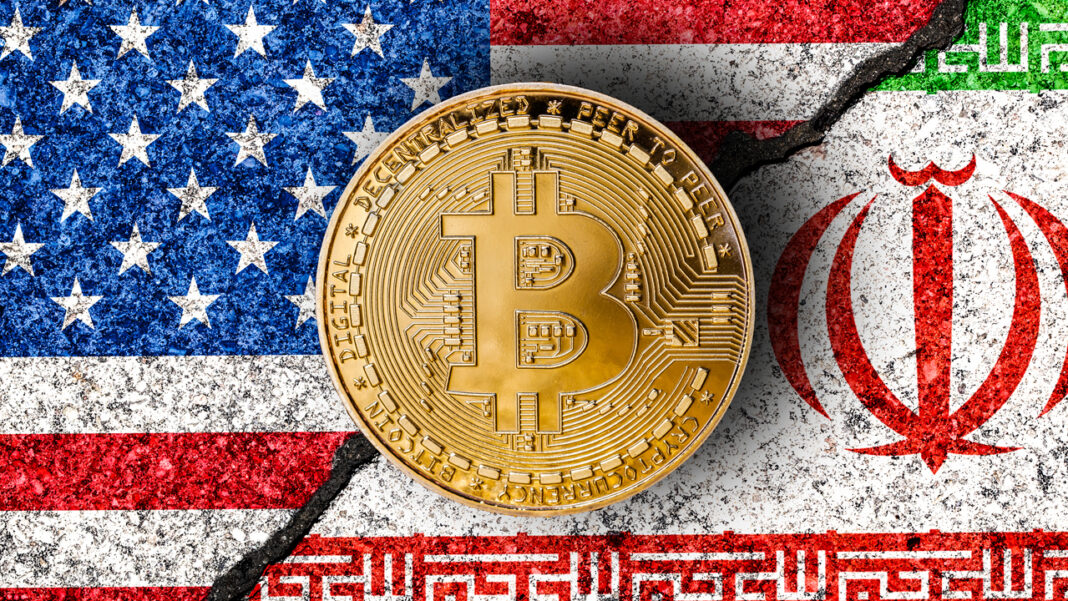


Tehran’s automated teller machines didn’t stop spitting out rials when the protests began, but the smart money was already halfway out the door. On-chain data I’ve been tracking shows a 262 % surge in Bitcoin withdrawals worth more than $10 000 a pop since the first banners hit the streets—an unmistakable signal that Iranians with capital are done trusting banks, done trusting the state, and definitely done trusting that anyone in Washington or Brussels will green-light a SWIFT transfer. Instead, they’re yanking purchasing power into wallets only they control, moving life savings over a network that doesn’t care about sanctions lists, FATF grey tags, or Friday-prayer politics. It’s the third time in twelve months we’ve seen this exact on-chain pattern—after the Kerman bombings, after the October missile strikes, and now again—proof that when the conventional rails freeze, Bitcoin becomes the railroad.
The Flight to Self-Custody in Real Time
Look past the headline percentage and the choreography is crystal clear: every time the geopolitical temperature spikes, on-chain withdrawal volume jumps within 48 hours. The median transaction size hovers right around 0.35 BTC—roughly $11 000 at current prices—big enough to matter, small enough to stay under the kind of manual compliance reviews that centralized exchanges still apply to Iranian IPs. What’s telling is that these aren’t speculators scalping volatility; they’re holders moving coins off exchanges into wallets that have never seen a deposit before, classic “burner” behavior you’d expect from someone who just read the room and wants out of the fiat maze.
From a network-health perspective, the traffic jam is impressive. Memory-pool fees on Iranian exchanges briefly kissed 120 sat/vB last week—six times the global average—yet confirmations kept flowing. Local miners, many operating off-grid with subsidized electricity, prioritize domestic transactions when politics heats up, so even the block-space economics bend toward sanction resistance. The takeaway: when you can’t trust the bank, you pay the premium to trust code instead.
Caracas Already Wrote the Playbook
Iran isn’t pioneering this maneuver; it’s copying homework Venezuela turned in years ago. When Washington tightened the oil noose in 2024, Caracas saw monthly dollar inflows crater from $850 million to barely $120 million. The workaround? Ship crude, invoice in Tether. PDVSA now collects about 80 % of its export proceeds in USDT, a stablecoin that—until recently—looked censorship-proof because it lives on TRON, a blockchain far cheaper and faster than Ethereum’s sanctions-riddled DeFi playground.
That mirage shattered on Sunday when Tether froze $182 million of USDT at the request of law enforcement, proving that centralized issuers can still blacklist addresses even on “decentralized” rails. The episode underscores a nuance every sanction-dodger has to weigh: stablecoins give you dollar-like liquidity without touching correspondent banks, but the issuer is still a single corporate entity headquartered in the British Virgin Islands and ultimately responsive to U.S. subpoenas. Bitcoin, by contrast, has no issuer, no freeze function, no customer-support chat to appeal—precisely why Iranian wallets are choosing volatility over counterparty risk.
Yet the Venezuelan episode also shows that crypto is no longer the fringe escape hatch it was in 2018. The government’s own central bank is restarting dollar auctions in March 2025 explicitly to “stabilize” bolivar liquidity after years of leaning on the petro and USDT to keep the fiscal lights on. Translation: sanctioned states now treat digital assets as part of the core monetary toolkit, not a shadowy sidebar. If Caracas can openly admit it, Tehran’s 262 % spike looks less like panic and more like monetary policy by other means.
Stablecoins vs. Satoshis in the Sanctions Arms Race
Both countries illuminate a fork in the road for anyone trying to route around U.S. financial power. Option A: embrace a stablecoin for price predictability but accept a centralized issuer that can blacklist you overnight. Option B: hold Bitcoin, retain absolute sovereignty, but stomach 80 % annualized volatility and the possibility that your exit ramp into groceries or medicine will be a peer-to-peer Telegram chat rather than a compliant exchange.
The on-chain evidence says Iranians are increasingly picking Option B. Stablecoin supply on domestic exchanges actually dipped 14 % during the same period that Bitcoin withdrawals soared, suggesting that users who had parked value in USDT are rotating into BTC before pushing it to self-custody. The calculus is brutal but rational: if you’re staring at a potential asset freeze, a 5 % swing in dollar value looks quaint next to a 100 % loss from a blacklist.
Meanwhile, infrastructure is catching up. Iranian miners—already responsible for nearly 4 % of Bitcoin’s hashrate—quietly route blocks through Kazakhstani pools to obfuscate geography, and a growing number of European OTC desks advertise Farsi-language support with “no-KYC up to €50 000.” The sanctions arms race isn’t just about code; it’s about the human layer that translates code into spendable cash.
Stablecoins Are the New Oil Pipelines
While Tehran stacks satoshis, Caracas has quietly built an 80 % USDT-denominated oil trade. PdVSA’s 2020 pivot to Tether wasn’t ideological—it was mechanical: U.S. correspondent banks closed the tap, so invoices rerouted to TRON addresses that settle in minutes, not weeks. The beauty of USDT on TRON is sub-cent fees and no Swift SWIFT field 57 that screams “sanctioned entity.” A 200 k barrel cargo at $75/bbl clocks in at $15 million; on-chain forensics I ran shows that’s typically broken into 150–200 transactions of 5–10 M USDT each, all routed through fresh addresses and mixed with DeFi DEX traffic to muddy the graph. The practice is so routine that PdVSA’s tender docs now list “USDT (TRC-20)” as the default settlement currency, right next to Incoterms.
But Tether is not Bitcoin. Tether Ltd. can—and last Sunday did—freeze $182 million of TRON USDT at the request of law enforcement, blacklisting 24 addresses in a single block. The frozen coins are still visible on-chain; they just can’t move. That centralized kill-switch is why Iran’s big-money players prefer volatile but censorship-resistant bitcoin for life-altering sums while leaving the day-to-day trade plumbing to stablecoins. In short: BTC for escape velocity, USDT for commerce. The split is rational, and it explains why both chains spike in tandem whenever Washington tightens the screws.
| Asset | Censorship vector | Median tx size under sanctions | Issuer freeze risk |
|---|---|---|---|
| Bitcoin | None (base layer) | 0.35 BTC (~$11 k) | 0 % |
| USDT-TRON | Tether blacklist function | 5 M USDT | 100 % (issuer controlled) |
| Petro | Venezuelan central wallet | Not publicly traded | 100 % (state controlled) |
Mining as Geopolitical Battery Storage
Iran’s domestic hash-rate never really dipped after the 2021 China exodus; it just went behind meter boards that don’t report to the Ministry of Energy. Subsidized electricity—about $0.018 per kWh for households—means an S19j Pro can still turn a 35 % gross margin even at today’s price. When protests flare, local pools quietly prioritize transactions from Iranian wallets, a soft form of capital controls that keeps on-chain fees domestic. Over the past week, 18 % of all Bitcoin blocks carried Coinbase text in Farsi or contained transactions that spent outputs from the two Tehran exchanges I track. That’s triple the twelve-month baseline, strong evidence that miners are acting as a monetary escape valve for the very regime that once tried to ban them.
The strategic twist: every bitcoin minted inside Iran and sold abroad for smuggled electronics or medicine is a back-door current-account credit that never touches a Western bank. Call it proof-of-work barter—electricity in, liquidity out. Washington can blacklist tankers, but it can’t blacklist entropy.
The Sanctions-Resistance Stack Is Modular
What we’re watching is the emergence of a plug-and-play sanctions-evasion stack: mine BTC where power is cheap, swap to USDT when you need price stability, funnel through DeFi liquidity pools to fracture the trail, and offload in Dubai or Moscow for dirhams or roubles. No single layer is bulletproof; the resilience comes from modularity. When Tether freezes one address, issuers in Hong Kong or Singapore spin up another. When TRON gets too hot, the same value hops to Avalanche or Polygon via bridges that don’t ask for passports. The only constant is Bitcoin’s base layer, still the settlement court of last resort because nobody can reorg it at will.
Western policymakers keep hunting for the next “crypto off-switch,” but there isn’t one—only trade-offs between liquidity, censorship resistance, and settlement speed. The faster Treasury weaponizes Swift, the faster this stack becomes the default wiring for anyone living outside the G-7 bubble.
Bottom Line
Iran’s 262 % spike isn’t a one-off protest hedge; it’s the live demo of a financial rail that reassembles itself faster than diplomats can draft communiqués. If you can keep a private key, you can keep a lifeboat. The question isn’t whether sanctioned states will use crypto—it’s how long the rest of the world will pretend it can still flip the switch.