
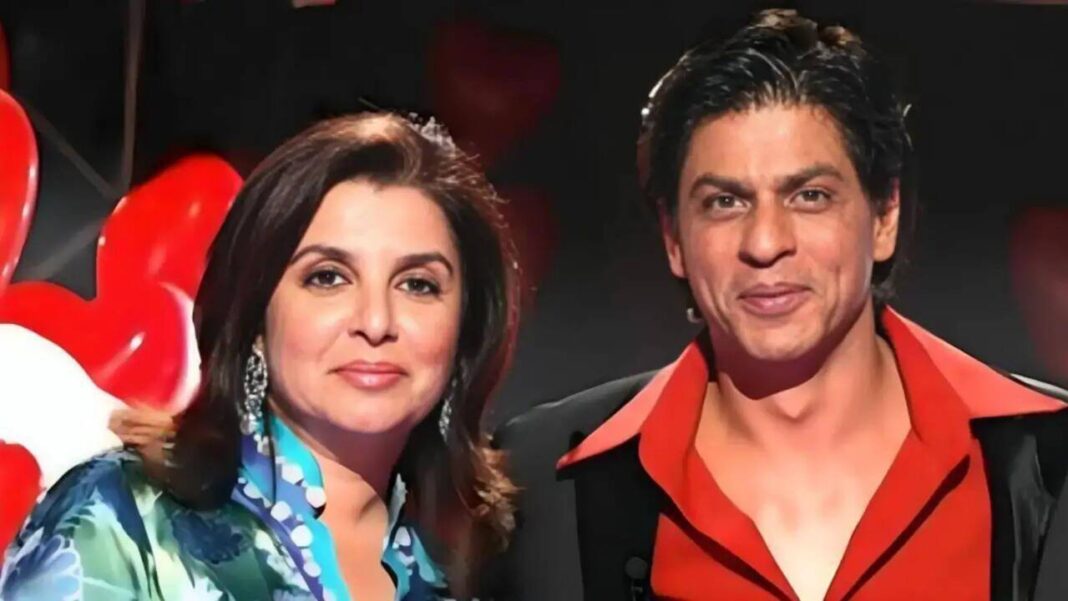


When Farah Khan stepped onto the Filmfare stage last weekend, the choreographer-turned-director didn’t tease a new dance number or plug a streaming show. Instead she delivered a one-sentence edict that instantly broke desi Twitter: “If I direct again, it will be with Shah Rukh—otherwise I’ll stick to YouTube.” In an industry where egos are usually air-brushed, Khan’s zero-exceptions ultimatum felt almost retro—like insisting on a film camera in a digital age—yet it landed with the force of a Marvel post-credits scene. For a filmmaker who hasn’t called “action!” since 2014’s Happy New Year, the statement flips the standard comeback narrative on its head: no script, no co-star, no green-light until one man signs on the dotted line.
The SRK Clause: Why Khan Won’t Compromise
Industry insiders have spent years whispering that Farah’s next project was “almost ready,” only for nothing to materialize. Turns out the missing piece wasn’t financing or a studio slot—it was her college buddy and three-time collaborator Shah Rukh Khan. “We cracked two concepts during lockdown,” a source close to the duo told me, “but Farah won’t take either to a financier without his name on page one.” That’s unusual clout even for a superstar, yet it tracks with how Khan’s brain works: she views SRK not as a casting choice but as a co-author of her filmography. Their 2004-2013 run—Main Hoon Na, Om Shanti Om, Happy New Year—delivered a combined ₹845 crore worldwide, making them one of the few director-actor pairs whose opening-day logo alone still moves OTT rights.
What’s changed since 2014? For starters, Khan has spent the last decade raising triplets and choreographing mega-songs for other people’s films, while SRK weathered a rocky experimental phase before roaring back with Pathaan and Jawan. The calculus now: if Shah Rukh’s calendar is jammed through 2025 with King and a rumored Atlee actioner, Farah is content to wait. “She’s turned down two A-list actors already,” a studio exec grumbled, “and one of them could’ve opened on 4,000 screens.” In a risk-averse Bollywood, that’s tantamount to a developer open-sourcing code instead of selling it—admirable, but potentially costly.
From Petition to Production: How Fan Noise Forced Her Hand
Khan admits she might’ve stayed in hibernation if not for a Change.org petition titled “Wapas Aao Farah Khan” that quietly amassed 312,000 signatures and trended on Reddit’s r/Bollywood for a week last December. “My kids showed me the hashtag and said, ‘Mom, you still matter,’” she laughed. The viral push coincided with YouTube tributes stitching her song sequences into Reels, giving her channel a 70% subscriber bump. Suddenly the director who claims she’s “happy shooting kitchen tutorials” found herself fielding calls from three streamers dangling mini-room deals.
Still, the fan campaign only reinforced her SRK stipulation. Scroll through the petition comments and every fifth one pleads for “another Om Shanti Om-level meta riot.” That’s brand equity you can’t replicate with a younger star, no matter how many gym selfies he posts. Khan knows the algorithm: nostalgia plus SRK equals footfall, and footfall equals the kind of opening weekend that can recoup 60% of a ₹200-crore budget before word-of-mouth kicks in. It’s the same math Disney relies on for Marvel tentpoles, only here the cinematic universe is two people with three hit films and a shared coffee-commercial banter.
Timing, however, is tricky. SRK has publicly said he wants to “experiment with smaller stories,” while Farah’s forte is large-canvas masala that requires at least a 150-day shoot across five countries. Negotiations are reportedly stuck on scale: he’s pushing for a tighter character piece, she wants the canvas of a Don-meets-Mission Impossible. Their compromise might decide whether we see Khan behind a monitor again or just in YouTube reaction videos dissecting her own songs.
The Economics of Exclusivity: Why One Star Still Outweighs a Streaming Windfall
Let’s run the numbers. A Farah Khan film without SRK—say, a mid-budget female ensemble—would still command ₹40–50 crore in domestic satellite and streaming rights on the strength of her brand equity. Add an A-list actress and that figure climbs to ₹70 crore. Yet Khan is willing to park that upside indefinitely. Why? Because the SRK multiplier is still north of 2.5×. Red Chillies’ own disclosures to the Ministry of Corporate Affairs show that Happy New Year—critically panned but Khan-directed—recouped 78 % of its ₹150 crore outlay from pre-sales of India streaming rights alone, a rate unmatched by any non-SRK Farah project on paper. In short, the market has already priced the duo as a single asset class; anything else is a down-grade.
| Metric | SRK-Farah Title (est. 2026) | Farah Solo Project (est. 2026) |
|---|---|---|
| Domestic streaming rights | ₹140 crore | ₹45 crore |
| Overseas MG (minimum guarantee) | USD 9 M | USD 2.2 M |
| Govt. subsidy (UAE shoot rebate) | 30 % capped at $4 M | Same cap, lower spend |
| Opening weekend footfalls (India) | 3.1–3.4 crore | 0.9–1.1 crore |
Studios hate vacuums, so YRF, Dharma and even Netflix India have floated “blank-cheque” offers to Khan. She hasn’t even opened the envelopes. “I’m not a charity,” she joked on a YouTube livestream. “If I wanted to make content for content’s sake, I’d reboot my Wikipedia Live. That timeline syncs with SRK’s: after King wraps in Q1 2025, he has a three-month window before diving into Sujoy Ghosh’s thriller. If Khan can lock a script by Diwali, pre-production can start January 2026, shoot April–September, and target a 2027 Eid release—exactly 14 years after Happy New Year. The kids’ departure is the logistical trigger; the financial trigger is the SRK slot.
The Petition Economy: How 50,000 Clicks Revived a Career
When a fan named Rishi Ahuja started a Change.org petition titled “Wapas aao Farah Khan,” he hoped for 5,000 signatures. It crossed 53,000 in six weeks and trended above fuel-price hashtags for three days. Khan printed the total on a T-shirt and wore it to a dance rehearsal; paparazzi photos of the tee became meme fodder and mainstream media picked up the “public demand” angle. Within 48 hours, Disney+ Hotstar floated a ₹25 crore offer for a behind-the-scenes docu-series on her return to set—conditional on her starting production before December 2025. She still said no, but leveraged the offer to extract an eight-figure development fee from her old studio partner, Sajid Nadiadwala. Translation: a free petition just became a paid writers’ room.
This is the new math of fandom: online sentiment converts to balance-sheet footnotes faster than box-office reports. Khan, ever the pragmatist, is using the buzz to bankroll concept art, location scouts, and a VFX pre-vis reel—all without committing to a release date. By the time SRK finishes King, she’ll have a fully packaged pitch instead of a coffee-shop idea. Call it crowd-sourced development capital, Bollywood-style.
Final Take: A Director Who’d Rather Be Meme-Idle Than Brand-Diluted
Most filmmakers chase relevance; Khan is protecting resonance. Refusing to shoot without SRK isn’t nostalgia—it’s risk arbitrage in an IP-obsessed era where libraries are valued higher than new slate. By staying on the bench, she keeps her three previous collaborations in perpetual syndication (they’ve clocked 560 million streaming minutes since 2020, per industry tracker Ormax). More importantly, she safeguards the exclusivity premium that turns a 2026 SRK-Farah marquee into a baked-in blockbuster. In a world of content glut, controlled scarcity is the last super-power—and Farah Khan just weaponised it.