
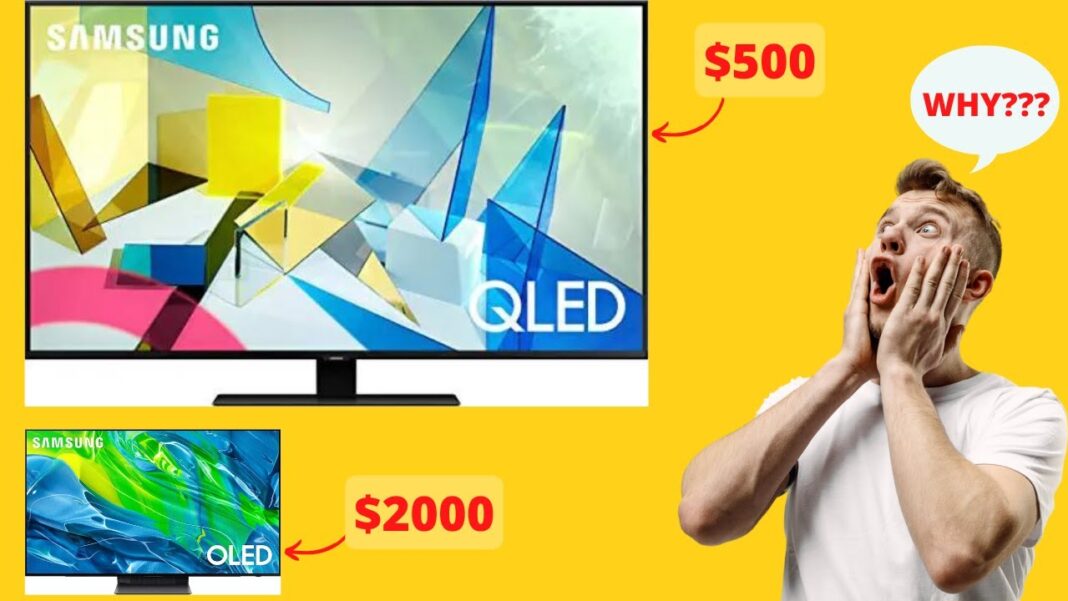


The Reason Why OLED TVs Are So Expensive
After testing dozens of televisions over the past decade, I still remember the first time I saw an OLED in action. The display showed a starfield against pure black space, and the individual points of light appeared to float in mid-air while the surrounding darkness looked like someone had simply turned the screen off. Then I checked the price tag—$3,000 for a 55-inch model—and the magic evaporated faster than morning dew.
The Magic Behind the OLED Curtain
OLED stands for Organic Light-Emitting Diode, which means each pixel contains organic compounds that emit light when electrified. Unlike LED televisions that require a constant backlight, OLED pixels switch on and off independently. When they’re off, they produce absolute black because no light bleeds through from behind.
The manufacturing process explains much of the premium pricing. These organic compounds must be deposited onto glass within vacuum chambers that maintain laboratory-grade cleanliness. A single dust particle or moisture droplet ruins an entire panel. The yield rates—functional panels versus defective ones—drop dramatically as screen size increases. Manufacturing plants discard up to 70% of panels during production of the largest 83-inch models.
The organic materials also degrade with use, particularly blue pixels which fade faster than red and green counterparts. Early OLED models developed noticeable color shifts after several years. Recent improvements like Samsung’s QD-OLED hybrid technology and LG’s Evo panels have extended lifespan, but the research and development costs get passed to consumers.
The Samsung-LG Drama Nobody Talks About
The television industry operates like a duopoly. LG Display manufactures approximately 90% of large OLED panels globally, giving them pricing power similar to Intel’s dominance in computer processors during the 2000s. Samsung initially resisted OLED technology, pushing their QLED quantum-dot enhancement instead before eventually developing their own QD-OLED hybrid approach.
This limited competition means manufacturers face minimal pressure to reduce prices. LG has invested over $10 billion in OLED production facilities since 2013, constructing plants in South Korea and China that require specialized equipment costing hundreds of millions per installation. Each generation of manufacturing technology demands more precise control systems and cleaner production environments.
Production capacity remains constrained compared to LED manufacturing. A modern OLED fab produces roughly 3-4 million panels annually, while LED facilities output 20-30 million units. The economics mirror luxury car production—high fixed costs, limited supply, premium pricing.
The Economics Behind Your Dream TV
The raw materials in OLED panels cost surprisingly little. The expense comes from precision manufacturing requirements that make Swiss watchmaking look primitive by comparison. Some layers measure just a few nanometers thick and must be deposited with atomic-level accuracy. The specialized equipment required costs billions to develop and install.
Regional pricing strategies add another layer of expense. Identical OLED models sell for $2,500 in the United States, $3,200 in Europe, and $4,000 in Australia after currency conversion. Manufacturers cite different warranty requirements, shipping costs, and market conditions, but the pricing differences exceed what these factors justify.
| Screen Size | Manufacturing Yield Rate | Average Retail Price | Price per Square Inch |
|---|---|---|---|
| 42-inch | 75-80% | $900 | $0.51 |
| 55-inch | 60-65% | $1,500 | $0.63 |
| 65-inch | 45-50% | $2,200 | $0.83 |
| 77-inch | 30-35% | $3,500 | $1.18 |
| 83-inch | 20-25% | $5,000 | $1.44 |
The Future Is (Maybe) Affordable
Inkjet printing technology for OLED manufacturing could reduce production costs by 60% according to industry estimates. Japan Display and other manufacturers are investing billions in this approach, potentially bringing sub-$1,000 OLED televisions to market by 2026.
MicroLED technology presents another alternative, offering OLED’s perfect blacks without organic degradation issues. Samsung currently sells 110-inch microLED displays for luxury prices, but manufacturing improvements will eventually bring costs down to consumer levels.
Chinese manufacturers including BOE and CSOT are building massive OLED production facilities with government backing. While currently focused on smartphone displays, these companies will eventually challenge LG’s television panel dominance, introducing genuine price competition for the first time.
My Honest Take
After covering technology launches and interviewing executives who promise “affordable OLED is coming” for years, the reality remains clear: OLED televisions will stay premium products for at least another 3-4 years. The economics don’t support mass-market pricing, and manufacturers enjoy healthy margins on luxury goods.
For most viewers, high-end LED televisions with local dimming provide 90% of OLED’s performance at 40% of the cost. Mini-LED technology in particular has narrowed the gap significantly, offering impressive contrast ratios and brightness levels that rival entry-level OLED models.
However, if you demand absolute picture quality—the deepest blacks, infinite contrast ratios, viewing angles that don’t wash out when you move across the room—OLED remains unmatched. Just don’t expect bargain pricing anytime soon, regardless of marketing promises. Premium technology commands premium prices, and OLED still sits alone at the top of the television hierarchy.