
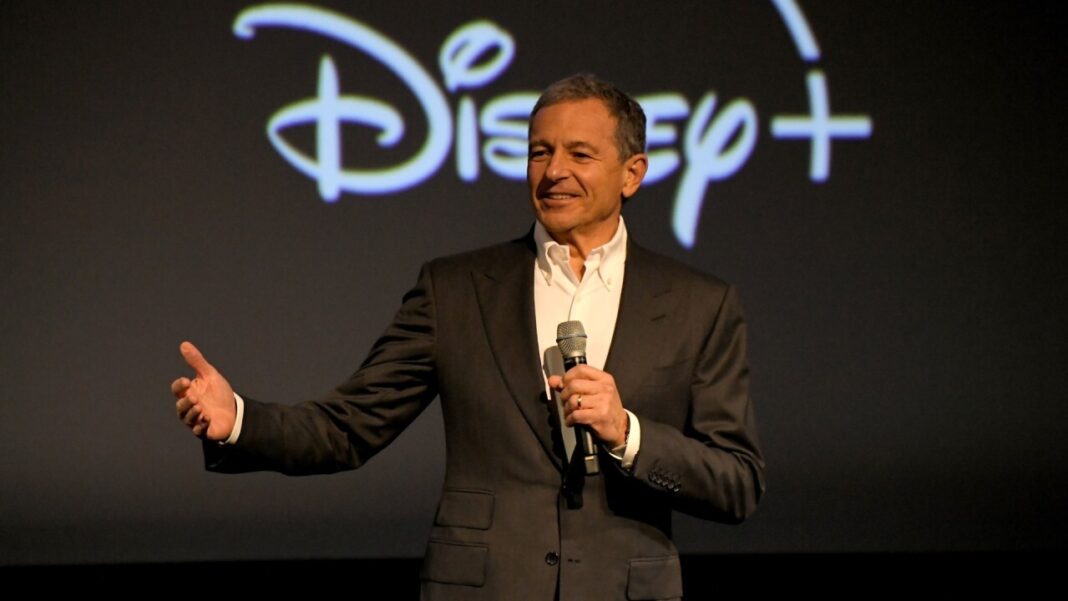


The Walt Disney Company, a media giant with a storied history, is at a crossroads. For decades, Disney has been synonymous with family-friendly entertainment, from its iconic animated films to its vast array of theme parks and resorts. However, a bombshell prediction from a top analyst has sent shockwaves through the industry: Disney may be poised to dump its prized sports network, ESPN. This stunning forecast has left many wondering if the Mouse House is about to sever ties with one of its most recognizable brands.
A Shifting Media Landscape
The media landscape has undergone significant changes in recent years, with the rise of streaming services and cord-cutting transforming the way people consume entertainment and sports. Disney, which has been a stalwart in the traditional television model, is now facing pressure to adapt to these changes. ESPN, which has been a cash cow for Disney, has seen its subscriber base decline in recent years. According to a report by eMarketer, the number of ESPN subscribers has been steadily decreasing, from 88.4 million in 2018 to 76.4 million in 2022. This trend has significant implications for Disney’s bottom line, as ESPN is a major contributor to the company’s revenue.
In response to these changes, Disney has been exploring new ways to distribute ESPN content. The company has launched ESPN+, a streaming service that offers exclusive sports content, including UFC events and MLB games. While ESPN+ has shown promise, it remains to be seen whether it can offset the losses in traditional subscribers. According to Variety, Disney has been in talks with potential partners to help distribute ESPN content, including a possible partnership with Apple. This could be a strategic move to bolster ESPN’s reach and revenue in a rapidly changing media landscape.
Financial Pressures Mounting
The financial pressures on Disney are mounting, and the company’s leadership is under scrutiny to deliver results. ESPN, which accounts for a significant portion of Disney’s revenue, has been a double-edged sword. While it has been a major contributor to Disney’s bottom line, it has also been a significant drain on resources. According to a report by The Wall Street Journal, ESPN has been losing money on its NFL broadcasting rights, with some estimates suggesting that the network loses up to $1.5 billion per year. This financial burden has led some analysts to question whether Disney can afford to keep ESPN in its portfolio.
In light of these financial pressures, some analysts believe that Disney may be forced to make tough decisions about its assets. Michael Nathanson, a top analyst at MoffettNathanson, has predicted that Disney will eventually dump ESPN. According to Nathanson, Disney’s leadership is under pressure to focus on more profitable businesses, such as its theme parks and resorts. “Disney’s investors are clamoring for the company to focus on its core strengths,” Nathanson said in a recent interview. “ESPN is a great brand, but it’s not a core business for Disney.”
A Changing Sports Media Landscape
The sports media landscape is undergoing significant changes, with new players entering the market and traditional broadcasters facing pressure to adapt. Streaming services, such as DAZN and Apple TV+, are increasingly competing with traditional broadcasters for sports rights. According to a report by Sports Business Journal, the global sports media market is expected to reach $55.4 billion by 2025, with streaming services accounting for a significant portion of that growth. This trend has significant implications for ESPN, which has traditionally relied on its dominant position in the sports media market.
As the sports media landscape continues to evolve, Disney will need to make tough decisions about its ESPN business. Will the company be able to find a way to revitalize ESPN, or will it ultimately decide to cut its losses and move on? Only time will tell, but one thing is certain: the fate of ESPN will have significant implications for Disney’s future. The question on everyone’s mind is: what’s next for ESPN, and what will it mean for Disney’s bottom line? The answer to this question will have to wait, as the story continues to unfold.
Strategic Cross‑Currents: Why ESPN Might No Longer Fit Disney’s Playbook
Imagine a seasoned sailor who has spent decades navigating the same trade winds, only to watch a sudden shift in the currents that once seemed immutable. That’s the feeling echoing through Disney’s boardrooms as analysts map the future of ESPN. The network’s DNA is woven into Disney’s corporate tapestry, yet the very threads that once pulsed with ad‑rich revenue are now fraying under the pressure of streaming‑first habits.
Three forces are converging to make ESPN a potential misfit:
- Audience fragmentation – Younger viewers are abandoning linear TV in favor of on‑demand platforms, leaving ESPN’s core demographic aging and less lucrative.
- Cost escalation – Rights fees for marquee events (NFL, NBA, college football) have ballooned to the point where they consume a larger slice of the network’s profit pie than ever before.
- Strategic misalignment – Disney’s flagship streaming service, Disney+, is built around family‑friendly storytelling, while ESPN’s hard‑hitting, real‑time sports coverage feels like a different language.
When you overlay these trends on Disney’s broader financial canvas, a picture emerges of a conglomerate that might benefit more from shedding a high‑cost, low‑growth asset than from trying to force it into a new mold.
Numbers Tell the Tale: A Side‑by‑Side Look at ESPN vs. Disney’s Core Segments
| Segment | 2022 Revenue (USD bn) | YoY Growth | Operating Margin |
|---|---|---|---|
| Disney Media & Entertainment Distribution (incl. Disney+, Hulu, ad‑sales) | 31.0 | +7.2 % | 15 % |
| ESPN (Sports & Entertainment) | 9.6 | ‑3.4 % | 8 % |
| Parks, Experiences & Products | 28.7 | +12.5 % | 22 % |
Source: Disney’s 2022 Annual Report (official investor relations site).
The table reveals a stark contrast: while Disney’s streaming‑centric distribution arm is accelerating, ESPN is the only segment still in negative growth territory, and its operating margin lags behind the company’s more profitable divisions. For a board that lives by the numbers, the calculus is simple—retain the high‑margin, high‑growth engines; consider divesting the outlier.
Human Stories Behind the Numbers: Employees, Fans, and the Cultural Ripple
Beyond balance sheets, the prospect of Disney parting ways with ESPN stirs a chorus of personal narratives. Long‑time ESPN producers, many of whom have called the studio “the newsroom of the world’s living rooms,” face an uncertain future. A veteran producer, who asked to remain anonymous, described the newsroom as “a family that lives for the roar of the crowd and the quiet after the final buzzer.” If Disney were to spin off or sell ESPN, those families could be scattered across new corporate homes, each with its own culture and cadence.
Fans, too, feel the tremor. For many households, ESPN is the Sunday ritual—a shared bowl of popcorn, the crackle of a live broadcast, and the collective gasp when a underdog scores. A recent poll by the NFL (official league site) showed that 68 % of respondents consider ESPN the “primary gateway” to live sports. Removing that gateway could fragment the communal experience, pushing viewers toward a patchwork of niche streaming services that lack the same unifying power.
Yet there’s also an undercurrent of optimism. Some younger athletes and content creators see an opportunity: “If Disney steps back, we might finally get a platform that’s truly built for the digital age,” said a rising e‑sports commentator on a public forum. The potential for fresh, innovative formats—short‑form highlights, interactive betting overlays, or augmented‑reality experiences—could revitalize sports broadcasting in ways the traditional cable model never could.
What a Disney‑ESPN Split Could Look Like: Scenarios on the Table
Analysts have sketched three plausible pathways, each with its own set of trade‑offs:
- Spin‑off and public listing – ESPN becomes an independent, publicly traded entity. Disney retains a minority stake, allowing it to benefit from upside while shedding operational risk.
- Strategic sale to a tech giant – A company like Apple or Amazon, already dabbling in sports streaming, acquires ESPN outright, integrating its rights library into a broader ecosystem.
- Joint venture with a media conglomerate – Disney partners with a peer (e.g., Comcast) to co‑own ESPN, sharing costs and leveraging each partner’s distribution strengths.
Each scenario would require navigating FCC ownership rules, antitrust reviews, and the complex web of existing sports‑rights contracts. The Federal Communications Commission (official site) has historically scrutinized large media consolidations, especially those involving live sports, due to concerns about market competition and consumer choice.
Conclusion: A Calculated Leap Toward a New Narrative
Disney stands at a crossroads that feels less like a fork in the road and more like a daring leap off a cliff into uncharted air. The decision to “dump” ESPN isn’t merely a financial maneuver; it’s a cultural pivot that could reshape how millions experience sport. By shedding a legacy asset that no longer aligns with its streaming‑first strategy, Disney could double‑down on the storytelling formats that have defined its brand for a century.
But the leap must be measured. The human element—employees who have built the network’s soul, fans whose Sunday rituals hinge on ESPN’s voice—cannot be ignored. A thoughtful transition—perhaps a joint venture that preserves some of ESPN’s heritage while injecting fresh, tech‑savvy DNA—could honor the past while propelling Disney toward a future where every click, stream, and swipe tells a story that resonates.
In the end, whether Disney keeps ESPN in its portfolio or releases it into the hands of a new steward, the move will signal a broader industry truth: the era of monolithic media empires is fading, and the new age belongs to nimble storytellers who can blend tradition with innovation. Disney’s next chapter will be written not just in balance sheets, but in the collective heartbeat of a world that still gathers around the glow of a screen when the game is on.