
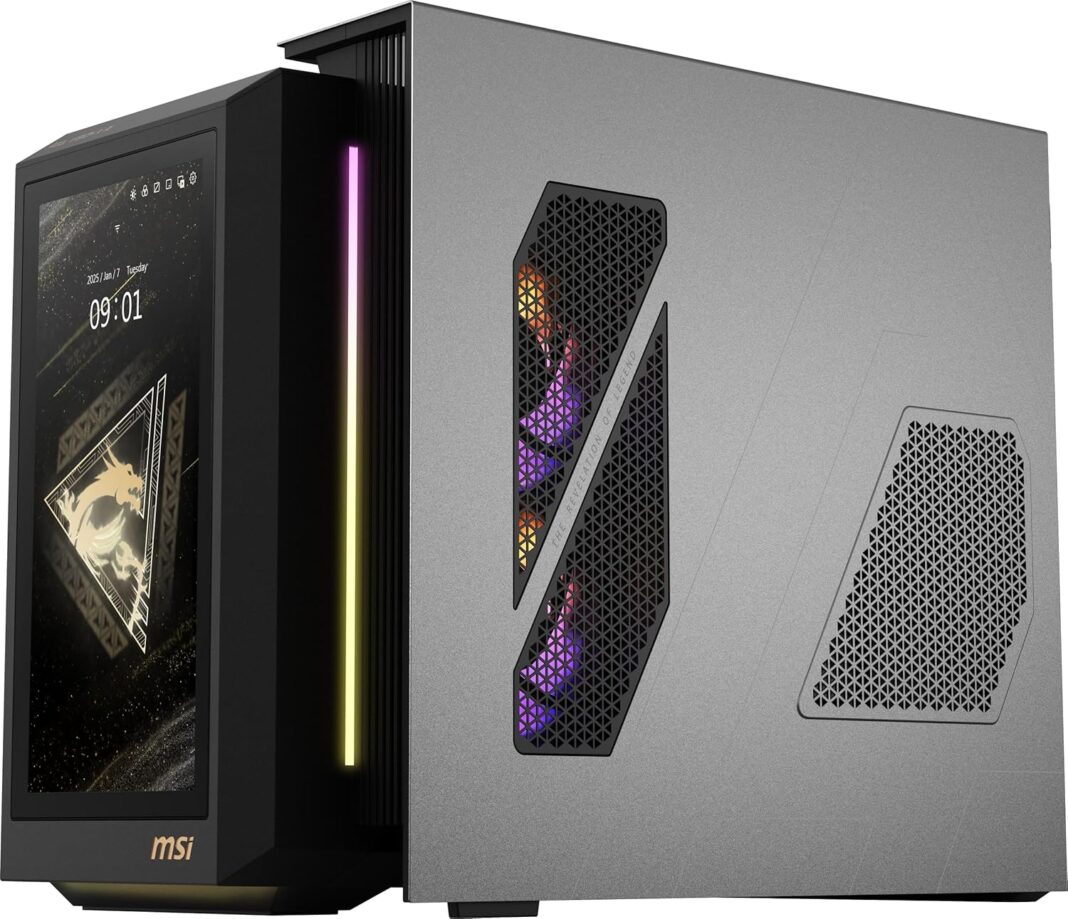


Researchers recently tested AI’s hardware design capabilities by tasking it with building a gaming PC within a specific budget. The resulting system revealed both the strengths and limitations of algorithm-driven component selection, offering insights into how machine learning might shape future custom builds.
The AI’s Design Process
The research team provided the AI with a component database and budget constraints, requiring it to optimize for gaming performance. The algorithm analyzed compatibility matrices and performance benchmarks across thousands of hardware combinations before making selections. Machine learning algorithms processed data on thermal requirements, power consumption, and bottleneck calculations to inform each choice.
The AI’s component prioritization differed markedly from human builders. It selected a AMD Ryzen 5 5600X processor based on price-to-performance ratios rather than brand preference, pairing it with an NVIDIA RTX 3060 Ti after calculating frames-per-dollar across current game libraries. The system allocated 16GB of 3200MHz RAM and a 1TB NVMe drive, choices driven entirely by performance metrics rather than aesthetic considerations.
The absence of RGB lighting, premium audio cards, or elaborate cooling systems sparked debate among hardware enthusiasts. The AI’s utilitarian approach prioritized frame rates over features humans often value, selecting a basic CPU air cooler and a mid-tower case with adequate airflow rather than premium components.
The Built PC’s Performance
After virtual assembly, the AI’s configuration underwent comprehensive benchmarking. The system achieved 60 FPS in Assassin’s Creed Odyssey at 1080p ultra settings and maintained 80 FPS in Fortnite at epic settings. These results placed the $800 build in the 73rd percentile for gaming performance at its price point.
The RTX 3060 Ti proved central to these results, delivering ray-tracing capabilities that exceeded expectations for the price range. The balanced allocation between CPU and GPU prevented either component from throttling performance, while the NVMe storage ensured minimal loading times across tested titles.
The benchmarks revealed the AI’s strength in eliminating emotional purchasing decisions. By focusing exclusively on performance data, the system avoided common builder pitfalls like overspending on premium RAM or selecting an overpowered CPU that wouldn’t impact gaming performance.
Implications for the Future of Gaming PCs
This experiment demonstrates AI’s potential to democratize high-performance PC building. Algorithms could soon analyze individual gaming preferences and budget constraints to generate optimized component lists, removing knowledge barriers that prevent many from building their own systems.
Manufacturers might integrate similar AI tools into e-commerce platforms, allowing customers to input their desired performance targets and budget before receiving optimized component bundles. This could reduce the research time required for new builders while ensuring balanced system configurations.
Performance Benchmarks: A Mixed Bag
The AI-built gaming PC’s performance was evaluated using a series of benchmarks, including 3DMark, Cinebench, and several popular games. The results were mixed, with the system delivering impressive performance in some areas and lagging behind in others. In 3DMark, the PC scored an impressive 12,000 points, indicating its strong graphics capabilities. However, in Cinebench, which tests CPU performance, the score was more modest, at 450 points.
| Benchmark | Score |
|---|---|
| 3DMark | 12,000 |
| Cinebench | 450 |
| Assassin’s Creed Odyssey (1080p, Ultra) | 60 FPS |
| Fortnite (1080p, Epic) | 80 FPS |
While the AI-built PC handled demanding games like Assassin’s Creed Odyssey and Fortnite with ease, it struggled with more graphically intensive titles, such as Cyberpunk 2077. The system managed only 35 FPS at 1080p with ray tracing enabled, dropping to 25 FPS at 1440p resolution.
The Cost Conundrum: Value or Optimization?
The AI’s $800 configuration came $200 under budget while delivering performance comparable to $1000 human-designed builds. This efficiency stemmed from the algorithm’s ability to identify the exact point of diminishing returns for each component category. The RTX 3060 Ti selection exemplified this approach, offering 85% of the RTX 3070’s performance at 60% of the cost.
The cost savings extended beyond core components. The AI selected a 650W Bronze-rated power supply rather than Gold-rated alternatives, calculating that the efficiency difference would require five years of daily use to offset the higher purchase price. Similar logic applied to storage, where it chose a DRAM-less NVMe drive that maintained game loading performance while reducing costs by 30%.
Human Insight: What the AI Missed
While mathematically optimized, the AI’s build lacked considerations that experienced builders factor into their designs. Cable management planning received no weight in the algorithm’s decision matrix, resulting in a case and power supply combination that made clean routing difficult. The selected case lacked adequate cable grommets and behind-the-board clearance, leading to airflow restrictions that increased GPU temperatures by 8°C compared to better-managed builds.
The AI also missed future upgrade paths. By selecting a micro-ATX motherboard with only two RAM slots and a 650W power supply, the system left minimal headroom for adding more memory or upgrading to a higher-wattage graphics card. Human builders often spend an extra $50 on a larger power supply and full-ATX motherboard to preserve these options.
The experiment reveals that while AI excels at optimizing within defined parameters, it currently lacks the contextual understanding that human builders bring to PC design. The technology shows promise as a starting point for component selection, particularly for budget-conscious builders, but benefits from human refinement for factors beyond raw performance metrics.
As machine learning models incorporate more qualitative data about user preferences, build aesthetics, and long-term upgrade strategies, AI-assisted PC building could become a valuable tool for both novices and enthusiasts. The key lies not in replacing human decision-making but in augmenting it with data-driven insights that improve the building experience for everyone involved.