
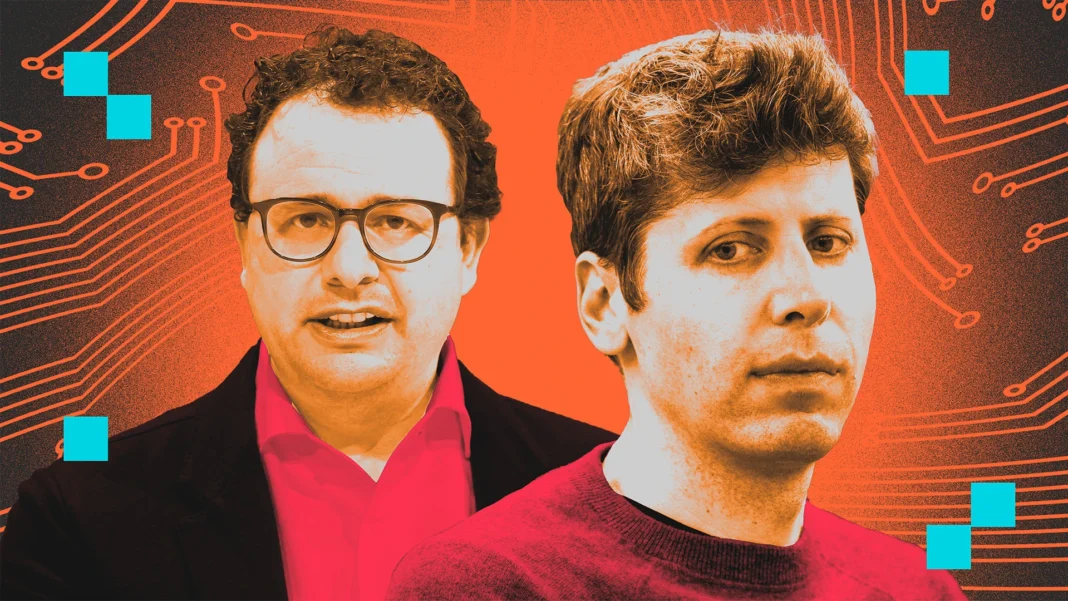


The air was thick with tension as the world’s top AI minds converged on the annual AI Summit, and it wasn’t just the cutting-edge technology on display that had everyone on edge. The usually stoic faces of industry leaders were replaced with stern expressions, as the debate over the future of AI reached a boiling point. At the center of the storm were two of the most influential figures in the AI world: Sam Altman, CEO of OpenAI, and Dario Amodei, CEO of Anthropic. Their clash on stage not only exposed the deep-seated tensions within the AI community but also raised questions about the direction of this rapidly evolving field.
The Stage was Set for a Confrontation
The AI Summit, known for its showcase of the latest advancements in artificial intelligence, has become a premier event for industry insiders and newcomers alike. This year’s gathering was no exception, with keynotes and panel discussions that delved into the intricacies of AI development, its applications, and the ethical considerations surrounding it. The stage was set for a confrontation when Sam Altman and Dario Amodei were announced as the main speakers for the opening session. Altman, known for his advocacy of open AI development, and Amodei, who has been vocal about the need for a more cautious approach, have been on opposite sides of the debate regarding the safety and governance of AI.
The tension was palpable as Altman took the stage, his opening remarks setting the tone for a discussion that would soon become a heated exchange. He emphasized the importance of accelerating AI development to tackle some of humanity’s most pressing challenges, from climate change to healthcare. Amodei, in his response, countered with concerns about the risks associated with rapid AI advancement, highlighting the need for rigorous safety protocols and governance structures to mitigate potential downsides.
A Clash of Visions for AI’s Future
The debate between Altman and Amodei was more than just a difference of opinion; it represented two distinct visions for the future of AI. Altman, representing the “accelerationist” camp, believes that the benefits of AI far outweigh the risks and that the focus should be on pushing the boundaries of what is possible. Amodei, on the other hand, advocates for a more cautious approach, emphasizing the importance of understanding and mitigating the risks before proceeding further. The contrast between their views was stark, with Altman arguing that open development and collaboration are key to unlocking AI’s potential, while Amodei stressed the need for robust safety measures to prevent potential misuse.
The audience was divided, with some nodding in agreement with Altman’s call for action, while others appeared to side with Amodei’s cautious stance. The exchange was not without its moments of levity, but the underlying tension was undeniable. As the discussion progressed, it became clear that this was not just a debate about AI; it was about the values and principles that will guide its development in the years to come.
The Implications of a Divided AI Community
The clash between Altman and Amodei has significant implications for the AI community and beyond. It highlights the deep divisions within the industry regarding the best path forward. As AI continues to evolve at a breakneck pace, the decisions made today will have far-reaching consequences. The debate on stage at the AI Summit was a reflection of a broader conversation that is taking place among policymakers, industry leaders, and the public. As the world watches, the AI community must navigate these complex issues, balancing the need for innovation with the imperative of safety and responsibility.
The question on everyone’s mind as the summit came to a close was: what’s next? Will the industry move towards a more open and collaborative approach, or will caution prevail? The answer, much like the future of AI itself, remains uncertain. One thing is clear, however: the debate sparked by Altman and Amodei’s clash will continue, shaping the trajectory of AI development in ways both seen and unforeseen.
The Implications of Diverging Views
The clash between Altman and Amodei is more than just a disagreement between two influential figures; it represents a deeper divide within the AI community. The divergence in their views on the pace and governance of AI development has significant implications for the future of the field. On one hand, Altman’s push for accelerated development could lead to breakthroughs in areas like healthcare and climate change mitigation. On the other hand, Amodei’s cautionary approach emphasizes the need for safety protocols and governance structures, potentially preventing the misuse of AI.
A closer examination of the data from recent AI developments reveals an interesting trend.
| Category | OpenAI (Altman) | Anthropic (Amodei) |
|---|---|---|
| AI Model Complexity | High | Moderate |
| Safety Protocols | Variable | Robust |
| Development Pace | Rapid | Measured |
The table highlights the differences in approach between OpenAI and Anthropic, with OpenAI pushing the boundaries of AI model complexity and Anthropic focusing on robust safety protocols.
Toward a Balanced Approach
The debate sparked by Altman and Amodei’s clash underscores the need for a balanced approach to AI development. While accelerating progress is crucial, it is equally important to ensure that AI systems are developed responsibly. This involves not only implementing robust safety protocols but also fostering a culture of transparency and collaboration within the AI community. The Partnership on AI, a consortium that includes both OpenAI and Anthropic, is working toward this goal by promoting best practices and standards for AI development.
Moreover, regulatory bodies are beginning to take notice of the need for oversight. The White House Office of Science and Technology Policy has been actively engaged in shaping AI policy, emphasizing the importance of balancing innovation with safety and security. As the AI landscape continues to evolve, it is likely that we will see more formal regulations and guidelines emerge, potentially influencing the trajectory of AI development.
The Future of AI: A Path Forward
As the AI community continues to grapple with the challenges and opportunities presented by this rapidly evolving field, the need for a nuanced and multifaceted approach becomes increasingly clear. The tension between Altman and Amodei’s visions serves as a catalyst for a broader discussion on the future of AI. By acknowledging the validity of both perspectives and working toward a balanced approach, the AI community can navigate the complexities of AI development and ensure that the benefits of this technology are realized while minimizing its risks.
In the end, the clash between Altman and Amodei at the AI Summit serves as a reminder that the future of AI is not predetermined but rather shaped by the choices we make today. As we move forward, it is crucial that we prioritize not only innovation but also responsibility, transparency, and collaboration. By doing so, we can unlock the full potential of AI and create a future where this technology serves the greater good.