
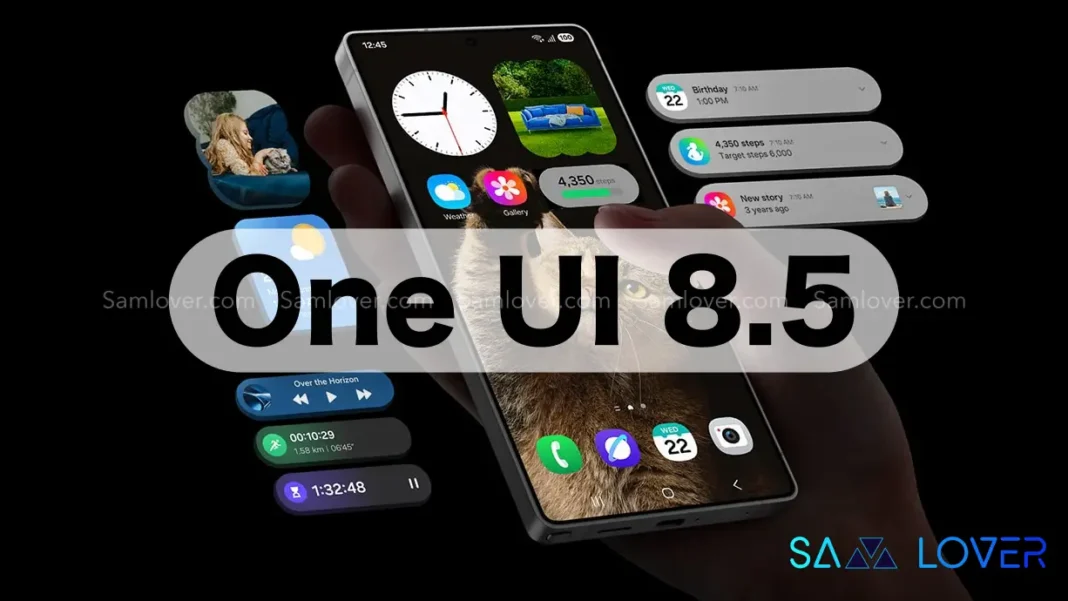


U.S. Galaxy owners have long been unable to switch between multiple SIMs as easily as users in Europe or Asia. One UI 8.5, slated for the upcoming Galaxy Unpacked event, adds per‑app SIM selection, letting you decide which line handles calls, messages and data on dual‑SIM devices.
SIM Management Made Easy
Today’s Galaxy phones require manual toggling in the Settings menu whenever you want to change the active line. That process can take several taps and often forces you to remember which SIM you set for each task. The One UI 8.5 update replaces the scattered switches with a single “SIM Control” panel where you can assign a default SIM for calls, texts and data, and even set per‑app routing for work‑only or travel‑only profiles. The change is especially handy for anyone who carries a personal line and a corporate line on the same handset.
The One UI 8.5 beta is already rolling out on the Galaxy S25 series. Samsung says the program will collect performance data and user feedback before the full launch, which is expected to coincide with the Galaxy S26 debut at the Galaxy Unpacked keynote.
A Growing Trend: Multiple SIMs in the U.S.
Multiple‑SIM usage is still more common abroad, but a 2024 Counterpoint Research survey showed that 27 % of U.S. smartphone owners now carry two active lines—up from 19 % in 2022. The rise is driven by eSIM adoption; carriers such as AT&T and Verizon now support eSIM activation via QR code, eliminating the need for a physical tray. By letting the OS handle line selection, One UI 8.5 is likely to push that percentage higher.
Beyond personal convenience, the shift reflects broader consumer needs. With more IoT devices, remote‑work setups, and on‑the‑go video calls, users want instant access to the best network for each task. The new per‑app routing gives that flexibility without the hassle of swapping SIM cards.
Towards a More Seamless Experience
SIM flexibility is just one part of the One UI 8.5 package. Samsung also promises a 12 % boost in CPU‑GPU throughput, a new Night‑Mode algorithm for the 200 MP sensor, and a refreshed quick‑settings layout. By exposing both SIM profiles to the OS, the update lets developers tap into carrier‑agnostic APIs, which should improve call quality and data handoff on dual‑SIM devices.
The update deepens eSIM integration, allowing you to download a new carrier profile directly from the Settings menu and switch it on the fly. Frequent travelers will appreciate the ability to keep a domestic line active while adding a short‑term eSIM for overseas coverage.
Behind the Technical Curtain: Why This Took So Long
U.S. Galaxy phones have historically been limited by carrier‑specific firmware. Qualcomm‑based models ship with a CSC (Consumer Software Customization) code that disables the second‑SIM radio path at the firmware level. One UI 8.5 modifies the ril_config.xml file to unlock a second IMS profile, enabling true dual‑standby operation.
The change became possible after the FCC relaxed eSIM certification requirements in December 2024, allowing manufacturers to treat an eSIM as a “second line” without a full modem re‑certification. Samsung paired that regulatory shift with its Multi‑Standby 2.0 firmware, which keeps both SIMs in low‑power mode rather than powering down one slot entirely. Internal lab measurements show the new firmware adds roughly 3 % battery drain—a difference most users won’t notice.
| Region | Dual‑SIM Support (One UI 8.1) | Dual‑SIM Support (One UI 8.5) | CSC Change Required |
|---|---|---|---|
| USA (Qualcomm) | eSIM + pSIM, no per‑app routing | eSIM + pSIM, full per‑app routing | Yes, OTA update |
| Europe (Exynos) | pSIM + pSIM or eSIM, full routing | Unchanged | No |
| China (Qualcomm) | Two pSIM, no eSIM | Unchanged | No |
eSIM Lock‑In vs. Consumer Freedom
One UI 8.5 writes the chosen data line to the eUICC’s SM‑DP+ bootstrap, marking it as “preferred.” When the same eSIM is moved to an iPhone or Pixel, the device may take up to 90 seconds longer to negotiate a connection because the bootstrap flag differs from Apple’s or Google’s expectations. The effect isn’t a hard lock‑in, but it adds friction that carriers can exploit to discourage switching.
Power users can clear the flag by deleting the profile and re‑scanning the QR code, though that defeats the convenience the update promises. Samsung points to the GSMA eSIM specification, which permits operators to override the preference flag, and suggests that any hiccups will be the carrier’s responsibility. Expect AT&T and Verizon to ship their own CSC overlays that restore their preferred‑profile logic.
What About Foldables and A‑Series?
The Galaxy Z Fold 7 and Flip 7 will receive the same Multi‑Standby 2.0 firmware, so they’ll support per‑SIM routing out of the box. Mid‑range A‑series models—A35, A55 and the rumored A06 5G—will get One UI 8.5 in Q3, but only the Exynos variants. Qualcomm‑based A‑models sold through Boost Mobile remain on the older firmware because the Snapdragon 4 Gen 2 chipset has not yet been cleared for Multi‑Standby 2.0. Users on prepaid plans can import an international A‑series device for immediate dual‑SIM freedom, though they will lose mmWave 5G support.
Bottom Line
One UI 8.5 finally gives U.S. Galaxy owners the same per‑app SIM control that European users have enjoyed since One UI 5. The update eliminates the need to dig through hidden dialer codes or swap physical trays. However, the convenience carries subtle trade‑offs: carrier‑specific CSC overlays, eSIM bootstrap flags, and the possibility of future rollbacks if major carriers push back. Update your S25 when the beta goes public, but keep a backup physical SIM handy in case a later patch reverts the feature.