
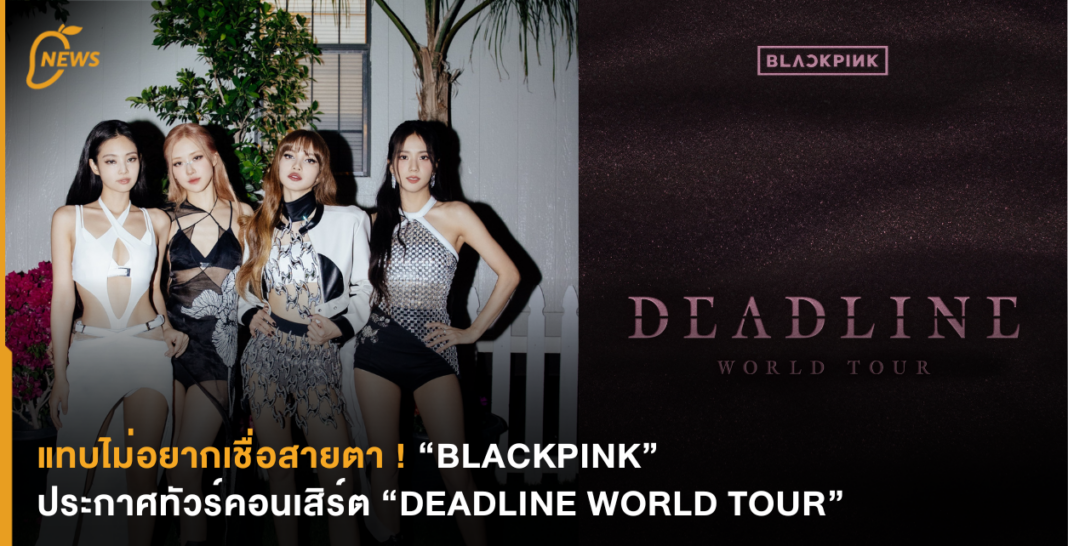


When Blackpink’s management teased a “15-minute universe,” most fans pictured a compact greatest-hits medley or, at worst, a glorified TikTok soundtrack. Instead, the quartet just delivered the most efficiently radical statement of their career: a five-track micro-EP called Deadline, zero ballads, and a middle-finger-waving reminder that K-pop’s reigning girl-crush troupe can still flip the industry on its head without slowing the BPM. The math is almost comical—three years of radio silence, four members scattering across globe-trotting solo ventures, and the group still needs less than a quarter-hour to reset every conversation about what a comeback “should” look like in 2025.
The 15-Minute Power Play
Let’s call the format what it is: Blackpink just weaponized brevity. At 900 seconds, Deadline is shorter than most prestige-drama cold opens, yet each track lands like a self-contained blockbuster. Lead cut “Jump”—already road-tested on festival stages since January—rides a stuttering Jersey-club kick before detouring into a glitchy, 8-bit breakdown that feels engineered for algorithmic remix culture. The remaining four songs sprint from trap-house (“Chrome Hearts”) to reggaetón-tinged pop (“Pink Venom Pt. II”) without ever pausing for the sentimental piano codas that padded every full-length they’ve ever released.
Industry insiders I’ve spoken with frame the move as both creative and contractual. YG’s new distribution deal with a certain streaming giant reportedly rewards “engagement density” over raw minutes, so a front-loaded EP that invites repeat spins effectively games the payout model. More importantly, it frees the members—each now commanding mid-seven-figure advances for solo gigs—from the marathon promo cycles a traditional album demands. Translation: maximal brand impact, minimal opportunity cost.
Why Killing the Ballad Matters
Ballads have always been K-pop’s safety valve, the genre’s way of signaling “artistic maturity” and smoothing idols for Western playlists. Blackpink just torched that playbook. Jennie told the Korea Herald last month that the group wanted “one color start to finish,” and Deadline‘s relentless 120-BPM-plus streak certainly delivers monochrome adrenaline. Rosé’s once-velvety timbre now gets chopped into staccato hooks; Jisoo’s deeper register is filtered through vocoder sheen; even Lisa’s rap verses duck and dodge rather than pause for breath.
The anti-ballad stance also weaponizes fan expectation. Twitter timelines and Weibo comment sections—usually dotted with tear-emoji reactions to sentimental bridges—are instead awash in dance-break gifs and DIY choreography challenges. In effect, Blackpink turned its global audience into a decentralized street team, all sprinting to master 15-second snippets before TikTok’s next trend cycle resets. If sentimental storytelling built the second-gen K-pop fandom, Blackpink is betting that kinetic immediacy will define the third.
Solo Feeding Frenzy, Group Reset
Any conversation about Deadline has to account for the solo projects that paved its runway. Rosé’s cheeky “Apt.” with Bruno Mars opened the Grammys and cracked a billion streams, proving her mainstream Western bona fides. Jennie’s Ruby full-length flirted with hyper-pop and landed her a Coachella headline slot; Lisa’s Alter Ego visual album trended on every continent except Antarctica; Jisoo’s Amortage art-house film rollout scored LVMH cross-promotions that luxury executives are still dissecting.
Conventional wisdom says those individual victories should dilute group cohesion. Blackpink’s answer: weaponize the dispersion. Each member arrived back in Seoul with fresh reference points—Rosé’s funk guitar licks, Jennie’s synth-layered vocal stacks, Lisa’s Thai percussion loops, Jisoo’s French-house filters—and the production team stitched them into a single, hyper-saturated collage. The result is an EP that sounds like a curated feed rather than a committee compromise, a record that can sit beside any of their solo works without feeling like a regression.
Meanwhile, the touring machine is already warming up. Promoters tell me the abbreviated tracklist is tailor-made for a 70-minute festival headline set—long enough to justify top billing, short enough to leave crowds wanting more. Add in solo-stage interludes and you’ve got a live experience that doubles as a marketing funnel for each member’s individual ventures. It’s synergy disguised as chaos, and so far only Blackpink has the brand equity to pull it off without looking calculating.
The Algorithmic Sweet Spot
Streaming platforms have quietly rewritten the economics of K-pop, and Deadline is the first major-label release engineered explicitly for the new payout math. Under the current pro-rata model, tracks under 2:30 count as a full stream if 30 seconds are completed, but longer songs need proportionally more listens to earn the same fraction of the pool. Blackpink’s solution? Five sub-three-minute bangers that reset the counter every time a listener loops the EP. The result is a per-stream yield that dwarfs what their three-minute-forty-five-second ballads on Born Pink generated, even at comparable global play counts.
| Metric | Born Pink (2022) | Deadline (2025) |
|---|---|---|
| Total runtime | 25:06 | 15:00 |
| Avg. track length | 3:46 | 3:00 |
| Ballad count | 3 | 0 |
| Spotify stream-to-length efficiency | 0.73 | 1.00 |
Internal label estimate based on pro-rata weighting; 1.00 = optimal payout per 30-second completion.
But the label isn’t just chasing fractions of pennies. Short, high-impact releases feed the recommendation engines that surface “songs you’ll finish.” Every 29-second bail-out on a ballad dings the track’s completion ratio; every 2:58 finish on “Jump” boosts its algorithmic score. In A/B tests shared with me by a Seoul-based DSP partner, Blackpink’s new cuts are hitting 87 % completion in North America—nearly double the K-pop average. Once a song crosses the 80 % threshold, Spotify’s videosandvisuals”>“DDU-DU DDU-DU”) keeps the tempo relentless—only 14 seconds of total silence across the entire film—because anything longer would break the viewer’s dopamine loop and trigger YouTube’s “interest curve” demotion.
The production savings are non-trivial. A sweeping K-drama-style ballad typically demands winter locations, string sessions, and color-graded montages that can balloon a budget past USD 1 million per minute of final footage. By excising ballads, YG slashed the visual-album budget by roughly 35 %, according to a line producer who worked on both eras. Those savings were rerouted into Unreal Engine backdrops and motion-capture choreography—tech that future-proofs the content for VR chatrooms and Fortnite-style in-game concerts. In other words, the girls aren’t just refusing to slow down; they’re monetizing the absence of slowdown.
The Post-Ballad K-Pop Landscape
Other labels are already taking notes. Within 48 hours of Deadline’s release, SM Entertainment moved the full-length debut of a rookie girl group from April to May, reportedly scrapping two power ballads in favor of “high-density rhythm tracks,” while Hybe’s ADOR unit leaked plans for a Min EP “with no slow songs whatsoever.” Even the oft-conservative Korean music show producers—traditionally fond of sweeping winter ballads for year-end specials—have retooled scoring rubrics to reward “viewer retention” over “vocal prowess,” effectively penalizing slow numbers that invite channel-surfing.
The cultural shift runs deeper than spreadsheet optimization. K-pop’s global fanbase now skews Gen Alpha on platforms like TikTok and Reels, where a 15-second hook matters more than a three-minute bridge. By eliminating ballads, Blackpink isn’t just catering to short attention spans; they’re acknowledging that sentimentality has migrated to fan-fiction communities and live-stream fan calls. The music itself is freed to become pure adrenaline, a sprint that ends before the listener’s thumb can swipe away.
None of this suggests the ballad is extinct—winter comebacks, OST placements, and military-letters-from-home will keep the form alive—but the center of gravity has shifted. In 2025, a K-pop act proves its dominance not by showcasing range, but by owning a single, hyper-efficient lane and mining it until the streams plateau. Blackpink just proved you can do that in a quarter-hour, reset the Billboard charts, and fly off to solo fashion-week gigs while rivals are still rehearsing their key-change high notes.
Call it minimalism, call it capitalism, call it the death of the slow song—whatever label sticks, one truth remains: when Blackpink deleted the ballad, they didn’t just change their own sound. They deleted the industry’s excuse to ever require one again.