
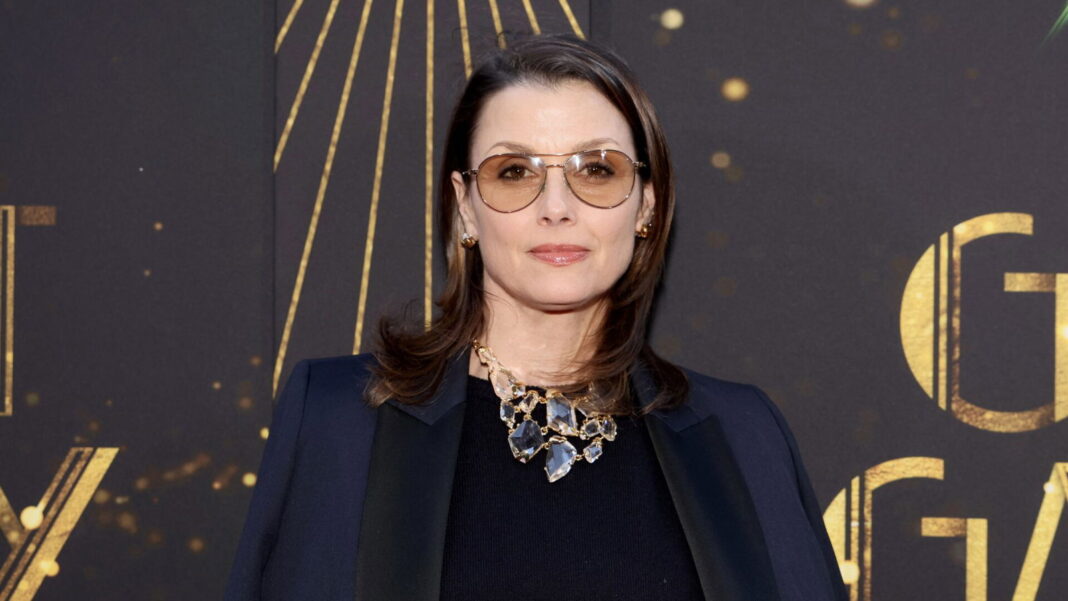


The fluorescent lights of a fictional locker room flicker to life, casting long shadows across a playbook scattered with dreams and desperation. Bridget Moynahan steps into her most compelling role yet, as the Blue Bloods veteran has officially joined Hulu’s upcoming NFL drama “The Land” as a series regular, bringing her trademark steel-spined grace to a world where family legacies collide with the brutal business of professional football.
This isn’t just another sports drama trading on touchdowns and turf wars. Created by Dan Fogelman—the mastermind behind This Is Us—the series promises to peel back the laminated play cards and reveal the human hearts beating beneath shoulder pads and press conferences. Set against the backdrop of a team loosely inspired by the Cleveland Browns, the show explores what happens when the price of victory extends far beyond the scoreboard, reaching into living rooms and family trees where the real games are played.
A Dynasty Built on Broken Dreams
William H. Macy’s team owner paces the executive suites like a general surveying his battlefield, but the true emotional battlefield lies in the wreckage of relationships left scattered across decades. Moynahan’s Belinda emerges from this debris as more than just another ex-wife trope—she’s the keeper of memories, the holder of secrets, the woman who once believed in the dream before watching it morph into something unrecognizable.
The genius of Fogelman’s storytelling has always been his ability to find the extraordinary in ordinary moments—a father’s trembling hand during a daughter’s wedding, a couple’s silent conversation across a crowded room. Now he’s turning that perceptive lens on professional football, where the stakes feel impossibly high yet the emotions remain universally recognizable. Belinda’s presence haunts the sidelines not through bitter vendettas, but through the quiet dignity of someone who helped build an empire only to watch others wear the crown.
Chris Meloni’s Danny—the team’s head coach and Belinda’s former husband—carries the weight of every broken promise in the lines etched around his eyes. Their shared history becomes a living thing, pulsing beneath locker room pep talks and late-night film sessions, reminding us that behind every great dynasty lies a trail of personal casualties. Moynahan and Meloni’s on-screen chemistry promises to deliver those small, devastating moments Fogelman excels at: the loaded silence after an argument, the way ex-lovers speak in shorthand about shared wounds.
The Women Who Hold the Line
In most sports narratives, women exist on the periphery—supportive wives, patient daughters, understanding girlfriends who wait by phones and watch from stands. But “The Land” seems poised to disrupt this tired dynamic, placing Belinda at the very center of the storm. She’s not waiting for anyone’s permission to matter; her relevance stems from being present at the creation, from understanding both the intoxicating rush of victory and its bitter aftertaste.
The series arrives at a moment when the NFL itself grapples with its complicated legacy—its treatment of players, its relationship with cities that bleed team colors, its evolution from simple entertainment to billion-dollar enterprise. Through Belinda’s eyes, we glimpse the human cost of this transformation: the marriages that couldn’t survive the pressure, the children who grew up in the shadow of larger-than-life fathers, the women who learned to build their own empires from the rubble of someone else’s dreams.
Produced by 20th Television and Skydance Sports, with Fogelman, Jess Rosenthal, and Kevin Falls steering the ship, “The Land” represents streaming television’s continued fascination with the stories behind the stories. It’s not about the game-winning touchdown or the championship parade—it’s about the 3 AM phone calls, the teenage son who stops returning texts, the wife who realizes she’s been sleeping next to a stranger wearing her husband’s face.
Moynahan’s casting feels particularly inspired here. After twelve seasons navigating the complex family dynamics of the Reagan clan on Blue Bloods, she brings an intimate understanding of how loyalty and legacy intertwine, how the weight of tradition can both elevate and crush those who carry it forward. Her Belinda won’t be defined by her relationship to powerful men but by her own journey through the complicated terrain of love, ambition, and the price of staying true to oneself when everything else falls away.
The Architecture of a Football Family
Football dynasties aren’t born—they’re engineered from raw ambition, sacrifice, and the kind of love that bruises as much as it builds. In Belinda’s world, Sunday victories came at the cost of Thursday dinners, and championship rings couldn’t fill the empty space at kitchen tables. Moynahan brings to this role the same quiet authority she wielded as Erin Reagan, but here it’s tempered by something deeper: the weight of roads not taken, of dreams deferred until they calcified into something harder.
The show’s DNA mirrors the Cleveland Browns’ own tortured history—four decades without a championship, a city that keeps believing despite evidence to the contrary. This isn’t incidental; it’s the very marrow of Fogelman’s narrative. The team’s perpetual rebuilding becomes a metaphor for families trying to reconstruct themselves from the same broken pieces, hoping this time the foundation will hold.
When Chris Meloni’s Danny stalks the sidelines, he’s not just managing a football team—he’s orchestrating redemption for an entire region, carrying the hopes of fathers who’ve passed down their season tickets like family heirlooms. His ex-wife Belinda understands this burden intimately; she once stood beside him, shoulder-to-shoulder against the world, before the game demanded more than she could give.
The Ex-Wife Who Refused to Disappear
Television has long trafficked in disposable ex-wives—convenient plot devices who vanish after serving their narrative purpose. But Belinda occupies a more complex space, haunting the corridors of power like a ghost who refuses to stay conveniently dead. She’s the keeper of the origin story, the woman who remembers when Danny was just a scared kid with a clipboard and a prayer, before the press conferences and the million-dollar contracts transformed him into something she barely recognizes.
Moynahan’s casting feels almost predestined. Throughout her career—from her breakout role in Sex and the City to her decade-long tenure on Blue Bloods—she’s excelled at portraying women who maintain their dignity while navigating systems designed to diminish them. Belinda requires this same steely resolve, but filtered through the specific exhaustion of someone who’s watched love curdle into something that sustains itself on shared history rather than shared dreams.
Their adult children—teetering on the precipice between loyalty and self-preservation—become the true battleground. In one devastating scene glimpsed in early footage, Belinda confronts her daughter about choosing between parents who’ve weaponized their pain. “You think I left him,” she says, her voice cracking with decades of controlled fury. “But he left us the moment he decided the game mattered more than anything breathing outside of it.”
The Fogelman Touch: Finding Epic in Intimate Moments
What elevates “The Land” beyond typical sports drama is Fogelman’s gift for recognizing that the most consequential plays happen nowhere near the field. His previous work on This Is Us proved he could mine operatic emotion from mundane moments—a father’s nervous joke, a mother’s worried glance across a hospital waiting room. Here, that same perceptive eye turns toward the peculiar ecosystem of professional football, where millionaire athletes and billionaire owners play games whose outcomes determine whether strangers across Ohio will greet Monday with hope or despair.
The show’s genius lies in understanding that football isn’t really about football—it’s about belonging, about claiming identity through tribal affiliation, about fathers and sons finding common ground in shared allegiance to laundry. When Belinda watches her grandchildren don jerseys with their grandfather’s name, she’s witnessing the cycle begin anew, watching history prepare to repeat its familiar pattern of devotion and disappointment.
Early episodes promise to explore the peculiar limbo of ex-wives in football families—neither fully inside nor outside the dynasty they helped build. Belinda retains her season tickets out of stubbornness rather than sentiment, sitting in seats that once felt like thrones but now feel like witness stands. Around her, the stadium becomes a living museum of her former life, each section holding some ghost of Christmas past: the section where she nursed babies, the aisle where she learned to walk alone again.
The Final Score
Great television understands that the most compelling dramas unfold in the space between what we say and what we mean, between the face we present to the world and the one that stares back from bathroom mirrors at three in the morning. “The Land” arrives at a moment when football itself seems caught in similar existential crisis—questioning its purpose while clinging to traditions that feel increasingly hollow.
In Moynahan’s hands, Belinda becomes our surrogate conscience, the character who sees through the mythology to the human cost beneath. She embodies the show’s central tension: how do we love something that keeps breaking our hearts, whether it’s a football team, a family, or the person we once promised to grow old with? Her presence guarantees that for all the show’s testosterone-fueled pageantry, its truest moments will happen in quiet conversations, in looks that last a second too long, in the courage required to keep showing up even after you’ve learned how the story ends.
This isn’t just television about football. It’s television about the stories we tell ourselves to survive Sunday, and the Monday morning reckoning that always follows.