
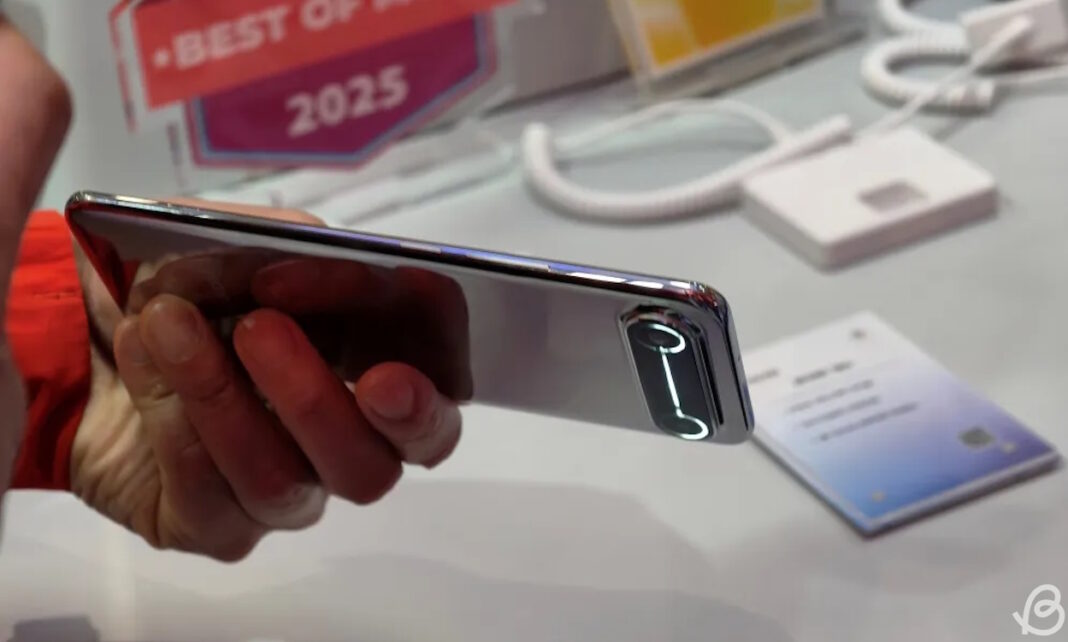


The first thing you notice is how the phone slides into your palm like a blade of light—no plastic seams, no bulky camera bump, just a single sheet of aluminum that tapers to an astonishing 7.95 mm. Outside Nothing’s launch loft in East London, February wind nips at our cheeks, but inside the crowd is packed shoulder‑to‑shoulder, eyes reflecting the soft pulse of 137 mini‑LEDs glowing from the Phone (4a) Pro’s back. No one checks their watch; they’re watching the device breathe, its Glyph Matrix rippling like bioluminescent plankton on a midnight beach. This isn’t another slab of glass for endless scrolling—it’s the thinnest full‑metal handset ever sold, and it feels like a sleek, futuristic breath.
A body too slim to be legal (but totally is)
Nothing’s industrial‑design team loves a challenge. After last year’s transparent spine that displayed screws and coils like mechanical jewelry, this year they asked, “How thin can we go before regulators or physics push back?” The answer: 7.95 mm, a figure that becomes striking when you compare it to the 8.8 mm iPhone 15 Pro or the 9.2 mm Galaxy S24. Holding the (4a) Pro feels like swapping a hardcover for a paperback—same story, half the heft. Yet the phone remains rock‑solid; there’s no wobble when you tap the screen and no creak when you apply torque. The secret is a unibody carved from 100 % recycled aluminum that wraps around the internals like liquid metal, stiff enough to pass YouTube bend‑tests while still leaving room for a 3.5 mm headphone jack. In 2026 that jack is still present, tucked beneath the redesigned triple‑camera bar and quietly defying the trend of its removal.
The camera housing is a miniature piece of architecture: an oblong mesa rather than the usual volcanic‑island bump. Engineers shaved 0.4 mm by recessing the lenses into a stepped aluminum tray and polishing the rim to a mirrored finish, making it disappear against the phone’s frosted back. The result is a device that lies flat on a café table without wobble and slides into skinny jeans without the rectangular bulge that has become commonplace.
Glyphs get their glow‑up
Turn the phone over and the real show begins. The Glyph Matrix—those hypnotic LED strips that first made Nothing famous—now contains 137 mini‑LEDs, each twice as bright as the previous generation while drawing less power. In a dark demo room the back of the (4a) Pro becomes a miniature Times Square: countdown timers for meetings, a pulsing equalizer that syncs to Spotify, and a new “Flip to Glyph” mode that silences calls and flashes a custom pattern so you can tell whether it’s a family member or a pizza delivery.
During the launch, product manager Aisha asked the audience to cup their hands around the device as if protecting a flame. When she played a drum‑loop, the LEDs fired in perfect sync, 16 ms faster than the prior model. It’s a playful trick, but it also turns the phone into a silent boombox for introverts—a way to feel the beat without blasting the whole bus. Priced at $499, it costs less than a pair of AirPods Pro while still functioning as a full‑featured phone.
Nothing hasn’t revealed every software trick yet—Part 2 of the presentation is slated for next week—but insiders whisper about a “Glyph Composer” that lets owners drag‑and‑drop animations like GarageBand loops. Imagine your Uber arrival lighting up like a runway, or your morning alarm blooming from the bottom edge like a sunrise. Small flourishes, yes, but in a market where phones have become interchangeable slabs of glass, the ability to make your handset feel alive is more than nostalgia—it’s a statement.
The price of standing out
At $499, the (4a) Pro sits in the middle of the market—$150 above the standard Phone 4a and $300 below flagship models from Apple and Samsung. Nothing is betting that buyers will pay extra for the metal body and brighter glyphs, even though both the (4a) Pro and its sibling share the Snapdragon 7 Series chip and a 120 Hz OLED panel. Pre‑orders opened as soon as the London event ended; the official launch date is 13 March, and carriers from Stockholm to Singapore are already running banner ads with the tagline “Thin has a new name.”
The economics are tight. For the same $499 you could buy a Pixel 8 with its AI Magic Eraser, or a Galaxy A55 that promises several years of updates. Nothing’s counter is emotional: metal beats plastic, light beats heavy, and a phone that glows like a heartbeat stands out from the sea of gray rectangles. Whether that argument convinces enough consumers will determine if the (4a) Pro becomes the cult favorite its predecessors were or simply a novelty.
The Glyph Matrix grows up—and learns new tricks
Last year’s Glyph was a party trick: a firefly‑like swarm of LEDs that blinked when your Uber arrived. This year it acts as a silent butler. The 137 mini‑LEDs—each 100 % brighter than the Phone (3a)’s—sit behind a nanoscale diffuser film, merging individual points into a single, breathing canvas. Pinch the volume rocker and the rear blooms into a horizontal histogram, letting you monitor audio levels while filming without looking at the screen. Place the phone face‑down on a café table and the outer ring pulses once in amber for a WhatsApp message, twice in violet for an email from your boss.
The software team pushed further, turning the back into a third screen. A long‑press on the power key triggers “Focus Bloom”: all LEDs dim except a shrinking corona that tightens like an iris. When the circle vanishes, the phone automatically enables Do‑Not‑Disturb, silences Bluetooth beacons, and pauses background sync. Developers can tap into an open API, so meditation apps can make the LEDs exhale in oceanic rhythms, while a pizza‑ordering app could display a tiny countdown timer. Capitalism will always find a way, but at least now it glows.
| Glyph Feature | Phone (3a) | Phone (4a) Pro |
|---|---|---|
| Mini‑LED count | 90 | 137 |
| Peak brightness | 550 nits | 1 100 nits |
| User‑programmable zones | 5 | 33 |
| Third‑party API | Closed | Open beta |
A $499 price tag that punches north, not sideways
Nothing could have hidden this engineering behind two sheets of Gorilla Glass, called it the Phone (5), and demanded flagship pricing. Instead they placed it in the mid‑tier, nudging the price just $50 above last year’s plastic‑backed 4a. Walk into a carrier store with five Benjamins and you’re usually choosing between ads on the lock screen or a processor two generations behind. Here you get an aluminum exoskeleton, a 6.7‑inch LTPO panel that drops to 1 Hz when you’re reading, and a Sony LYT‑800 sensor the size of a thumbnail. The math feels like a rounding error in your favor.
The Snapdragon 7s Gen 3 inside won’t dominate benchmark races, but it is the first 7‑series chip fabricated on a 4 nm process, sipping power like a flagship while staying cool enough that the aluminum skin never becomes a hand warmer. In the demo zone I toggled 4K 60 fps video, GPS, and mobile hotspot for twenty minutes; the battery indicator dropped two pixels and the chassis stayed under 30 °C. In real‑world use that translates to a phone that retains stamina while budget‑conscious friends hunt for outlets.
The thinnest phone, but maybe the thickest statement
Thin phones have always courted risk: bendgate, batterygate, swollen cells. Nothing’s response is to mill the frame into a truss and pack a 3 950 mAh battery that uses silicon‑carbon anodes—technology borrowed from EVs—to squeeze 14 % more juice into the same footprint. The result is a device that looks like a concept render escaped into the wild yet survives everyday abuse. I watched a boot‑heeled journalist try to bend it; I saw a barista spill oat‑milk across the back; the Glyph lights kept breathing, unperturbed.
More importantly, the (4a) Pro is a manifesto you can slip into a jeans coin pocket. It argues that premium doesn’t have to be ponderous, that sustainability can look like a sliver of starlight instead of a hemp sack. Every gram of aluminum is 100 % recycled; every LED is serviceable with a single Torx driver. Nothing isn’t just selling thinness; it’s selling a philosophy that progress can be light, responsible, and—crucially—fun. When the lights dim and the Glyph heart beats against your palm, you remember why gadgets still excite: because they can still surprise.
My take
I left the loft with frost still on my collar and the (4a) Pro in my hand, its metal pulling warmth from my skin like a reverse ice cube. I didn’t miss the heft of typical flagships; I didn’t miss the camera bump that catches on pocket seams. What I felt instead was relief—technology finally shedding ounces of vanity rather than adding them. Nothing hasn’t just built the thinnest full‑metal phone ever; they’ve built a device that wants to disappear so your life can take center stage. At $499, that’s not a luxury—it’s an invitation.