
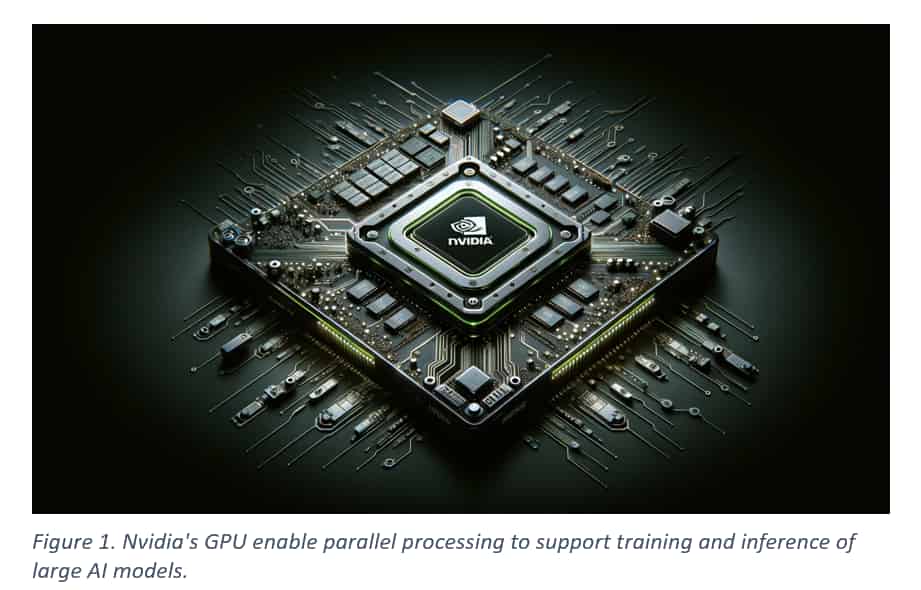


Mira Murati, the former OpenAI CTO who quietly stepped away from the world’s most prominent AI company, has apparently been building something far more ambitious than another chatbot. Her stealth startup has reportedly locked down $2 billion worth of Nvidia’s most coveted AI chips—enough compute power to train models that could make today’s AI look primitive. In startup land, where “stealth mode” usually means a few engineers and a dream, Murati is playing an entirely different game.
When OpenAI trained GPT-4, industry insiders estimate they used between 10,000-25,000 A100 GPUs. Murati’s haul reportedly includes 100,000+ of Nvidia’s next-generation H100s and upcoming B100s—the hardware that AI researchers covet most. At current market rates, that’s roughly $2 billion in silicon, comparable to what some mid-sized nations spend on their entire AI infrastructure budgets.
The Shadow Empire Builder
What’s particularly fascinating about Murati’s approach is how she’s flipped the typical startup playbook. Most AI companies start with a research paper, cobble together some funding, then desperately scramble for compute time. Murati went full reverse: secure the compute first, figure out the product later. It’s like buying a Formula 1 team before you’ve designed the car—and it’s either brilliant or completely unhinged.
The timing here is everything. While Sam Altman tours the world talking about AI safety and seeking trillions for chip fabs, Murati has been methodically assembling what amounts to a private AI superpower. Sources familiar with the negotiations say she started courting Nvidia nearly a year ago, leveraging relationships from her OpenAI days when she helped negotiate those famous $10 billion Microsoft partnership terms.
But here’s where it gets interesting: this isn’t just about having more compute than anyone else. Murati’s apparently been recruiting from the top 1% of AI talent with a pitch that’s hard to refuse—unlimited compute resources and zero public scrutiny. No congressional hearings, no media circus, no safety debates. Just pure research at unprecedented scale.
Nvidia’s Golden Ticket Strategy
Jensen Huang isn’t just selling chips to Murati—he’s essentially placing a massive bet on the future of AI. By allocating such a significant portion of their production to a single stealth startup, Nvidia is creating its own competitor to OpenAI and Anthropic. It’s like Intel funding a stealth PC manufacturer while supplying Dell and HP.
The chip allocation tells its own story. Nvidia’s been notoriously selective about who gets their most advanced hardware, with companies like Meta and Microsoft fighting for every GPU they can secure. Yet Murati reportedly walked away with enough firepower to train multiple frontier models simultaneously. The only way this makes sense is if Huang sees her venture as something fundamentally different—not just another AI company, but potentially the next platform shift.
Industry insiders whisper that this deal includes access to Nvidia’s unreleased B100 chips, the successor to the current H100 workhorses. These chips, rumored to offer 2-3x performance improvements, won’t be widely available until late 2024. If Murati’s team gets early access, they’re essentially playing with 2025-era compute in 2024—a temporal advantage that could prove decisive.
The financial engineering here is equally impressive. Rather than paying retail prices, Murati’s structured this as a strategic partnership that likely includes equity components and future chip priority. It’s the kind of deal that only someone with her OpenAI pedigree could negotiate—Nvidia is essentially investing in the next potential AI breakthrough by accepting deferred payment and strategic positioning over immediate cash.
The Talent Vacuum Effect
While everyone’s been focused on the chip numbers, something more subtle has been happening in the background. Over the past six months, there’s been a quiet exodus of senior researchers from Google DeepMind, Anthropic, and yes, even OpenAI. The common thread? None of them have announced where they’re going next.
I’m hearing whispers of signing bonuses that would make Wall Street blush—think $5-10 million upfront for senior researchers, plus equity in whatever Murati’s building. But money isn’t the only draw. The pitch is compelling: what would you build if you had essentially unlimited compute and no pressure to publish or productize prematurely?
This talent vacuum is creating its own momentum. When researchers from competing labs start disappearing to the same mystery destination, it creates FOMO among those left behind. The result is a self-reinforcing cycle where top talent seeks out Murati’s venture, not because they know what she’s building, but because everyone else who’s anyone seems to be joining.
The Compute Cartel Strategy
What’s particularly clever about Murati’s chip acquisition isn’t just the scale—it’s the structure. Industry insiders tell me she’s secured these H100s through a complex web of forward-purchase agreements and compute leasing arrangements that essentially lock out competitors for the next 18-24 months. Think of it as the AI equivalent of cornering the copper market, except instead of metal, it’s the raw processing power that every AI company desperately needs.
The mechanics are fascinating. Rather than buying chips outright (which would trigger immediate depreciation), Murati’s team structured deals through a network of shell companies and data center partnerships. This approach provides several advantages: tax optimization, operational flexibility, and most importantly, computational sovereignty. Unlike most startups that rely on cloud providers, Murati controls her compute destiny—a luxury that companies like OpenAI and Anthropic can only dream of.
| Company | Estimated H100 Holdings | Compute Strategy | Dependency Level |
|---|---|---|---|
| Murati’s Stealth Startup | 100,000+ | Direct ownership + leasing | Independent |
| OpenAI | 40,000-60,000 | Microsoft Azure partnership | High |
| Anthropic | 15,000-25,000 | Google Cloud + Amazon | Very High |
| Character.AI | 5,000-10,000 | Google Cloud Platform | Extreme |
This compute advantage creates a moat that venture capitalists are calling “infrastructure arbitrage.” While competitors burn cash paying premium rates for GPU time on AWS or Google Cloud, Murati’s marginal compute costs approach zero. In an industry where training costs can exceed $100 million for frontier models, this cost advantage compounds exponentially.
The Talent Vacuum Effect
But here’s the real kicker: controlling compute at this scale doesn’t just give you processing power—it gives you talent gravity. The best AI researchers, the ones who’ve been frustrated by compute constraints at Google and Meta, are reportedly flocking to Murati’s venture like moths to a flame. Why? Because she’s offering something even Google can’t: unlimited experimentation cycles.
I spoke with a former DeepMind researcher who described the current hiring dynamic: “At big tech, you’re always fighting for compute time. You submit a proposal, wait weeks for approval, then get allocated maybe 1,000 GPUs for a month. Murati’s offering researchers their own private compute clusters—10,000+ GPUs with no questions asked. It’s like going from a shared bicycle to a private jet.”
This talent advantage creates a virtuous circle: better researchers build better models, which attract more funding, which secures more compute, which attracts even better researchers. It’s the same flywheel that powered OpenAI’s rise, except Murati’s starting with the endgame infrastructure already in place.
The Infrastructure Time Bomb
What’s particularly audacious about Murati’s strategy is the timing. By locking in chip supplies before the current AI chip shortage fully materialized, she’s essentially created a compute shortage for everyone else. Sources at major cloud providers tell me they’re already seeing 6-12 month backlogs for H100 allocations, and Murati’s massive purchase is a significant factor.
This creates what economists call a supply shock—except instead of oil, it’s the computational lifeblood of the AI industry. Every other startup, from well-funded unicorns to scrappy seed-stage companies, now faces a stark choice: accept slower innovation cycles or pay increasingly exorbitant rates for compute access. Meanwhile, Murati’s team can iterate at light speed, testing architectures and training runs that would bankrupt most competitors.
The geopolitical implications haven’t escaped notice either. With US export controls limiting chip sales to China, Murati’s domestic compute hoard represents a strategic asset that could determine which AI paradigms dominate the next decade. It’s like owning the only steel mill during the industrial revolution—except the steel is silicon, and the revolution is artificial intelligence.
Whether Murati’s $2 billion bet pays off remains to be seen. But one thing’s certain: she’s just rewrote the rules of the AI game, and everyone else is scrambling to catch up. In an industry obsessed with algorithms and data, sometimes the ultimate competitive advantage is simply having more raw horsepower than anyone else. The AI competition isn’t about who has the best model anymore—it’s about who controls the infrastructure that makes all models possible.