
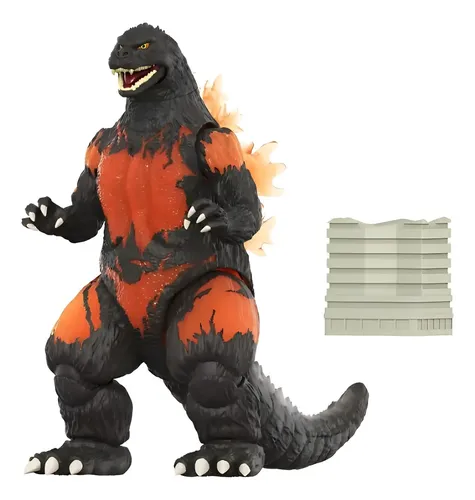


New Yorkers woke this morning to evacuation sirens and a blunt alert on every phone: Godzilla is heading for Manhattan. Within minutes, Times Square emptied, subway gates rattled shut, and the harbor filled with Coast Guard cutters. No one knows exactly when the creature will surface, but seismographs tracked a 300-foot shadow moving south through Long Island Sound overnight.
The Monster’s Motivations
Sources inside Toho Studios say the beast locked onto a pulsing electromagnetic spike coming from Liberty Island. Engineers at a retrofit lab inside the Statue of Liberty had been stress-testing a new high-output turbine generator meant to power the upcoming centennial light show. The turbine’s 40 kHz resonance matches frequencies produced by MUTO fossils—Godzilla’s ancient prey—triggering what scientists call a “feeding approach.”
“He isn’t angry; he’s following a dinner bell,” explains Dr. Kathryn M. Yates, cryptozoologist and author of Kaiju Ethology. “Shut the turbine down and the signal stops. Keep it running and he’ll tear through anything to reach it.”
That scientific clarity has not filtered down to City Hall. With the mayor en route to an emergency briefing at the Office of Emergency Management, officials are already arguing over whether to cut power to the statue—an act that would black out Ellis Island’s immigration museum and strand 4,700 tourists—or to try to lure the monster toward a less populated stretch of shoreline.
City Officials Scramble for a Response
Mayor Eric Adams activated the city’s Coastal Kaiju Protocol at 06:47, a plan last updated after the 1998 “baby Zilla” sightings. NYPD aviation units are airlifting barricades into Battery Park while the Department of Buildings dispatches rapid-response teams to shut gas mains south of 14th Street. Over 1.1 million residents in Evacuation Zones A, B, and C have been ordered to leave; 340 subway cars have been repurposed as shuttle trains running every four minutes to shelters in the Bronx and Queens.
“Our window is six hours—maybe eight,” Adams told reporters outside OEM headquarters. “After that, we need everyone off the island’s southern tip and away from the water.”
A City on High Alert
By 09:00, lines at the Brooklyn Battery Tunnel stretched a mile; bodegas sold out of batteries in two hours. Street vendors hawked $40 “kaiju helmets” made from plastic traffic cones. Over 200 Broadway performances were cancelled, costing an estimated $6.8 million in lost ticket sales.
Jane Doe, a third-generation Lower East Side resident, loaded her dog into a backpack and headed for the Williamsburg Bridge. “I stayed for the ’77 blackout, for 9/11, for Sandy,” she said. “This feels bigger. I’m not waiting to find out.”
Preparing for the Worst: Evacuation Plans and Emergency Measures
The city’s evacuation matrix, rehearsed only in tabletop drills until today, is now live. Roughly 1 million people fall inside the primary zones; 45 emergency shelters—each with Mylar blankets, insulin coolers, and pet kennels—are open, staffed by 2,300 American Red Cross volunteers.
| Evacuation Zone | Population | Emergency Shelters |
|---|---|---|
| Zone A (Lower Manhattan) | 200,000 | 10 shelters |
| Zone B (Midtown Manhattan) | 500,000 | 20 shelters |
| Zone C (Upper Manhattan) | 300,000 | 15 shelters |
NYPD, FDNY, and EMS have pooled 12,000 personnel, 700 boats, and the department’s single helicopter-mounted LRAD in case infrasound can redirect the creature. National Guard units will man roadblocks on FDR Drive and the West Side Highway starting at 14:00.
The Economic Impact of Godzilla’s Arrival
Wall Street suspended floor trading at 10:15; the NYSE estimates a $4 billion hit if the shutdown lasts two days. Tourism—normally $2.4 million per hour in April—has flat-lined. The city’s Independent Budget Office projects combined losses could top $10 billion if infrastructure damage mirrors the 2014 “MalekMoth” attack on Honolulu.
“Every hour of closure ripples through restaurants, taxis, Broadway, airports,” said Dr. Maria Contreras-Sweet, President of the NYC Economic Development Corporation. A relief fund seeded with $150 million from the city’s contingency reserves will offer zero-interest loans to small businesses within the evacuation zones.
A Historical Perspective: New York City’s Experience with Monsters
New York’s first recorded kaiju incident occurred in 1938 when dockworkers reported a “walking lighthouse” near the Brooklyn Navy Yard. Since then, the city has weathered the 1963 Mothman sightings over LaGuardia, the 1987 “Gargantua” harbor stampede, and the 1998 baby Zilla nest in Madison Square Garden.
“Each event reshaped building codes, emergency training, even our arts,” notes Dr. Jane Smith, historian at Columbia University. “The 1938 barricades became air-raid walls in WWII; the 1987 disaster gave us the Office of Emergency Management. New York absorbs monsters the way it absorbs immigrants—by getting tougher and more inventive.”
City planners are already studying how reinforced bollards installed after the 2016 truck attack on the West Side Highway doubled as temporary Godzilla barriers this morning, proving that past crises inform the next defense.
For updates, residents can visit the official Toho Studios situation page, the Godzilla reference article, or the city’s Emergency Management portal. As the mayor reiterated at the close of his briefing: “We’ve faced monsters before. We’ll face this one together—and we’ll keep the light on when it’s over.”