
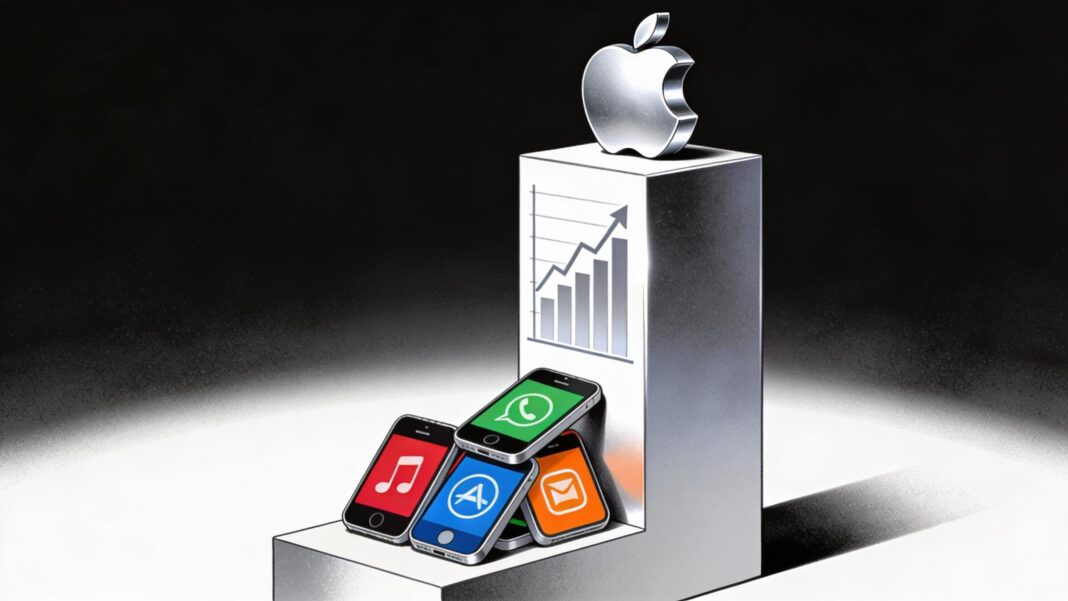


Listen, darlings, if there’s one thing I’ve learned covering the tech beat, it’s that even the most polished silicon dreams can turn into a bit of a nightmare when they hit the cold, hard reality of the consumer market. We’ve all been buzzing about the iPhone Air for months—that impossibly slim, “blink-and-you’ll-miss-it” device that was supposed to redefine what we carry in our pockets. But the numbers are finally in, and let’s just say the reception has been more “ghost town” than “global phenomenon.” It turns out, the world wasn’t quite as obsessed with shaving off those extra millimeters as Cupertino’s marketing team hoped, and the ripple effects are sending shockwaves through the entire industry that we’re only just beginning to map out.
The Numbers Don’t Lie: A Luxury Flop
When Apple drops a new line, we usually expect the kind of frenzy that results in mile-long queues and server crashes. Yet, the iPhone Air has been a different story entirely. Despite a flurry of desperate price cuts intended to lure in the fence-sitters, the device only managed to hit a measly 700,000 activations. To put that into perspective for those of you who don’t spend your mornings staring at supply chain spreadsheets, that’s a total disaster for a product that was meant to be the next big leap in mobile design. It’s a sobering reminder that even the most powerful brand in the world can’t force a trend if the public just isn’t buying what they’re selling.
The contagion didn’t stop with Apple, either. We’ve seen the ultra-thin smartphone sector—a niche that tech giants were salivating over just last year—absolutely crater. Take the major Chinese players, for example; one prominent ultra-thin model managed a pathetic 50,000 activations. It’s clear that the “thin is in” mantra didn’t translate to the daily grind of the average user. When the demand is this abysmal, the supply chain doesn’t just stutter; it collapses. We’re looking at an 80% production capacity cut from Apple’s suppliers between the September 2025 launch and the start of 2026. That is a staggering amount of wasted manufacturing potential and a massive financial headache for the factories caught in the crossfire.
The Great Pivot: Rivals Retreat
If you were holding your breath for a flood of ultra-thin alternatives to hit the market, you might want to start breathing again—because it’s not happening. The failure of the iPhone Air has effectively served as a “do not enter” sign for the rest of the industry. Major players like Xiaomi and Vivo have reportedly pulled the plug on their own ultra-thin projects. These companies are notoriously reactive to market trends, and seeing Apple stumble this hard has sent them scrambling back to the safety of their more traditional, thicker, and battery-heavy designs. It’s a classic case of “follow the leader,” but this time, the leader walked straight into a wall. For more on this topic, see: What The Pitt’s 15-Week Straight .
Perhaps the most shocking casualty of this market correction is the Galaxy S26 Edge. Samsung, usually the one to push the boundaries of form factor just to see if they can, has officially cancelled the project. It’s a bold move, but a necessary one. Why burn millions on R&D for a form factor that consumers have essentially rejected? The industry is currently in a state of total recalibration, pivoting away from the “ultra-thin” narrative as quickly as they once embraced it. It’s a reminder that in the high-stakes world of smartphones, there’s a very thin line—pun intended—between being an innovator and being a cautionary tale. While the suits in the boardroom might be panicked, the rest of us are left wondering what this means for the next few years of design. If the iPhone Air 2 is destined to be the only ultra-thin flagship on the market, it’s going to be a very lonely existence for Apple’s “thinnest” experiment. For more on this topic, see: What George R. R. Martin’s .
…witnessing a massive, industry-wide exodus from the “ultra-thin” category. It’s not just a cooling off; it’s a full-on tactical retreat. When the titans of the industry realize that the R&D budget spent on shaving microns off a chassis could have been better spent on battery life or camera optics, the pivot happens fast. And trust me, the pivot is currently in full swing.
The Great Pivot: Where Do We Go From Here?
So, if the world doesn’t want a paper-thin phone that feels like it might snap in a stiff breeze, what do they want? The market data is screaming a very clear message: utility over vanity. Rivals like Xiaomi and Vivo, who were once racing to beat Apple at their own game, have officially pulled the plug on their ultra-thin prototypes. Instead, they are doubling down on what I like to call “The Practical Powerhouse” era. We’re talking bigger batteries, improved thermal management, and, dare I say it, more robust designs that don’t require a protective case the size of a brick to keep them from bending. For more on this topic, see: Breaking: A24’s Award Winners Hit .
Samsung’s decision to scrap the Galaxy S26 Edge is perhaps the most telling move of all. They’ve essentially looked at the wreckage of the iPhone Air and decided to stay in their lane, focusing on their proven hardware pillars. It’s a smart, albeit safe, play. By abandoning the ultra-thin trend, these companies are signaling to the consumer that they are listening. It’s a rare moment where the market actually forced a correction on the manufacturers, rather than the other way around.
| Manufacturer | Status of Ultra-Thin Project | Strategic Shift |
|---|---|---|
| Apple | Struggling (iPhone Air) | Focusing on iPhone Air 2 iteration |
| Samsung | Cancelled (Galaxy S26 Edge) | Refining core flagship series |
| Xiaomi/Vivo | Halted | Prioritizing battery/durability |
The “Air” Monopoly: A Lonely Future
Here’s the kicker, darlings: because everyone else has tucked tail and run, Apple is about to become the sole inhabitant of the ultra-thin flagship space. With the iPhone Air 2 on the horizon, Cupertino is essentially trying to turn a failure into a niche monopoly. It’s a bold, if slightly delusional, strategy. By being the only brand left in the category, they hope to court the “design-obsessed” demographic that still exists, even if it’s a fraction of what they initially projected.
For more on the regulatory and environmental standards governing these manufacturing shifts, you can check out the