
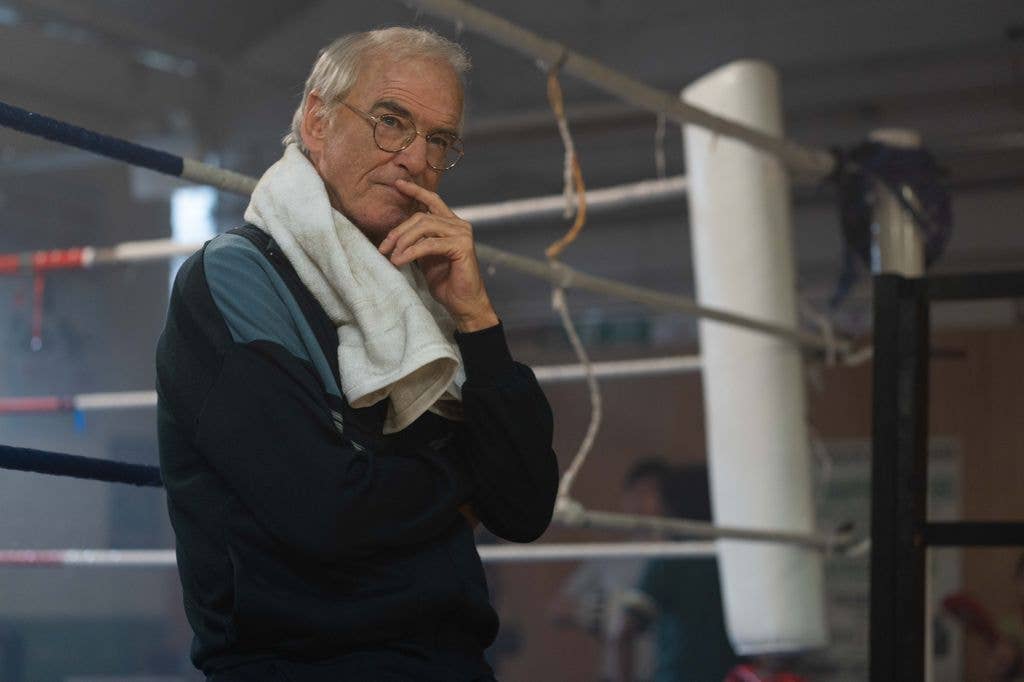


If you thought you knew what to expect from Pierce Brosnan, think again. We’ve spent decades associating the actor with the razor-sharp tailoring, shaken martinis, and effortless cool of 007, but the first look at his latest transformation has officially sent the internet into a tailspin. In the upcoming drama Giant, the 72-year-old icon has completely shed his Hollywood leading-man veneer to step into the shoes of Brendan Ingle, the legendary Sheffield-based boxing trainer. It’s a gritty, grounded shift that feels like a career-defining pivot, proving that even after all these years, Brosnan still has plenty of tricks up his sleeve.
A Transformation That Defies Expectation
Let’s talk about the look, because honestly, it’s a masterclass in character work. Gone is the suave, silver-fox aesthetic we’ve come to adore; in its place is a version of Brosnan that feels startlingly human and lived-in. With a thinning comb-over, unassuming thin-framed glasses, and a wardrobe consisting of humble tracksuits, he is practically unrecognizable. It’s the kind of physical commitment that reminds us why he’s a titan in the industry—he isn’t just playing a man; he’s disappearing into the skin of a working-class hero from the gritty streets of Northern England.
This isn’t just about the makeup chair, though. Portraying Brendan Ingle—the man who famously molded the career of British-Yemeni boxing superstar Prince Naseem “Naz” Hamed—requires a level of gravitas that Brosnan seems to be tapping into with ease. Ingle was a complex, pivotal figure in the boxing world, known for his unique training philosophy and his role as a father figure to his fighters. Seeing Brosnan take on such a layered, real-life mentor role suggests that Giant is aiming for something much deeper than your average sports biopic. It’s a bold choice that positions the film as a serious contender in the upcoming awards conversation.
The Heart of the Ring: A Story of Unlikely Bonds
At the center of Giant is the “unlikely and tender” relationship between Ingle and the flamboyant, world-champion-to-be Prince Naseem Hamed. Played by the immensely talented Amir El-Masry, Hamed’s rise to fame is the heartbeat of this narrative. The film promises to document the rags-to-riches journey of a man who changed the sport of boxing forever, but it’s the dynamic between the disciplined, grounded Ingle and the electric, often controversial Hamed that will likely keep audiences glued to their seats. It’s a classic mentor-mentee arc, but one colored by the specific socio-political climate of the time.
The production, directed by Rowan Athale and boasting the heavyweight backing of executive producer Sylvester Stallone, isn’t shying away from the tougher realities of the era. The film is set against the backdrop of the 1980s and 90s in Britain—a time marked by significant social tension, including rampant racism and Islamophobia. By situating the bond between Ingle and Hamed within this atmosphere, Giant looks poised to explore how these two men navigated not just the pressures of the boxing ring, but the systemic prejudices of the world outside of it. It’s a narrative choice that adds a poignant layer of social commentary to what could have easily been a straightforward sports drama.
While the film is currently building anticipation ahead of its U.K. premiere, stateside fans are already marking their calendars for the May 22 release, when it hits select theaters and VOD. It’s clear that this isn’t just another boxing movie; it’s a deliberate look at heritage, mentorship, and the resilience required to thrive in a world that wasn’t necessarily built for you to win. With Brosnan leading the charge in such an unexpected way, the conversation surrounding Giant is only just beginning to heat up. For more on this topic, see: Breaking: A24’s Award Winners Hit .
The Architecture of an Unlikely Partnership
While the visual transformation is what grabbed the headlines, the true heartbeat of Giant lies in the dynamic between Brosnan’s Ingle and Amir El-Masry’s portrayal of Prince Naseem “Naz” Hamed. We’ve seen a thousand boxing films that focus on the glory of the ring, but this project seems laser-focused on the psychological architecture of their mentor-mentee bond. Ingle wasn’t just a trainer; he was an Irish immigrant who built a sanctuary for working-class kids in a Sheffield gym, often acting as a stabilizing force for Hamed as the boxer’s flamboyant, trash-talking persona began to collide with the harsh realities of 1990s British society.
The film doesn’t shy away from the friction inherent in their relationship. Navigating themes of identity, race, and the specific pressures of the media circus, the script promises to peel back the curtain on the “Prince” persona. It’s a delicate balancing act—how do you portray a man who was simultaneously a national hero and a lightning rod for controversy? By grounding the narrative in the “unlikely and tender” connection between a disciplined, old-school trainer and a flashy, explosive young prodigy, the filmmakers have carved out a space that feels both intimate and grand.
| Feature | Details |
|---|---|
| Director | Rowan Athale |
| Key Protagonists | Brendan Ingle (Brosnan) & Prince Naseem Hamed (El-Masry) |
| Executive Producer | Sylvester Stallone |
| U.S. Release Date | May 22 |
Why This Role Changes the Game for Brosnan
It is worth noting the pedigree behind the camera. With Sylvester Stallone serving as an executive producer, there is a clear lineage of boxing cinema DNA infused into this production. However, Brosnan’s involvement feels like the ultimate “prestige pivot.” In an industry that often traps icons in the amber of their past successes, seeing an actor of his caliber lean into the grit of a 1980s Sheffield gym is refreshing. It signals a desire to be challenged, to disappear into the mundane, and to find the extraordinary in the ordinary.
For those interested in the historical context of the sport, you can find more information on the legacy of boxing training and the evolution of the sport through the British Boxing Board of Control. Additionally, for a deeper dive into the cultural landscape of the era, the National Archives provides extensive documentation on the societal shifts in Britain during the late 20th century, which serves as the backdrop for the racial and religious tensions depicted in the film.
The Cultural Significance of ‘Giant’
What makes Giant feel particularly timely is its exploration of the immigrant experience in Britain. By highlighting the relationship between an Irish trainer and a British-Yemeni fighter, the film taps into a specific, often overlooked chapter of UK sports history. It’s a story about finding family in unlikely places and the resilience required to thrive when the world is constantly telling you that you don’t belong. This isn’t just a sports movie; it’s a social commentary wrapped in the sweat, blood, and tears of the boxing gym. For more on this topic, see: NASA’s Latest Space Mission Just .
As we look toward the May 22 release, the buzz is palpable. It’s rare to see a project that balances the commercial appeal of a boxing biopic with such a nuanced, character-driven approach. Brosnan’s willingness to strip away the glamour of his persona to serve the story of a man like Brendan Ingle is a testament to his enduring craft. Whether you’re a fan of boxing, a cinephile, or simply someone who appreciates a transformative performance, Giant is shaping up to be the kind of film that reminds us why we go to the theater in the first place: to see ourselves reflected in the lives of people we never thought we’d understand. For more on this topic, see: Breaking: Discover the Real-Life Settings .
Ultimately, Giant serves as a poignant reminder that the most compelling stories aren’t always the ones with the biggest explosions or the highest stakes—they’re the ones that find the “giant” within the quiet, often overlooked moments of human connection. Pierce Brosnan has long been a master of the screen, but in stepping into the tracksuits of Brendan Ingle, he’s proving that his greatest performance might just be the one where he finally stops trying to be the hero, and instead, becomes the man behind the legend.