
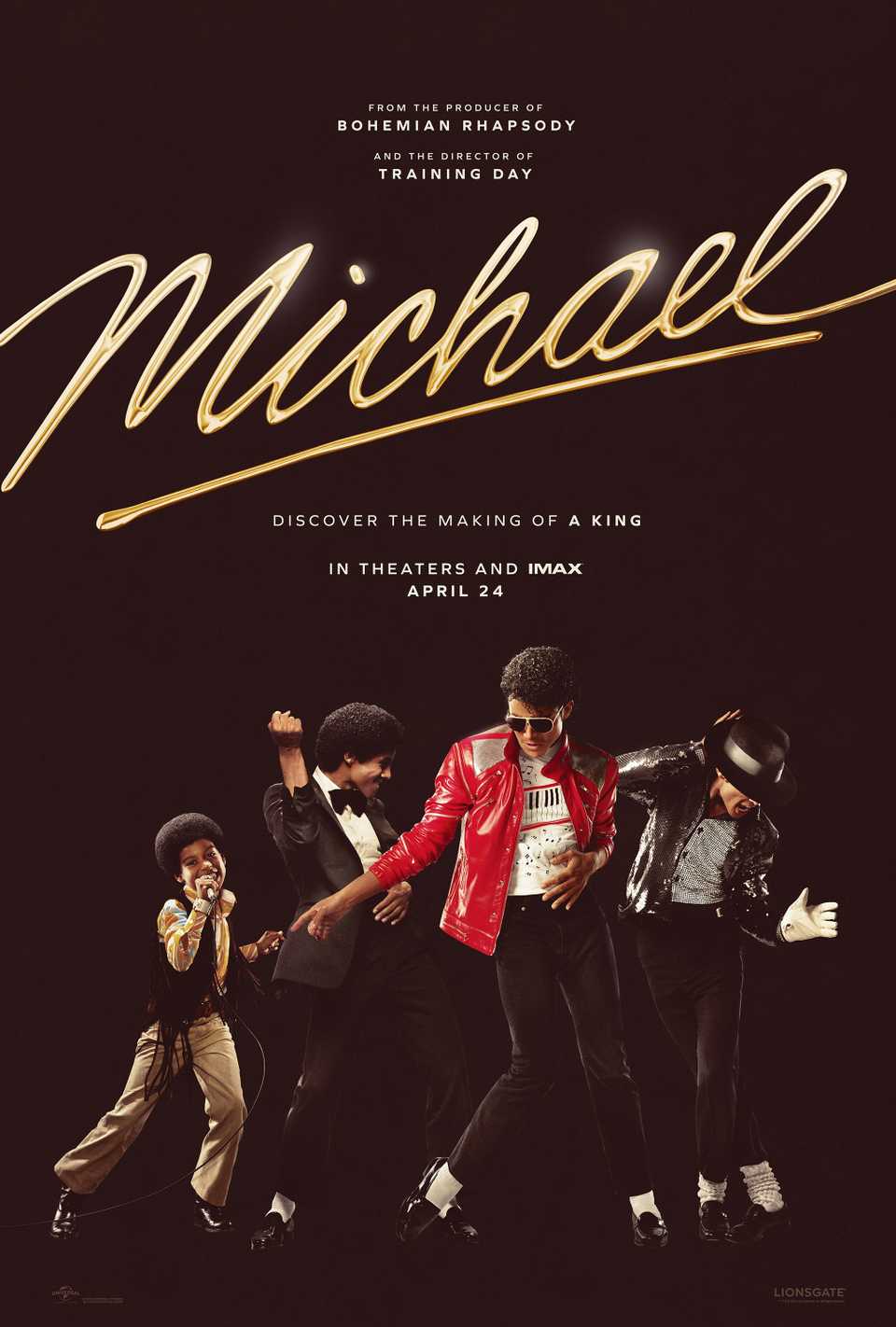


When the first trailers for Michael dropped, the industry was buzzing with a specific kind of nervous energy. We’ve seen the music biopic formula perfected—and occasionally exhausted—over the last decade, from the gritty realism of Straight Outta Compton to the jukebox spectacle of Bohemian Rhapsody. But Michael hasn’t just entered the conversation; it has effectively nuked the current box office paradigm. As a tech-savvy observer of digital trends, I’m used to seeing algorithms and predictive models struggle to keep pace with human sentiment, but the sheer velocity of this film’s performance is a masterclass in how modern audiences are decoupling from traditional critical gatekeepers.
The Data Mirage: Shattering Every Industry Projection
If you look at the pre-release analytics, the story was supposed to be modest. Initial industry tracking had the film pegged for a domestic opening in the $50 million to $60 million range. Even the most bullish analysts were capping their expectations around $70 million. Instead, Michael delivered a staggering $97.2 million domestic debut. To put that into perspective, it didn’t just beat the competition; it left the previous record-holder, Straight Outta Compton ($60.2 million), in the rearview mirror, and even eclipsed the massive opening of Christopher Nolan’s Oppenheimer ($80 million). When a film outperforms its own projections by nearly $30 million in North America alone, you aren’t just looking at a successful marketing campaign—you’re looking at a cultural event that defied the math.
The global footprint is even more aggressive. By hitting a $218.8 million worldwide opening weekend, Michael has officially claimed the title of the biggest biopic debut in history, music-themed or otherwise. It took just 10 days for the film to cross the $300 million mark, a milestone that only Bohemian Rhapsody had previously achieved in the music biopic space. It has already surpassed the total lifetime gross of 2022’s Elvis, which managed a respectable $288.6 million. In the world of cinema, these numbers aren’t just statistics; they are a signal that the “King of Pop” remains a gravitational force that digital streaming and fragmented media consumption haven’t been able to diminish.
The Great Divide: Critics vs. The Crowd
Perhaps the most fascinating aspect of this rollout is the massive chasm between professional critics and the general public. On Rotten Tomatoes, the film sits at a tepid 38% critic approval rating, a figure that usually signals a “stay away” warning for the average cinephile. Yet, the audience reception tells a completely different story. With a 97% audience score and an “A-” CinemaScore, the public is clearly voting with their wallets and their time. This disconnect highlights a growing trend in entertainment: the traditional critical review is losing its leverage as a primary driver of ticket sales, especially when a film taps into a global, deeply embedded fan base.
From a tech perspective, this is a fascinating case study in brand loyalty versus critical discourse. In an era where social media sentiment can be manufactured or manipulated, the sustained, organic turnout for Michael suggests that the audience’s relationship with Jackson’s music transcends the standard review cycle. While critics are busy dissecting the narrative structure and the inherent controversies surrounding the subject, the viewers are clearly prioritizing the spectacle and the performance. It’s a reminder that in the modern entertainment landscape, legacy and emotional connection are the ultimate currency—and right now, that currency is trading at an all-time high.
Navigating the Legal Minefield
Of course, no discussion of this film is complete without addressing the elephant in the room: the narrative constraints placed upon it. The production team faced a unique set of hurdles, particularly regarding how to handle the darker chapters of Jackson’s life. Sources confirm that the film’s third act was originally slated to delve into the 1990s accusations brought by Jordan Chandler. However, the filmmakers ran into a hard wall of legal reality. A settlement agreement between Michael Jackson and the Chandler family includes a specific, ironclad clause that legally prohibits the Jackson estate from mentioning Jordan Chandler in any film project.
This legal prohibition effectively forced the hand of the screenwriters, creating a structural challenge that likely contributed to the critical friction mentioned earlier. It’s a rare instance where legal documentation dictates the creative flow of a major motion picture, essentially pruning the narrative before the first frame was even shot. Watching how the film navigates these omissions while still managing to maintain such overwhelming momentum suggests a very specific, curated storytelling strategy—one that is clearly resonating with the masses, even if it leaves the critics searching for the missing pieces of the puzzle.
The Algorithmic Disconnect: When Sentiment Trumps Critics
One of the most fascinating aspects of Michael’s trajectory is the widening chasm between professional critical reception and the actual, boots-on-the-ground audience sentiment. While industry aggregators showed a lukewarm 38% positive rating from critics, the film secured a robust “A-” grade on CinemaScore. In the era of high-speed data, we often assume that critical consensus acts as a bellwether for box office health. Michael has effectively rendered that assumption obsolete.
From a tech-analysis standpoint, this indicates that the “social proof” generated by fan communities and word-of-mouth far outweighs the traditional review-gatekeeping model. The audience isn’t looking for a clinical dissection of the subject’s life; they are seeking a sensory experience that aligns with their personal nostalgia and digital history with the artist’s music. The following table illustrates how Michael compares to its predecessors in terms of market impact and initial reception:
| Film | Domestic Opening | Worldwide Milestone Speed |
|---|---|---|
| Michael | $97.2 Million | $300M in 10 Days |
| Straight Outta Compton | $60.2 Million | N/A |
| Bohemian Rhapsody | $51.0 Million | $300M in 20+ Days |
| Elvis | $31.1 Million | Did not reach $300M total |
Navigating the Legal Architecture of Narrative
Behind the scenes, the production faced a unique set of constraints that would have crippled a less disciplined project. The narrative structure was constrained by significant legal boundaries, specifically regarding the 1990s accusations involving Jordan Chandler. A settlement agreement between the Jackson estate and the Chandler family includes a rigid non-disclosure clause that legally prohibits the estate from referencing the individual in any cinematic production. For more on this topic, see: What Nintendo’s New President’s First .
For a filmmaker, these constraints are essentially “hard-coded” limitations. Instead of forcing a confrontation with these legal walls, the production pivoted, focusing on the kinetic energy of the performances and the evolution of the music. This shift in narrative focus suggests a broader trend in how legacy estates will handle biographical content moving forward: by prioritizing the “mythology” of the artist rather than attempting a comprehensive, litigious-heavy documentary style. You can learn more about the complexities of estate management and legal intellectual property through the U.S. Copyright Office or by reviewing historical case documentation provided by the Library of Congress.
The Future of the Music Biopic
We are witnessing a shift in the “Biopic 2.0” era. The success of Michael proves that the audience is no longer interested in the “warts and all” investigative journalism style that defined the early 2000s. Instead, there is a clear appetite for high-fidelity, concert-grade recreations that leverage modern visual effects and sound design to transport the viewer. The technical execution—the seamless blending of archival audio with contemporary performance—has set a new standard for studio productions.
Furthermore, the global reach of this film demonstrates that music remains the most potent universal language in the digital age. By hitting $218.8 million in its global opening, the film proved that a well-executed music biopic is a safer bet for studios than almost any other genre, including superhero franchises. For those interested in the evolution of cinema technology and its impact on audience engagement, I recommend exploring the archives at the Academy of Motion Picture Arts and Sciences, which tracks the intersection of artistic intent and technical innovation. For more on this topic, see: What The Pitt’s 15-Week Straight .
Ultimately, Michael is a signal. It tells us that the traditional metrics of “critical success” are being replaced by the raw, unadulterated power of fandom and the digital echo chamber. Whether you agree with the film’s narrative choices or not, the numbers do not lie: the music biopic as a genre has evolved, and it is here to stay, operating on a scale that few could have predicted even a few years ago. We are no longer watching movies; we are participating in global, synchronized cultural moments. For more on this topic, see: What George R. R. Martin’s .