
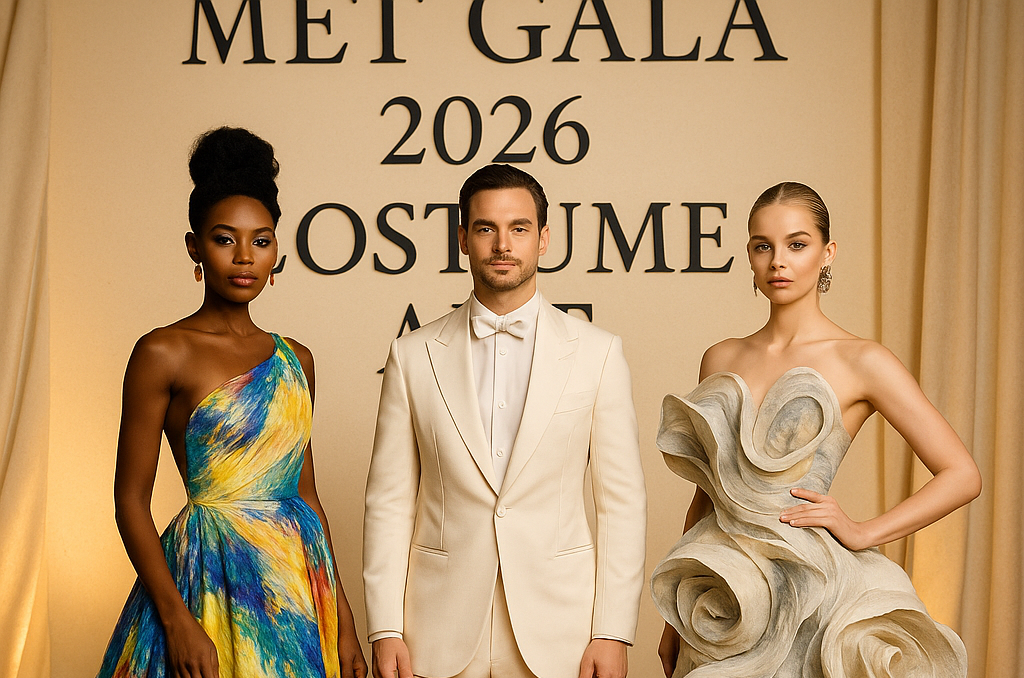


There is a specific, electric hum that vibrates through the air when the Met Gala approaches—a collective holding of breath as the fashion world prepares to turn the steps of the Metropolitan Museum of Art into the most exclusive stage on the planet. But as the whispers regarding the 2026 theme, “Costume Art,” begin to reach a fever pitch, it feels like we are standing on the precipice of something far more profound than just another night of high-octane red carpet theater. This isn’t merely about who wore what; it’s a deliberate, scholarly, and perhaps even defiant assertion that the garments we drape over our bodies are not just accessories to history, but the very ink with which the story of human evolution is written.
The Architecture of the Human Form
At the heart of the 2026 exhibition lies a fascinating, almost biological approach to curation. By organizing the exhibit around “thematic body types,” the curators are inviting us to look past the glitz of the sequins and the structural audacity of the hemlines to see something more primal: the inextricable relationship between the garment and the flesh it inhabits. It suggests that fashion is not something we simply put on; it is a reciprocal dialogue. For centuries, we have shaped our clothing, but in turn, our clothing has defined how we move, how we occupy space, and how we perceive the silhouette of our own humanity.
This focus on Western art history—tracing that dialogue from prehistory to the present day—feels like a necessary grounding. It reminds us that whether it’s a corset from the nineteenth century or a avant-garde piece from a modern atelier, the intent remains the same: to project an identity onto the canvas of the body. By framing fashion as a continuous, enduring element of our cultural lineage, the Met is asking us to stop viewing style as a fleeting whim and start respecting it as a legitimate art form that has tracked our development as a species.
A New Era of Wearable Canvases
The conversation is shifting, and if the early buzz is any indication, we are moving toward a future where the distinction between a designer and a fine artist is effectively erased. We are seeing a surge in the philosophy that fashion is “wearable art,” a concept brought to life through breathtaking collaborations like the one between image architect Law Roach and artist Naïla Opiangah. When you see a custom suit serving as a literal canvas for a painter, the garment ceases to be just a piece of clothing; it becomes a piece of fine art that happens to be mobile, breathing, and alive.
This intersection of disciplines—where structural design meets the raw, expressive brushstroke—is perhaps the most exciting evolution in modern couture. It challenges the wearer to become a participant in the art, not just a bystander. The 2026 gala is poised to be a masterclass in this synthesis, proving that the future of fashion lies in its ability to function as a “wearable canvas.” It is a bold move that demands we reconsider the boundaries of the museum space, suggesting that the most vital art of our time isn’t hanging on a wall behind velvet ropes, but walking down a staircase, draped over the shoulders of the world’s most influential icons.
Of course, the gravity of such a theme is only amplified by the faces set to lead the charge. The announcement of co-chairs like Nicole Kidman, Venus Williams, and the legendary Beyoncé—marking her return to the gala after a decade-long hiatus—signals that this is a moment of monumental cultural significance. It is a generational bridge, further highlighted by Kidman’s decision to bring her daughter, Sunday Rose, into the fold. It feels like a passing of the torch, a recognition that the next generation of fashion isn’t just inheriting the industry; they are actively rewriting the rules of how we define artistic expression.
The Convergence of Disciplines: Fashion as a Wearable Canvas
If the structural analysis of the human form provides the foundation for the 2026 exhibition, the emerging trend of “wearable canvases” provides its soul. We are witnessing a profound blurring of the lines between the atelier and the fine art studio. This isn’t merely about embellishment; it is about the literal fusion of mediums. When a visionary like Law Roach commissions a painter like Naïla Opiangah to work directly onto the fabric of a custom suit, the garment ceases to be a product of tailoring alone. It becomes a site of cross-disciplinary creation, where the fluid motion of the wearer transforms a static painting into a kinetic, living performance.
This shift forces us to reconsider the traditional hierarchy of the art world. For decades, the “fine arts”—painting, sculpture, and installation—have occupied a pedestal of permanence, while fashion was relegated to the realm of the ephemeral. By framing the 2026 theme around this intersection, the Met is effectively dismantling that hierarchy. We are entering an era where the artist’s brushstroke on silk is held in the same scholarly regard as a pigment on canvas. This move invites a new level of scrutiny, demanding that we engage with our clothing not just as items of utility, but as artifacts of intentional, collaborative expression. For more on this topic, see: What Google’s Nano Banana AI .
| Artistic Medium | Traditional Perception | 2026 “Costume Art” Perspective |
|---|---|---|
| Textiles | Utility / Ornament | Primary Medium for Fine Art |
| The Body | Display Mechanism | Active Participant in the Work |
| Designers | Commercial Creators | Curators of Cultural Identity |
The Generational Shift: Legacy Meets the Future
Perhaps the most poignant aspect of this year’s gala is the deliberate inclusion of the next generation. The presence of co-chairs like Nicole Kidman, accompanied by her daughter Sunday Rose, signals that the dialogue surrounding “Costume Art” is not meant to be a nostalgic look backward, but a bridge to the future. When we see a seventeen-year-old stepping onto that red carpet, we aren’t just witnessing a celebrity appearance; we are seeing the torch being passed. The 2026 theme asks the younger generation to interpret these historical silhouettes and artistic techniques through the lens of their own, rapidly evolving digital and social landscapes. For more on this topic, see: What George R. R. Martin’s .
This generational bridge is vital. It ensures that the study of fashion remains a living, breathing discipline rather than a dusty archive. For those interested in the historical preservation and academic study of these works, resources such as the design” target=”blank”>Wikipedia entry on Fashion Design provides a comprehensive look at the evolution of the craft, while the Library of Congress holds vast archives that document the societal impact of clothing throughout the centuries. These resources remind us that while the Gala is a night of glamour, the study of fashion is a lifelong pursuit of understanding our own humanity. For more on this topic, see: What Fallout’s Mysterious Countdown Reveals .
Ultimately, the 2026 theme is a mirror. It reflects our desire to be seen, our need to belong to a lineage of creators, and our relentless drive to turn the mundane into the magnificent. As the steps of the Met fill with these “wearable canvases,” we won’t just be watching a parade of stars. We will be witnessing the elevation of the human silhouette to its rightful place in the pantheon of art history. We are not just wearing clothes; we are wearing our own evolution, and for one night, the world will finally stop to truly look.