
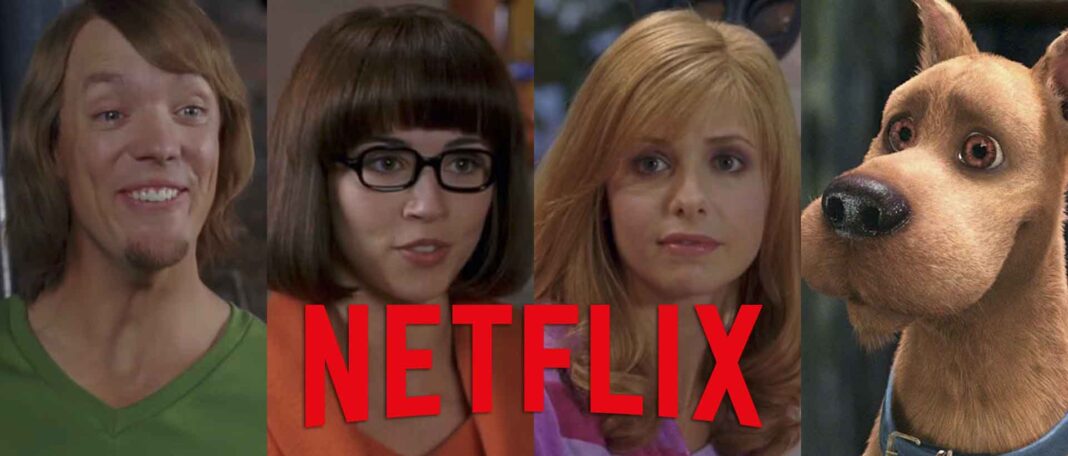


If you grew up tethered to a Saturday morning cartoon schedule, the name Mystery Inc. likely carries a specific kind of nostalgic weight. For 57 years, that meddling gang—Fred, Daphne, Velma, Shaggy, and their cowardly Great Dane—has been a staple of the animated landscape, solving supernatural hoaxes with nothing more than a trap, a flashlight, and a questionable amount of snacks. But today, the industry landscape shifted. Netflix just dropped the bombshell that they are officially moving forward with Scooby-Doo: Origins, marking the franchise’s very first attempt at a live-action episodic television series. It’s a bold play for the streaming giant, one that attempts to bridge the gap between generational nostalgia and the modern demand for serialized, prestige-style storytelling.
A Franchise First: Moving Beyond the Animation Cell
It’s almost hard to believe that in nearly six decades of pop culture dominance, we’ve never seen a live-action Scooby-Doo series. We’ve had the theatrical blockbusters—the CGI-heavy spectacles of the early 2000s that leaned into a campy, heightened reality—and we’ve had a mountain of animated spin-offs, reboots, and straight-to-video adventures. Yet, the episodic television format has remained strictly the domain of 2D and 3D animation. By bringing the gang into the live-action fold, Netflix isn’t just adapting a cartoon; they are attempting to translate the aesthetic of a long-running mystery procedural into a format that requires a massive lift in both production design and character grounding.
From a tech perspective, this is a fascinating evolution of the “legacy sequel” trend. Studios are increasingly looking at their IP catalogs not just for reboots, but for opportunities to shift genres entirely. Moving a property as stylized as Scooby-Doo into a live-action series requires a delicate balance. How do you retain the iconic “Mystery Machine” aesthetic without it looking like a low-budget cosplay convention? How do you handle the supernatural elements—the ghosts that are always secretly just a guy in a rubber mask—without losing the suspension of disbelief that a live-action camera requires? Netflix has the budget to pull off high-fidelity creature effects, but the real challenge will be the tone. We’re moving away from the slapstick physics of animation and into the realm of human performance, which changes the fundamental DNA of the mystery-solving dynamic.
The Prequel Narrative: Crafting the Mystery Inc. Origin
The decision to frame the series as an origin story, titled Scooby-Doo: Origins, is a classic move in the modern streaming playbook. By focusing on the formation of the group, showrunners have the freedom to explore the “why” behind the partnership. We’ve seen the gang as a fully formed unit for half a century; seeing them as strangers—or perhaps as rivals—before they became a cohesive unit offers a fresh narrative hook that isn’t just a retread of the “monster of the week” formula. It allows for character development that feels earned rather than assumed, providing a gritty, grounded look at how a group of teenagers and a dog ended up living out of a van.
This approach also helps sidestep the inevitable comparisons to the 2002 theatrical film or its various animated iterations. By setting the timeline before the established canon, the writers can play with the lore without being shackled by it. In the tech-heavy world of modern television production, this is essentially “world-building 101.” We are looking at a narrative architecture that prioritizes character arcs over episodic tropes. If they manage to nail the chemistry between the five leads, they have the potential to turn a tired brand into a multi-season drama that feels as much like a coming-of-age story as it does a mystery series. The pressure is on, however; the audience for this IP is incredibly protective, and any deviation from the established character archetypes will be under a microscope from day one.
The Technical Challenge of Bringing the “Ghost” to Life
Transitioning a character like Scooby-Doo from a hand-drawn or digital animation cell to a live-action environment presents a significant hurdle in computational rendering and visual effects (VFX) integration. In the early 2000s, the theatrical films relied on early-stage CGI that often felt disconnected from the live actors. Today, the bar is set significantly higher. To achieve a seamless blend, Netflix will likely utilize advanced volumetric lighting and real-time ray tracing during production, ensuring that Scooby’s fur and physical presence interact realistically with the physical sets.
The challenge isn’t just the dog; it’s the atmosphere. Scooby-Doo relies on a specific “spooky” aesthetic—glowing eyes in the dark, shifting floorboards, and abandoned amusement parks. To make this work in a serialized format, the show must move away from the flat lighting of traditional sitcoms and adopt a cinematic, high-dynamic-range (HDR) approach that mimics the depth of modern prestige dramas. Below is a comparison of how the technical demands of this series differ from previous iterations of the franchise.
| Production Element | Traditional Animation | Netflix Live-Action Series |
|---|---|---|
| Character Integration | Layered 2D/3D assets | Motion-capture & fur simulation |
| Lighting Model | Painted backgrounds | Real-time ray tracing/HDR |
| Environment | Stylized, static backgrounds | Hybrid physical/virtual production |
| Narrative Pacing | Episodic/Self-contained | Serialized/Long-form arc |
Data-Driven Nostalgia: Why Now?
From an industry standpoint, Netflix’s decision to greenlight Scooby-Doo: Origins is a calculated move based on audience engagement metrics. The streaming giant has long utilized data to determine which legacy properties have the highest “rewatchability” index. Scooby-Doo consistently ranks as a high-performing evergreen asset. By pivoting to a prequel narrative, the studio is effectively “de-risking” the project. A prequel allows for a fresh introduction to the characters, bypassing the need to explain decades of existing lore while simultaneously providing a clean slate for a more grounded, character-driven narrative.
This approach mirrors the broader industry trend of IP expansion, where established brands are repurposed to capture both the original demographic and a new generation of viewers. By focusing on the “origins,” the showrunners have the creative freedom to lean into a darker, more investigative tone—a move that has proven successful for other adaptations of classic properties that transitioned from lighthearted animation to serialized drama. For more on this topic, see: Breaking: A24’s Award Winners Hit .
For those interested in the history of the intellectual property and the evolution of the studio behind these characters, you can find more information through these official channels:
- Warner Bros. Discovery Official Site
- Netflix Tudum: Behind the Scenes
- Scooby-Doo Franchise Overview (Wikipedia)
The Verdict: A New Era for Mystery Inc.
Whether this experiment succeeds will ultimately come down to the “heart” of the project. While the tech behind the VFX and the data behind the greenlight are necessary components, they don’t guarantee a hit. The magic of Scooby-Doo has always been the chemistry of the gang—the dynamic between Shaggy’s neuroticism and Velma’s deductive brilliance. If Netflix can marry the high-end production values of modern streaming with the genuine, earnest charm of the original characters, they might just redefine what a “Saturday morning” property looks like in the 21st century. For more on this topic, see: Breaking: BlackRock Chief Demands Radical . For more on this topic, see: Breaking: National Film Registry Adds .
We are witnessing a fascinating collision of eras. We are taking a 1969 concept and subjecting it to the rigorous, high-budget scrutiny of contemporary digital production. If they get the tone right—balancing the campy, ghost-hunting roots with a grounded, character-first approach—this could set a new standard for how we modernize our collective childhood memories. The Mystery Machine is being rebuilt from the chassis up; it remains to be seen if it will handle the road ahead or break down under the weight of its own legacy. My bet? The tech is there, the audience is waiting, and the ghost of the franchise is ready to be unmasked once again.