
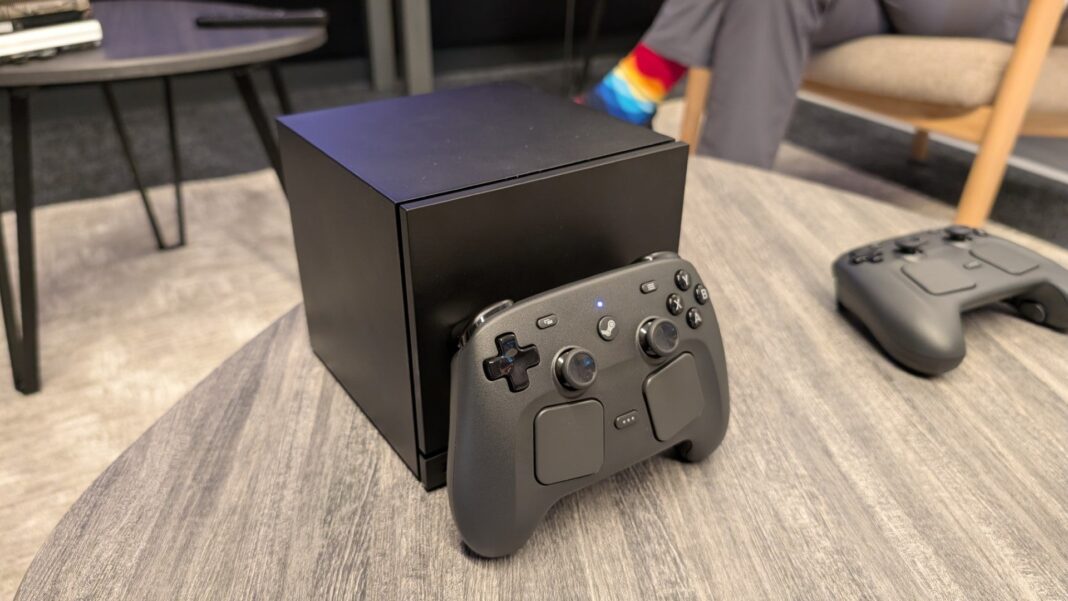


There is a specific kind of magic that happens when you finally find “the one”—that piece of hardware that feels less like a plastic peripheral and more like an extension of your own nervous system. For years, the original Steam Controller lived in a strange, liminal space; it was a bold experiment in trackpad-driven navigation that earned a cult following but left many of us craving something a bit more… grounded. Well, the wait is over. The new Steam Controller has arrived, and it’s not just a refinement; it’s a total reimagining that bridges the gap between the portable convenience of the Steam Deck and the high-fidelity expectations of a dedicated living room setup. But the real story isn’t just in the refined matte plastic or the clicky, tactile triggers—it’s in the ecosystem of hardware that’s launching alongside it, turning our gaming spaces into something that feels truly, deeply personal.
The Evolution of Feel: A Controller That Finally Means Business
If you remember the original Steam Controller, you likely remember that “hollow” sensation—a device that felt like a prototype trying to find its identity. This new iteration, priced at $99, sheds that experimental skin entirely. The first thing you notice is the heft. It sits in the palms with a weight and ergonomic curve that feels remarkably similar to a high-end Xbox gamepad, trading that lightweight, plasticky feel for a dense, premium build. The surface is finished in a textured, matte black plastic that begs to be gripped, while the touchpads have been upgraded to a smooth, satiny finish that makes precision inputs feel like gliding across silk.
The internal mechanics have received an equally significant overhaul. The triggers, once a point of contention, now offer smooth, non-spongy tension that rewards every pull, and the rear buttons are now permanently integrated, providing a crisp, “clicky” tactile response that feels intentional and robust. Perhaps most importantly for the long-term players, the controller features TMR (Tunneling Magnetoresistance) joysticks, which promise to be drift-free. Coupled with the new “Grip Sense” technology—which intelligently detects when you’re actually holding the device—this feels like a piece of kit engineered for the long haul, rather than a disposable accessory.
Mounting the Future: Mechanism’s Custom Ecosystem
What truly sets this launch apart from any other controller release is the foresight behind the accessories. Valve didn’t just drop a new gamepad into the wild; they provided early design access to the team at Mechanism, ensuring that the custom ecosystem was ready to roll out on day one. For those of us who have spent years trying to jerry-rig portable setups for Steam Link, this is a revelation. The standout is the Basegrip, the first-of-its-kind mount designed to attach the controller directly to your smartphone. It turns your mobile device into a high-fidelity handheld, perfect for streaming your library while you’re lounging on the couch or traveling. For more on this topic, see: What Nintendo’s New President’s First .
The ambition doesn’t stop at mobile gaming. Mechanism has introduced a versatile mounting system that allows the controller to integrate into your physical gaming environment in ways we’ve only seen in DIY hobbyist circles. Whether you’re looking to dock your controller to an Ikea Skadis pegboard to keep your desk clutter-free or you’re interested in their new dedicated docking station—which holds the controller at a perfect, ergonomic angle rather than the flat, magnetic puck style—the focus is clearly on ownership. It’s about creating a setup that reflects your space, not just a generic peripheral that sits on a shelf collecting dust. While the mobile experience is currently limited by the fact that the controller doesn’t interface with every iOS or Android system menu, the remote-play functionality via the Steam Link app is a glimpse into a future where our gaming setup is as fluid as our lifestyle.
…perhaps most impressive is how these mechanical refinements serve the software. By adopting the exact input architecture of the Steam Deck, Valve has effectively eliminated the “learning curve” that plagued the original. If you’ve spent any time with their handheld, your muscle memory is already perfectly calibrated for this controller. It’s a seamless transition from the bus to the living room sofa, a feat of hardware synergy that feels long overdue.
The Architecture of an Ecosystem: Beyond the Handheld
The true genius of this launch isn’t just the device itself, but the way it invites us to curate our physical space. Through a unique collaboration with companies like Mechanism, Valve has opened the door to a modular mounting system that transforms the controller from a stray peripheral into a centerpiece. The “Basegrip” mount, for instance, allows for a tethered mobile experience, turning your smartphone into a high-fidelity remote screen for your PC via the Steam Link app. It’s a level of portability that feels genuinely transformative for those of us who want to take our library into the kitchen or the backyard without sacrificing the tactile satisfaction of a “real” controller.
This isn’t just about mobile gaming, though. The mounting ecosystem extends to our desks and walls, allowing for a level of organization that borders on the artistic. Whether you are mounting your controller to a standard pegboard or utilizing the new angled docking station, the goal is clear: your gear should be visible, accessible, and ready for action the moment inspiration strikes.
| Mounting Option | Primary Use Case | Key Benefit |
|---|---|---|
| Basegrip | Mobile/Steam Link | Unified handheld experience |
| Skadis Pegboard Mount | Desk/Wall Storage | Clean, vertical cable management |
| Angled Dock | Living Room/Desk | Ergonomic visibility and quick access |
The “Grip Sense” Revolution and Future-Proofing
Beneath the matte finish lies the most exciting piece of technology: “Grip Sense.” This feature detects exactly when your hands have made contact with the chassis, allowing the controller to wake up your PC or switch profiles the moment you pick it up. It’s one of those subtle, “invisible” technologies that, once experienced, makes every other controller feel dated. Combined with the TMR (Tunneling Magnetoresistance) joysticks—which are designed to be immune to the dreaded stick drift—it’s clear that Valve is building for the long haul. They aren’t interested in planned obsolescence; they are building a tool that is meant to age alongside your Steam library. For more on this topic, see: Breaking: A24’s Award Winners Hit .
For those who love to tinker, the integration with Steam Input remains the gold standard. The ability to map specific gyro-aiming sensitivity or touchpad macros on a per-game basis, and then have those layouts sync automatically between your Steam Deck and this new controller, is a quality-of-life upgrade that is hard to overstate. You aren’t just buying a controller; you are buying into a living, breathing software environment that rewards curiosity.
A Personal Perspective
There is a quiet, profound satisfaction in using a piece of technology that feels like it was designed by people who actually play games. For years, we’ve been forced to compromise—choosing between the convenience of a handheld or the power of a desktop, or settling for third-party controllers that never quite captured the specific “flavor” of our preferred playstyles. This new Steam Controller feels like a homecoming.
It reminds me of the early days of PC gaming, where hardware felt like a modular extension of your own intent. By allowing us to mount, dock, and customize not just the software, but the physical placement of our controllers, Valve has acknowledged a simple truth: our gaming spaces are a reflection of our personalities. Whether you’re a minimalist who wants a clean desk or a power user who needs every button mapped for a complex simulation, this hardware finally gives us the agency to build our own ideal setups. It’s not just about winning the next match; it’s about the joy of the interface itself. And for the first time in a long time, the interface is finally as good as the games we play.
For more information on the technical standards and ecosystem, you may explore these official resources: