
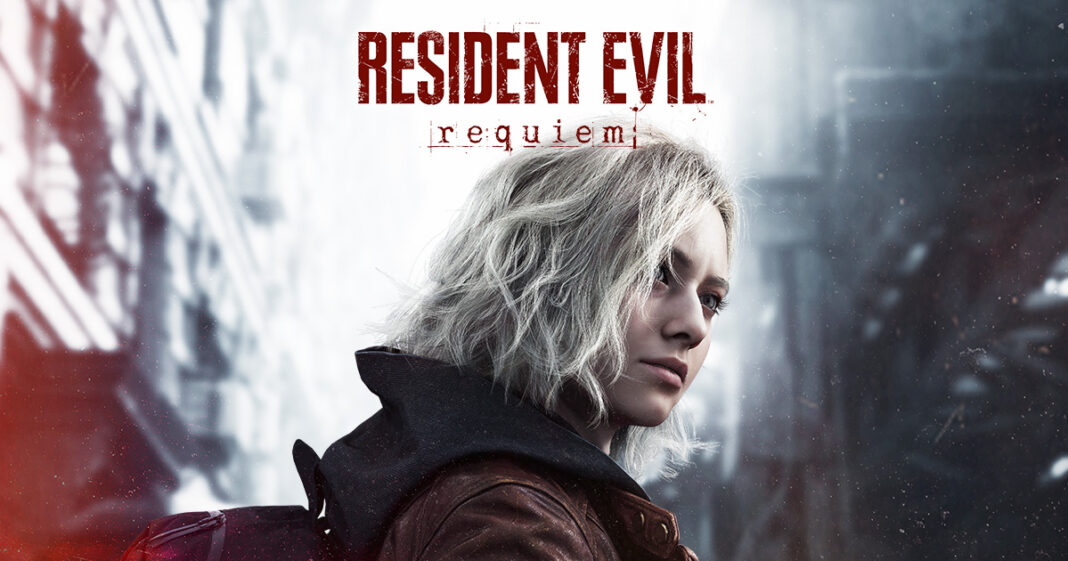


In the high-stakes world of Hollywood intellectual property, few franchises have been as polarizing as the Resident Evil cinematic universe. We’ve seen the Paul W.S. Anderson era—a neon-soaked, action-heavy departure from the survival horror roots of Capcom’s source material—and we’ve seen the 2021 reboot, Welcome to Raccoon City, which tried to pivot back to the source but stumbled under the weight of its own ambition. Now, the industry is buzzing about a new gamble: the revival of a specific, notoriously “hated” franchise title that fans have spent the last two decades trying to scrub from their collective memory. It’s a bold move, and as someone who has tracked the evolution of game-to-film adaptations from the early, clunky CGI days to today’s high-fidelity Unreal Engine-powered spectacles, I have to ask: is this a calculated risk or a desperate reach for nostalgia?
The Legacy of the “Hated” Title
When we talk about the “hated” title, we aren’t just talking about a bad script; we’re talking about a narrative black hole that effectively derailed the franchise’s reputation among hardcore gamers. For years, the Resident Evil film series operated in a vacuum, ignoring the intricate lore of the games in favor of a singular, unstoppable protagonist. This created a rift between the casual moviegoer who enjoyed the popcorn-flick explosions and the purist who felt the soul of the franchise had been excised. By leaning back into this specific title, the studio is essentially trying to perform a “digital resurrection” on a property that was widely considered dead on arrival.
From a technical standpoint, the challenge here is massive. Modern audiences are conditioned to expect a certain level of fidelity to the source material—think of the success of The Last of Us on HBO or the recent Fallout series. These adaptations succeeded because they respected the world-building and the specific “grammar” of the games. By choosing to revive a title that fundamentally misunderstood its own source material, the producers are fighting an uphill battle against established fan sentiment. They aren’t just making a movie; they are trying to rewrite history, hoping that better visual effects and a more grounded tone can salvage a concept that was fundamentally flawed from its inception.
The Gamble: Nostalgia vs. Market Reality
There is a dangerous trend in Hollywood right now: the belief that any IP can be “fixed” with enough budget and a fresh coat of paint. We’ve seen this in the tech sector, too—companies trying to push legacy software into the cloud without refactoring the underlying code. The result is almost always the same: a bloated, inefficient mess that alienates the user base. By doubling down on this controversial Resident Evil title, the studio is gambling that the name recognition—even if it’s associated with negative sentiment—will drive enough opening-weekend traffic to justify the production costs. It’s a classic case of chasing brand equity while ignoring the actual quality of the product.
However, there is a nuance here that shouldn’t be ignored. The film industry is currently obsessed with the “re-evaluation” of past failures. We see it in the way certain cult classics eventually find their footing years later. Perhaps the studio believes that in the current landscape, where horror-action hybrids are seeing a massive resurgence, this specific title can be recontextualized. If they can move away from the “zombie-as-fodder” trope and lean into the survival horror mechanics that made the games legendary, they might just pull off the impossible. But that requires a level of restraint that this franchise has historically lacked, and it requires the directors to stop treating the source material like a rough draft and start treating it like a blueprint.
This isn’t just about whether the movie will be “good” or “bad.” It’s about the underlying architecture of how we consume media. Are we reaching a point where the industry is so starved for recognizable names that they’d rather resurrect a “hated” property than risk a new, original concept? As I look at the current production pipeline, the answer seems to lean heavily toward the former, which poses a serious question about the future of digital storytelling.
The Technical Debt of Narrative Reboots
When a studio decides to revisit a “hated” title, they aren’t just dealing with a script; they are navigating a massive amount of technical debt. In software development, technical debt occurs when you choose an easy solution now instead of a better approach that would take longer. In film production, this manifests as a legacy of poor character development, disjointed timelines, and visual aesthetics that clash with the established “canon” of the source material. By attempting to salvage a narrative that was previously abandoned, the studio is trying to refactor a codebase that was never designed to be modular. For more on this topic, see: What Ubisoft’s cryptic tweet revealed .
The core issue is that Capcom’s original survival horror framework relies on claustrophobic pacing and resource management—elements that are notoriously difficult to translate into a two-hour blockbuster format. If the studio attempts to “patch” the old title with modern visual effects while ignoring the underlying structural flaws, they risk creating an uncanny valley effect for the audience. The viewer might see high-fidelity textures and state-of-the-art motion capture, but the narrative logic remains stuck in the early 2000s, leading to a jarring disconnect between what we see and what we feel.
| Factor | Early Adaptation Era | Modern Adaptation Standards |
|---|---|---|
| Visual Fidelity | Practical effects/Early CGI | Unreal Engine 5/Real-time rendering |
| Lore Integration | Loose interpretation | Direct source material alignment |
| Pacing | Action-oriented | Atmospheric/Slow-burn horror |
| Fan Engagement | Passive consumption | Community-driven feedback loops |
The Unreal Engine Paradigm Shift
We are currently living in an era where the line between game development and film production has effectively vanished. With the advent of Virtual Production—the same technology used in The Mandalorian and other high-end series—studios can now render high-fidelity environments in real-time. This is a game-changer for a franchise like Resident Evil, which relies heavily on iconic, atmosphere-drenched settings like the Spencer Mansion or the Raccoon City Police Department.
However, technology is merely a tool. The “hated” title in question failed originally because it lacked a coherent vision, not because the camera lenses weren’t sharp enough. Today, the temptation is to use Unreal Engine to mask a lack of substance with high-octane spectacle. If the filmmakers lean too heavily on digital assets to “fix” the film, they miss the point of why the original games were so revolutionary. The brilliance of the source material wasn’t just the monsters; it was the psychological tension created by limited ammunition and the isolation of the player. You cannot render that kind of dread using a GPU alone; it requires a disciplined script that understands the value of silence and space.
For those interested in the technical standards of game-to-film pipelines, you can review the documentation on how these assets are managed at the official Capcom website to see how they maintain their own internal lore. For more on this topic, see: What George R. R. Martin’s . For more on this topic, see: What Nintendo’s New President’s First .