
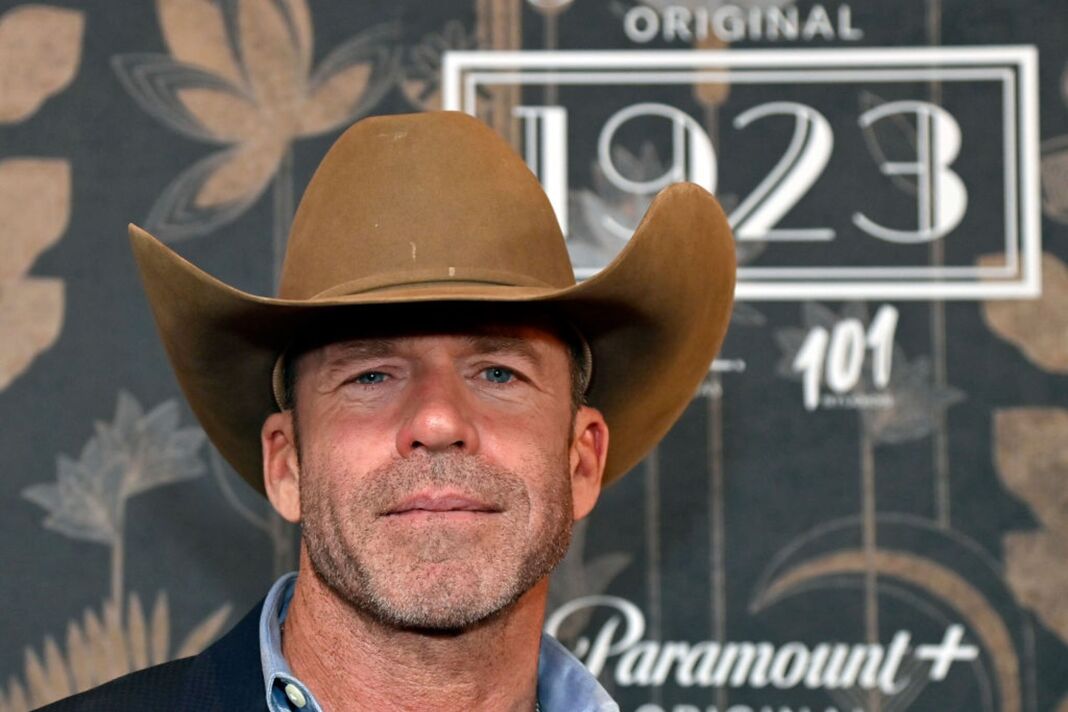


If you’ve been tracking the shifting tectonic plates of Hollywood, you already know that Taylor Sheridan isn’t just a showrunner—he’s a one-man industrial complex. For years, we’ve watched him turn the Paramount lot into his personal playground, churning out enough cowboys, convicts, and CIA operatives to populate a small state. But the news that rocked the industry this week is finally official: by 2029, the architect of the Yellowstone universe is packing his bags and heading to Universal to build out their streaming future. It’s a move that feels less like a simple contract renewal and more like a seismic power play. Sheridan is stepping off the ranch and into a brand-new arena, and frankly, I’m dying to see if his singular, “my way or the highway” creative philosophy can survive the transition to a new corporate home.
The Paramount Exit and the Future of the Dutton Legacy
Let’s be real: Sheridan’s departure from Paramount is the kind of breakup that changes the landscape of prestige television. After years of defining the network’s identity with hits like 1883, 1923, and the ever-expanding Tulsa King, Sheridan is finally looking for a new horizon. While he’s currently busy wrapping up the final pieces of his legacy—including the highly anticipated Dutton Ranch premiering May 15, 2026, and the upcoming seasons of The Madison starring heavy hitters Michelle Pfeiffer and Kurt Russell—the industry is already buzzing about what happens when he officially pivots to Universal. Will he bring his signature brand of gritty, character-driven neo-Westerns, or is he looking to reinvent his aesthetic entirely?
The transition comes at an interesting time for the franchise. We’ve seen the post-Yellowstone era begin with Marshals, a series that, while technically a sequel, feels like a massive pivot toward the “standard crime procedural” format. The fan reception has been, shall we say, passionate. The Yellowstone Reddit community—which continues to pull in nearly 100,000 visitors a week—hasn’t been shy about their critique, often calling the new direction predictable or lacking the high-stakes drama of the original series. Sheridan’s refusal to use traditional writers’ rooms means he keeps total control, but it also means that when the tone shifts, it shifts solely on his shoulders. It’s a high-wire act, and as he moves to Universal, the pressure to keep that massive audience engaged while navigating a new corporate ecosystem will be the ultimate test of his creative stamina.
Back to the Big Screen: The F.A.S.T. and Call of Duty Gamble
If you thought Sheridan was just going to stick to television, think again. After a six-year hiatus from the silver screen, he’s making a massive return to feature films, and he isn’t playing it safe. He’s currently locked in to write and direct the CIA action flick F.A.S.T., starring Brandon Sklenar. It’s a return to his roots as a filmmaker, tapping into the same high-octane, tactical energy that made his earlier work so visceral. But the project that has everyone in the industry whispering is his attachment to the live-action Call of Duty adaptation. Bringing a franchise known for its frenetic, non-linear gameplay to the cinema is a Herculean task, especially when you consider the lack of a central, established narrative core to anchor the story.
The most fascinating layer to this? Sheridan is reuniting with director Peter Berg for the project. For those of you who remember Berg’s 2013 comments, this is a wild pairing. Berg once famously labeled these types of games as “pathetic” and “keyboard courage,” suggesting that the only people who should be engaging with that kind of content are the military during their downtime. Now, they’re tasked with turning that very IP into a cinematic powerhouse. It’s a massive creative challenge, and it highlights exactly why Sheridan is the most interesting player in the game right now. He’s not just adapting source material; he’s trying to force a gritty, character-driven vision onto properties that have never really had one. Whether this is a stroke of genius or a bridge too far remains to be seen, but you can bet that Universal is banking on his ability to make the impossible look like his next big hit. For more on this topic, see: What George R. R. Martin’s . For more on this topic, see: What Fallout’s Mysterious Countdown Reveals . For more on this topic, see: What The Pitt’s 15-Week Straight .
The Cinematic Pivot: Why the Big Screen is Calling
While the industry has been hyper-focused on his television output, Sheridan’s move to Universal signals a strategic pivot back to the silver screen. After a six-year hiatus from theaters, he is diving headfirst into the high-octane world of feature films with F.A.S.T., a CIA-focused action project starring Brandon Sklenar. It is a smart move; television, even at the scale Sheridan operates, can feel like a treadmill. By moving to Universal, he’s clearly looking to leverage their theatrical distribution muscle to reclaim the cinematic prestige he earned with early hits like Sicario and Hell or High Water.
However, the most eyebrow-raising project on his slate is undoubtedly the live-action adaptation of the Call of Duty franchise. This isn’t just a movie; it’s a massive intellectual property gamble. Pairing Sheridan with director Peter Berg—a man who has historically been quite vocal about his skepticism toward war-themed video games—is a fascinating creative friction. Can Sheridan, a writer who thrives on slow-burn, character-driven grit, successfully translate the frenetic, arcade-style chaos of a first-person shooter into a coherent cinematic narrative? It’s a bold experiment that suggests he is looking to transcend the “Western” label that has defined his last decade.
To understand the sheer breadth of his upcoming transition, consider how his current portfolio compares to his future ambitions:
| Project Type | Current Focus (Paramount) | Future Focus (Universal) |
|---|---|---|
| Core Aesthetic | Neo-Western / Americana | Global Action / Franchise IP |
| Format | Episodic Television | Theatrical & Streaming Hybrid |
| Narrative Style | Character-Driven | High-Concept Adaptation |
The “Sheridan Method” and the Risks of Total Control
We have to address the elephant in the room: Sheridan’s refusal to utilize traditional writers’ rooms. In Hollywood, this is an anomaly. Most mega-producers rely on a team to maintain consistency, especially when managing multiple concurrent shows. Sheridan, by contrast, acts as the sole architect. While this has resulted in a distinct, singular voice that audiences have gravitated toward, it has also led to the high showrunner turnover we’ve seen across his various series. When you are the only one who knows the blueprint, the structure becomes incredibly fragile if you are pulled in too many directions.
Universal is a different beast than Paramount. They are a massive conglomerate with a long history of franchise management. Will they allow a showrunner to operate with such total autonomy, or will they push for the collaborative, room-based approach that keeps most prestige dramas on track? If Sheridan wants to maintain his “my way or the highway” philosophy, he’s going to need to prove that his output can remain as consistent in quality as it is in volume. For more on the official history of the studio landscape, you can check the Universal Studios official site or the Library of Congress records on the evolution of American media production.
The Verdict: A Legacy in Transition
Ultimately, this move to Universal is the biggest test of Taylor Sheridan’s career. For the last several years, he has been the king of the Paramount lot, a creative force so essential that the network essentially built its streaming strategy around his singular output. But the shift to Universal represents a move from “big fish in a small pond” to “major player in a global ecosystem.”
I suspect that Sheridan is tired of being the “Western guy.” By taking on Call of Duty and returning to the CIA-thriller genre, he is signaling that he wants to be recognized as a versatile filmmaker, not just a genre specialist. Whether he succeeds depends on his ability to adapt his personal creative process to a larger corporate machine. If he can maintain the intensity of his writing while navigating the demands of a studio like Universal, he won’t just be a showrunner anymore—he’ll be a permanent fixture in the pantheon of modern Hollywood auteurs. As we wait for the 2029 transition, one thing is certain: the industry will be watching every single frame.
For those interested in the broader context of how media conglomerates shape content, you can research the history of the industry via the Federal Communications Commission archives regarding media ownership and market trends.