
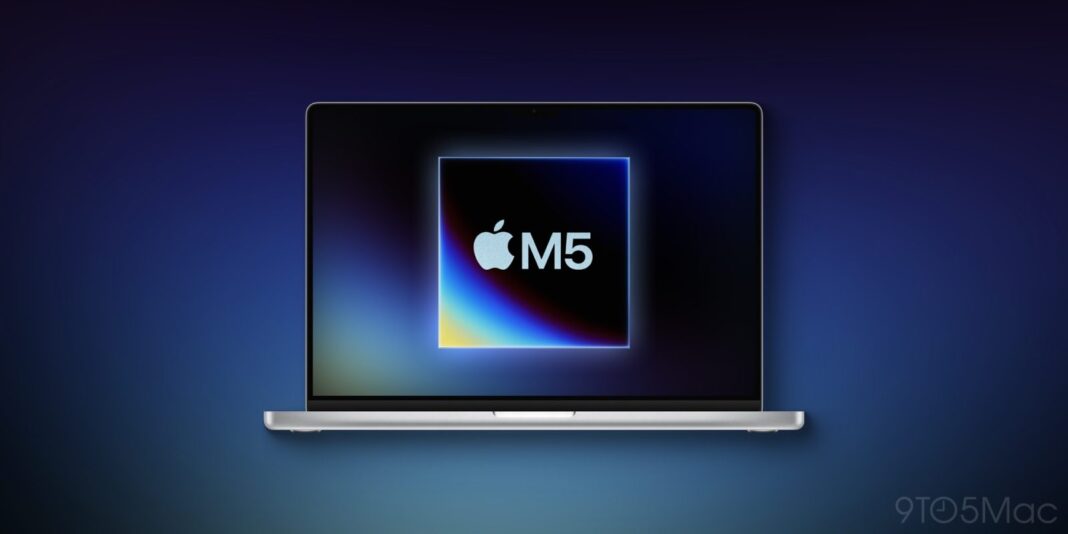


If you’ve been tracking Apple’s silicon trajectory, you know the rhythm by now: every iteration of the M-series chip feels like a quiet, calculated tightening of the screws. But with the arrival of the M5 MacBook Air, which officially hits shelves on March 11, the narrative has shifted from mere iterative speed bumps to a fundamental realignment of what a “portable” machine actually means. After spending time digging into the specs and the market positioning, it’s clear that Apple isn’t just updating the Air; they are refining the very concept of the middle-tier laptop, effectively blurring the lines between the consumer-grade Air and the professional-grade Pro.
The Performance Paradigm Shift
The headline here is undeniably the M5 chipset. While we’ve grown accustomed to the efficiency of Apple Silicon, this jump represents a genuine performance chasm compared to the legacy Intel-based machines that many users are still clinging to. The M5 isn’t just faster; it’s aggressively capable, offering processing power that sits uncomfortably close to the entry-level MacBook Pro. For the average user, this is a win, but for the pro-sumer, it creates a fascinating dilemma. Why pay the “Pro” tax when the Air is now packing enough horsepower to handle heavy lifting in photo and video editing workflows?
Apple has leaned into this by bumping the default RAM configuration to 16GB. In an era where 8GB of unified memory feels like a relic of the past, this move is a massive nod toward future-proofing. Whether you’re juggling dozens of Chrome tabs, running virtual machines, or rendering 4K video, the base-level Air now feels like a serious workstation rather than a glorified netbook. It’s a clear signal that Apple recognizes the modern user’s workflow is rarely “light,” regardless of which model they choose.
Storage, Connectivity, and the New Value Proposition
Perhaps the most consumer-friendly pivot in this release is the storage strategy. Apple has finally abandoned the stingy 256GB base tier, doubling the entry-level storage to 512GB. When you pair this with the fact that the M5 Air is actually launching at a lower price point than its M4-equipped predecessors—starting at $1,099 for the 13-inch and $1,299 for the 15-inch—it’s clear that Apple is feeling the heat of a competitive market. Even better, for those of us who live in the cloud but keep a massive local library, the maximum storage capacity has been bumped to a whopping 4TB, giving the Air a level of versatility we usually only see in the Pro line.
However, the hardware isn’t without its constraints. The connectivity suite remains anchored to a pair of Thunderbolt 4 ports. While perfectly adequate for most, it serves as a reminder of where Apple draws the line in the sand. If you need a deep array of I/O ports, you’re still being nudged toward the Pro. But for the target audience—creatives on the go who prioritize that signature thin, lightweight aluminum chassis—these ports are likely a non-issue. The inclusion of the 12MP Center Stage Camera and the reliable Magic Keyboard keeps the user experience consistent, ensuring that while the internals are cutting-edge, the daily interaction remains familiar and polished. For more on this topic, see: What Fallout’s Mysterious Countdown Reveals . For more on this topic, see: What The Pitt’s 15-Week Straight . For more on this topic, see: HP Just Erased Its Name .
The pricing strategy is where things get truly interesting. We are seeing major retailers like Amazon already undercutting the MSRP, with some configurations dipping toward the $950 mark. By pushing the “MacBook Neo” into the budget slot, Apple has liberated the Air to occupy a premium middle ground. It’s no longer the “cheap” Mac; it’s the “default” Mac. This aggressive pricing, coupled with the 16GB/512GB base configuration, effectively challenges the necessity of the MacBook Pro for a significant segment of the market. It’s a bold move that forces us to re-evaluate whether the Pro line is still the necessary gold standard for creative professionals, or if the Air has finally grown up enough to take the throne.
…friendly shift is the aggressive overhaul of the base storage. By doubling the starting capacity to 512GB, Apple has effectively neutralized the most common complaint leveled against the Air line for the better part of a decade. When you combine this with the $100 price reduction over previous M4 configurations, the value proposition isn’t just improved—it’s recalibrated.
The “MacBook Neo” Factor and Market Realignment
It is impossible to discuss the M5 MacBook Air without addressing the elephant in the room: the emergence of the “MacBook Neo.” With the Neo now occupying the entry-level budget tier, the MacBook Air has been liberated from the constraints of being the “cheap” Apple laptop. This shift allows the Air to lean fully into its identity as the quintessential “everyman” machine.
The M5 isn’t being marketed as a compromise; it’s being positioned as the sweet spot. By offloading the entry-level burden to the Neo, Apple has granted the Air permission to be better. The result is a machine that feels premium in every sense, from the chassis rigidity to the thermal management of the M5 silicon. For those who don’t require the active cooling or the specialized display tech of the MacBook Pro, the Air is no longer the “second choice.” It is arguably the most sensible choice.
| Feature | MacBook Neo (Entry) | MacBook Air M5 (Mid) | MacBook Pro (High-End) |
|---|---|---|---|
| Primary Use | General/Education | Pro-sumer/Creative | Heavy Production |
| Base RAM | 8GB | 16GB | 18GB+ |
| Base Storage | 256GB | 512GB | 512GB+ |
| Cooling | Passive | Passive | Active (Fans) |
Hardware Longevity and the 4TB Ceiling
One of the most telling indicators of Apple’s intent for the M5 MacBook Air is the expansion of the storage ceiling to 4TB. Historically, the Air was treated as a “disposable” machine—a laptop you’d use for three years and discard. By allowing for such massive onboard storage, Apple is acknowledging that users intend to keep these machines for half a decade or more.
This isn’t just about disk space; it’s about the integration of the Unified Memory Architecture. Because the M5 chip handles memory and storage throughput with such efficiency, a well-specced Air can now outlive the utility of many professional machines from just a few years ago. If you pair the M5 chip with 24GB of RAM and the maximum storage capacity, you aren’t just buying a laptop; you are buying a long-term asset. The hardware is finally catching up to the longevity of the software support cycle.
Reflections on the Silicon Trajectory
As we look at the broader picture, the M5 MacBook Air serves as a mirror for Apple’s strategy. They are no longer competing against other laptop manufacturers; they are competing against their own past iterations. By making the Air more powerful, more affordable, and more capable, they are forcing the entire industry to reconsider what “mid-range” performance looks like.
The M5 is a masterclass in efficiency. It handles the thermal envelope of a fanless design with ease, proving that the future of computing isn’t about raw wattage—it’s about the intelligence of the architecture. For the vast majority of professionals, the era of needing a “Pro” machine for creative work is effectively over. The Air, once a niche device for light travelers, has matured into a powerhouse that demands respect. If you’re currently weighing your next upgrade, the M5 isn’t just an incremental step; it’s the point where the hardware finally stops getting in the way of the work.
For deeper technical specifications and official product documentation, you can visit the following resources:
Apple MacBook Air Official Page
Apple Silicon (Wikipedia)