
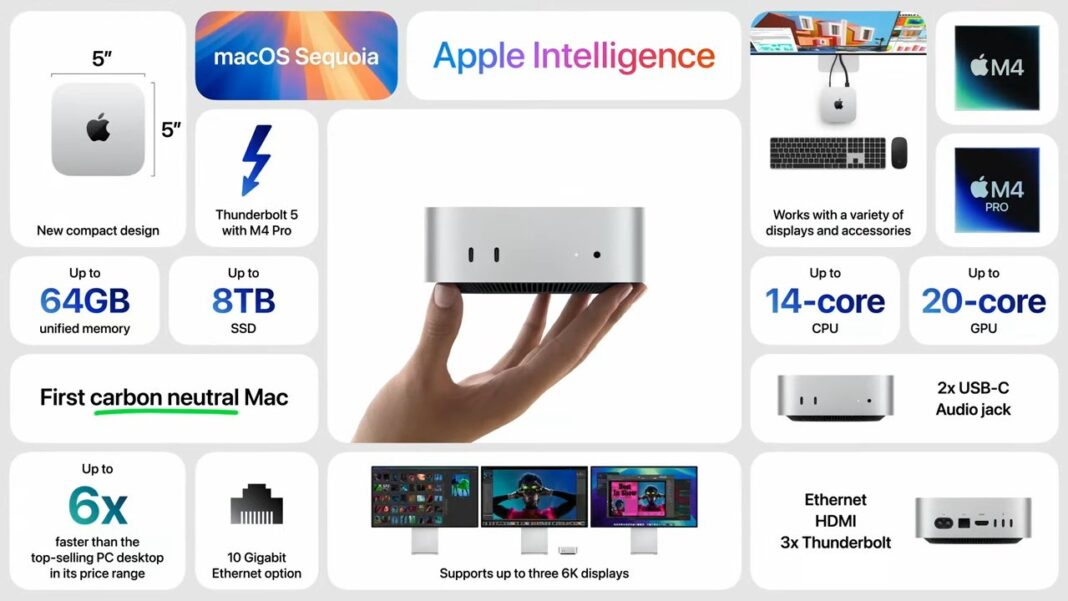


If you’ve been tracking the trajectory of Apple’s desktop lineup, you know the Mac mini has long been the industry’s gold standard for “bang for your buck.” It was the gateway drug into the macOS ecosystem—a compact, unassuming aluminum brick that punched well above its weight class. But the Cupertino giant just pulled the rug out from under that narrative. With the silent retirement of the $599 entry-level tier and the subsequent jump to a $799 starting price, Apple isn’t just tweaking its pricing strategy; they are signaling a fundamental pivot in how they view the desktop workstation in an era defined by silicon scarcity and the insatiable appetite for on-device AI.
The Death of the Budget Tier and the New Baseline
Let’s be clear about what’s actually happening under the hood. By killing off the $599 configuration, Apple has effectively raised the floor for entry into the Mac desktop experience by 33%. For the average consumer who just wanted a reliable machine for web browsing and light productivity, this feels like a punch to the gut. However, from a hardware strategy perspective, it’s a calculated move. The new $799 base model isn’t just a price hike; it’s a spec bump, shipping with 512GB of storage as the new floor. Apple is betting that the market is ready to trade the “budget” label for a higher performance baseline.
This shift reflects a broader trend I’ve been tracking across the industry: the commoditization of entry-level specs. As software—specifically macOS and its increasingly heavy background processes—demands more overhead, 256GB of storage has become a bottleneck that arguably hurts Apple’s brand reputation for “premium” performance. By forcing the 512GB tier, Apple is standardizing the experience, ensuring that even the cheapest desktop in their catalog doesn’t leave the user feeling like they’re running on fumes within six months of purchase. It’s a move toward a more consistent, albeit more expensive, user experience.
The Silicon Bottleneck: Why Your Mac mini Costs More
If you’re wondering why this price hike feels so abrupt, you have to look at the supply chain. We are currently living through a period of extreme competition for advanced semiconductor nodes. The Mac mini’s heart—its System on a Chip (SoC)—relies on the same cutting-edge manufacturing processes that power the entire high-end mobile and server market. When Apple talks about “supply constraints,” they aren’t just making excuses; they are navigating a global tug-of-war for wafer capacity at foundries like TSMC. When supply is tight, prioritizing higher-margin configurations isn’t just good business—it’s a survival mechanism for maintaining production volume.
Tim Cook’s recent comments regarding this shortage provide a fascinating window into the current state of agentic AI. It turns out that this isn’t just about people wanting faster computers for video editing or coding. There is a massive, surging demand for hardware capable of running local large language models (LLMs) and agentic tools. These workloads are incredibly taxing on both the NPU and the unified memory architecture. Apple is finding that their silicon is being snatched up by developers and power users who need the specific neural engine performance found in the latest chips to run autonomous AI agents locally. The Mac mini, once a peripheral device, is quickly becoming a critical node in the decentralized AI revolution.
This creates a fascinating feedback loop. Because the hardware is now being utilized for high-compute AI tasks, the value proposition of the device has shifted from “cheap desktop” to “compact AI server.” Apple is leaning into this, essentially pricing the hardware to match the utility it provides in a post-LLM world. For those of us who have been covering the Mac transition since the M1 launch, this is the moment where the “mini” moniker starts to feel a bit ironic. It’s no longer a small, secondary machine; it’s a high-performance engine for the next wave of computing, and the price tag is finally catching up to that reality. For more on this topic, see: AI Just Found 500 Critical .
The Silicon Bottleneck: Why Advanced Nodes Are the Real Constraint
To understand why Apple is willing to risk alienating the budget-conscious demographic, one must look at the foundry capacity. The Mac mini’s performance is entirely predicated on its System on a Chip (SoC) architecture. As Apple moves further into the sub-3nm manufacturing processes, the number of viable manufacturers shrinks to a handful of global players. These advanced nodes are currently the most contested real estate in the semiconductor industry.
When Tim Cook points to supply chain constraints, he isn’t just talking about logistics; he is talking about the physical limits of wafer yield. Producing chips at this density is incredibly difficult, and the “good” silicon—the chips that can run at higher clock speeds without excessive heat or power draw—is being diverted to the MacBook Pro and the Mac Studio lines. By raising the price of the Mac mini, Apple is effectively performing a triage on its own supply chain. It is a strategic move to prioritize high-margin units that justify the exorbitant cost of these advanced nodes. If you can’t make enough chips to satisfy everyone, you make the ones you do have work harder for your bottom line.
| Metric | Legacy Entry Model | New Baseline Model |
|---|---|---|
| Starting Price | $599 | $799 |
| Base Storage | 256GB | 512GB |
| Node Efficiency | Standard | High-Density Advanced Node |
| AI Capability | Limited | Optimized for Agentic Tools |
The AI Pivot: Silicon as a Platform for Agents
The most significant driver behind this hardware repositioning is the shift toward on-device AI. We are moving away from the era of “dumb” desktops that simply display web content, toward a future where the machine acts as an autonomous agent. Running local LLMs (Large Language Models) or agentic workflows requires a massive amount of unified memory and high-speed storage throughput. The previous entry-level Mac mini, with its limited 8GB memory and 256GB storage, was effectively a “legacy” machine in the eyes of current AI development.
Apple’s move to increase the floor is an admission that the “baseline” for a functional computer has shifted. To run local agents effectively—without offloading sensitive data to the cloud—you need hardware that can handle the inference load. This isn’t just about faster rendering or gaming; it’s about ensuring that the Mac mini remains a viable node for local compute in an increasingly decentralized AI architecture. By forcing a higher spec, Apple is ensuring that every machine sold today can participate in the next three to five years of software evolution. For more on this topic, see: The 2026 ‘Super Bowl of .
For more technical details on the architecture of Apple’s silicon, you can refer to the official documentation provided by the Apple’s Budget MacBook Just Got .
The Long-Term Outlook: A Premium-Only Future
The days of the “cheap” Mac are likely behind us, and that is a reality users must reconcile with. Apple has clearly decided that its brand equity is better served by being a premium-performance provider rather than a volume-based hardware manufacturer. While this will undoubtedly drive some users toward the second-hand market or alternative operating systems, it guarantees that the “Mac experience” remains consistent across the entire product stack.
From where I sit, this is a bold, if somewhat cold, calculation. By shedding the budget-tier baggage, Apple is refining its target audience to those who view their hardware as an investment in productivity rather than a disposable commodity. As we watch the integration of agentic AI deepen, the $799 price point will likely look like a bargain compared to the specialized hardware that will be required to keep up with the next wave of local compute demands. The aluminum brick hasn’t just gotten more expensive; it has grown up, and it’s finally ready to do the heavy lifting required by the next decade of computing.
For further exploration into the standards driving these hardware shifts, consult the International Organization for Standardization (ISO) regarding information technology and system architectures.