
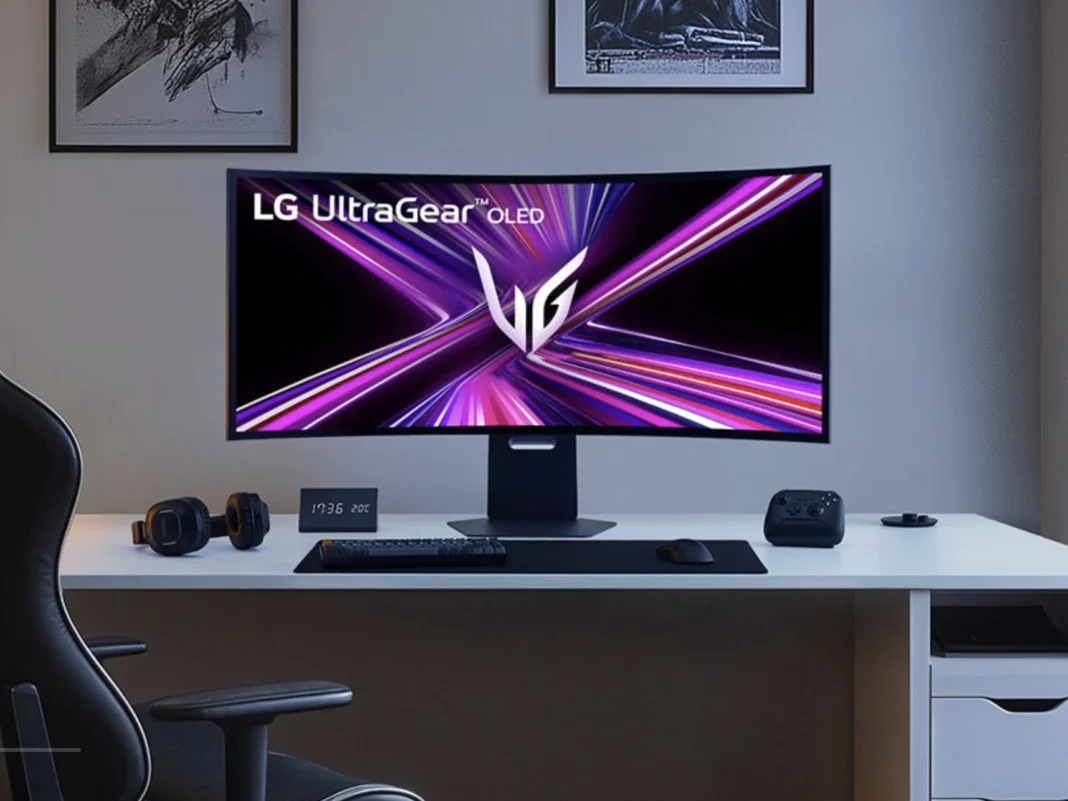


There is a specific kind of silence that falls over a room when you finally boot up a game on a display that feels less like a piece of consumer hardware and more like a window into another dimension. We’ve all been there—the frantic clicking of a mouse, the hum of a cooling fan, and that split-second of anticipation as the screen flickers to life. For years, the high-end monitor market has felt like an exclusive club, guarded by price tags that could comfortably cover a month’s rent or a mid-range vacation. But lately, the industry has felt stagnant, a slow dance of incremental upgrades that left many of us wondering if the “next big thing” was ever actually going to arrive at a price point that didn’t require a second mortgage.
That changed this week. LG, a titan that has long defined the visual standard for living rooms and creative studios alike, just pulled the rug out from under the competition. Their latest aggressive pre-order strategy isn’t just a marketing ploy; it’s a seismic shift in how we value high-end gaming hardware. It’s the kind of move that makes you sit up, lean into your desk, and wonder if the barrier to entry for enthusiast-grade gear just got a whole lot thinner.
The OLED Revolution Hits Home
For the uninitiated, the leap from a standard IPS panel to OLED technology is akin to trading a grainy radio broadcast for a front-row seat at a symphony. The deep, inky blacks and the infinite contrast ratio aren’t just technical specifications on a spec sheet—they are the difference between seeing a shadowy figure in a horror game and actually feeling the hair on the back of your neck stand up. LG has been the architect of this transition, pushing their panels into the hands of creators and gamers who demand nothing less than perfection.
However, perfection has historically been punishingly expensive. When these ultra-fast, high-refresh-rate OLED monitors first hit the shelves, they were luxury items, reserved for the ultra-enthusiast or the professional streamer with a sponsorship budget. By slashing the entry price through these pre-order windows, LG is effectively democratizing the premium experience. They aren’t just selling a monitor; they are inviting a wider audience into a tier of gaming fidelity that was previously gated by sheer financial weight.
Redefining Value in a Saturated Market
It’s easy to look at a monitor and see only pixels and refresh rates, but for those of us who spend our days navigating digital landscapes—whether it’s the rain-slicked streets of a cyberpunk metropolis or the high-stakes intensity of a competitive shooter—the display is our primary interface with the world. When a company like LG decides to aggressively discount a flagship product, it ripples through the entire ecosystem. It forces competitors to reconsider their own pricing models, and it gives the consumer a rare moment of power in a market that usually dictates the terms.
What makes this particular move so fascinating is the timing. We are currently in a golden age of gaming hardware where the bottleneck is no longer just the GPU in your rig; it’s the screen you’re looking at. You can have the most powerful graphics card money can buy, but if your monitor is a relic of 2018, you’re essentially looking at a masterpiece through a dirty window. LG’s decision to lower the barrier for their latest high-end panels suggests they understand that the bottleneck is shifting. They’re betting that if they put the best tech in front of more people, the loyalty—and the shift in expectations—will pay dividends long after the pre-order discount ends.
This isn’t just about saving a few hundred dollars at checkout, though that certainly helps the bank account. It’s about the psychological shift that occurs when a “dream product” suddenly becomes an “attainable reality.” When the price tag stops being the primary deterrent, we start looking at the actual performance, the color accuracy, and the sheer immersion factor. It turns the shopping experience from a calculation of compromise into a genuine pursuit of quality. For more on this topic, see: HP Just Erased Its Name .
The Economics of the “Early Adopter” Tax
There has long been an unspoken social contract in the tech world: if you want the cutting edge, you pay the premium. We call it the “early adopter tax.” It is the price we pay for the privilege of being the first to experience the future. For years, companies have relied on this dynamic, keeping high-end OLED displays locked behind four-figure price tags long after the manufacturing processes had matured. By keeping prices artificially high, they maximized margins on the enthusiasts who simply couldn’t wait. For more on this topic, see: What Nintendo’s New President’s First .
LG’s decision to disrupt this model is, quite frankly, a masterclass in market disruption. By offering a significant pre-order discount, they aren’t just selling hardware; they are effectively subsidizing the transition for the broader enthusiast community. They are betting that volume and brand loyalty will outweigh the short-term loss of profit margins. It forces every other manufacturer to look at their own spreadsheets and ask a difficult question: Are we still charging for innovation, or are we just charging for the name on the box?
| Feature | Traditional High-End Pricing | LG’s New Market Strategy |
|---|---|---|
| Entry Cost | Premium/Luxury Tier | Aggressive/Accessible Tier |
| Margin Focus | High per-unit profit | Market share expansion |
| Value Proposition | Exclusivity | Performance per dollar |
Beyond the Refresh Rate: Why Fidelity Matters
We often get caught up in the “arms race” of gaming specs—refresh rates that climb into the stratosphere and response times measured in fractions of a millisecond. While those metrics are vital for competitive play, they often overshadow the real reason we upgrade: visual fidelity. When you move to a high-density, color-accurate OLED screen, you stop playing the game and start inhabiting the world. You notice the way light refracts through a puddle in a rain-slicked city, or the subtle texture of fabric on a character’s cloak—details that were previously crushed into a muddy, gray mess by lesser panels.
This shift in pricing makes that level of immersion a reality for a wider demographic. It’s not just about winning a match; it’s about the emotional resonance of the art. When hardware becomes more accessible, it elevates the entire medium. Developers spend years crafting intricate lighting engines and color palettes; it is only fitting that we have the tools to actually see their vision as it was intended. For those interested in the technical standards behind these displays, you can explore the nuances of display engineering at the NIST for updates on display measurement and color science provides a grounded look at how far we’ve come.
Ultimately, the “game” isn’t just about the software we run or the graphics cards we install. It’s about the window through which we view those digital worlds. By making that window larger, clearer, and more accessible, LG hasn’t just changed their sales strategy—they’ve changed the way we experience our favorite stories. And honestly? It’s about time. For more on this topic, see: World’s first 240Hz AR glasses .