
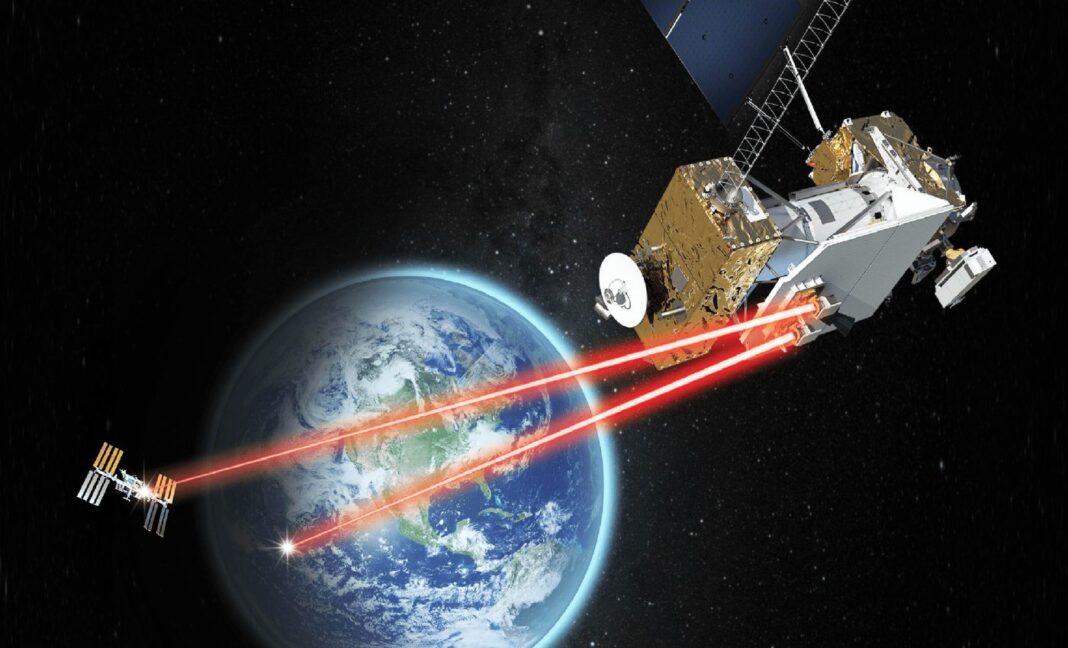


There is a quiet, shimmering revolution happening three hundred million miles away, and it doesn’t involve the roar of chemical rockets or the bone-shaking rumble of a launchpad ignition. For decades, we have been tethered to the constraints of radio waves—the digital equivalent of shouting across a vast, empty canyon and waiting minutes for an echo to return. But NASA’s recent breakthrough in Deep Space Optical Communications (DSOC) has effectively traded that megaphone for a high-speed fiber-optic cable spun from pure light. It is a moment that feels less like an engineering milestone and more like the first time a flickering candle was replaced by the sudden, blinding clarity of a lightbulb.
The End of the Cosmic Dial-Up Era
For as long as we’ve been sending probes into the deep dark, we’ve relied on the reliable, if sluggish, medium of radio frequency. Think of it like trying to stream a 4K movie while connected to a dial-up modem from 1995. It works, sure, but it’s a grueling, pixelated ordeal. Because radio waves spread out as they travel, the signal becomes faint and fuzzy by the time it reaches Earth, forcing us to compress our data until it’s barely a shadow of what we actually captured.
The DSOC system changes the geometry of that conversation entirely. By using near-infrared lasers to transmit data, NASA is effectively sharpening the focus of our cosmic lens. Light waves are far more concentrated than radio waves, allowing for a massive increase in bandwidth. During recent tests with the Psyche spacecraft, engineers successfully beamed data from deep space at rates 10 to 100 times greater than traditional systems. It isn’t just an incremental upgrade; it is the difference between sending a telegram and hosting a high-definition video call from the edge of the solar system.
Precision at the Speed of Light
To understand the sheer audacity of this technology, you have to picture the scale of the challenge. We are talking about hitting a moving target—a spacecraft hurtling through the void at tens of thousands of miles per hour—with a laser beam fired from a ground station on Earth. It is the celestial equivalent of trying to shine a laser pointer at a single human hair from across a bustling city, all while that hair is moving at the speed of a jet engine. The precision required is, frankly, staggering.
The system relies on a sophisticated flight laser transceiver mounted on the spacecraft, which works in tandem with powerful ground-based telescopes. These telescopes aren’t just looking for a signal; they are tracking the photon-level arrival of data, filtering out the blinding glare of the sun and the interference of our own atmosphere. When that first beam of light locked onto the Palomar Observatory in California, it wasn’t just a technical “handshake.” It was a signal that we have finally mastered the art of aiming our curiosity across the abyss.
This isn’t just about faster downloads or clearer photos of asteroid belts, though those are certainly welcome perks. This breakthrough is about the human element of exploration. When we eventually send astronauts toward Mars, they won’t be able to rely on a quick Google search or a seamless stream of instructions from Mission Control. They will be isolated, drifting in a silent, hostile sea. By enabling high-bandwidth communication, we are essentially building a digital lifeline. We are ensuring that when the first boot prints are pressed into the red Martian dust, the people back home won’t just be reading reports—they will be witnessing the heartbeat of the mission in real-time. For more on this topic, see: What Nintendo’s New President’s First .
But how does this change the way we actually design the missions of tomorrow? The shift from radio to light isn’t just a change in equipment; it’s a fundamental shift in how we perceive the distance between us and the stars. As we prepare to push further, the limitations of our previous tech are becoming increasingly apparent, and the race to integrate this light-speed connectivity is already beginning to reshape the blueprints of the next generation of spacecraft.
A Game of Interplanetary Archery
To understand the sheer audacity of this technology, you have to picture the scale of the challenge. We are talking about a spacecraft hurtling through the void at tens of thousands of miles per hour, attempting to hit a precise target—a ground station on Earth—with a beam of light that has traveled for millions of miles. It is the cosmic equivalent of a professional archer standing in New York and trying to hit a bullseye in Tokyo, all while both the archer and the target are spinning on their respective planets. For more on this topic, see: What George R. R. Martin’s .
Traditional radio antennas are forgiving; they cast a wide, broad net, which is why we could always “catch” their signals. But a laser is a scalpel. To make this work, NASA engineers developed a sophisticated pointing, acquisition, and tracking system. This hardware must account for the light-speed delay, calculating exactly where Earth will be by the time the photon stream arrives, rather than where it is when the laser fires. It is a dance of sub-micro-radian precision, a feat of engineering that feels more like magic than physics.
| Feature | Radio Frequency (RF) | Optical Communications (Laser) |
|---|---|---|
| Signal Spread | Wide, divergent beam | Highly focused, narrow beam |
| Data Throughput | Low (Kilobits per second) | High (Megabits to Gigabits per second) |
| Energy Efficiency | Moderate | High (Higher power density) |
| Atmospheric Impact | Negligible interference | Susceptible to cloud cover |
The Human Dimension: Why Bandwidth Matters
It is easy to get lost in the technical specifications—the bits, the wavelengths, and the decibels. But we must ask: what does this actually mean for the human experience of exploration? When we sent the Apollo astronauts to the moon, the world watched in grainy, low-resolution black and white. It was enough to inspire a generation, but it left so much to the imagination. For more on this topic, see: NASA’s Latest Space Mission Just .
As we set our sights on the red sands of Mars and beyond, we are no longer just sending machines; we are preparing to send the human spirit. A crewed mission to Mars will require constant, high-speed communication not just for the sake of scientific telemetry, but for the psychological well-being of the astronauts. They will need to stream medical data in real-time, receive high-resolution software updates, and perhaps most importantly, maintain a high-fidelity connection with their families back home. When the first human steps onto the Martian surface, we won’t just want to see a blurry silhouette; we will want to witness the texture of the soil and the grit on their boots in 4K resolution, shared instantly with every schoolroom on Earth. This technology turns the “void” of space into a neighborhood.
The Road to a Laser-Linked Solar System
We are currently in the “proof of concept” phase, but the roadmap is clear. Agencies like NASA and research bodies like the European Space Agency are already looking at how to integrate these laser terminals into the backbone of our future space infrastructure. Imagine a series of relay satellites orbiting the Sun, acting as “light-bridges” that bounce data across the solar system, creating a Solar System Internet.
The challenges remain—specifically, how to keep these beams clear through Earth’s thick, turbulent atmosphere—but the momentum is undeniable. We are moving away from the era of the “lone probe” and toward an era of a connected, planetary-scale network. The silence of deep space is finally being broken, not by the roar of an engine, but by the quiet, persistent pulse of a laser.
As I look up at the night sky, I no longer see an impenetrable wall of black. I see a vast, dark ocean that we have finally learned how to light up. We have spent sixty years shouting into the darkness, hoping for a faint whisper in return. Now, for the first time, we are holding a conversation. The constraints of distance haven’t vanished, but for the first time in human history, they have been rendered irrelevant to the speed of our ideas. We are no longer just travelers in the dark; we are becoming neighbors in the light.
For those interested in the technical evolution of these systems, you can track the ongoing progress through the official DSOC project archives. The future isn’t just arriving; it’s being beamed to us, one photon at a time.