
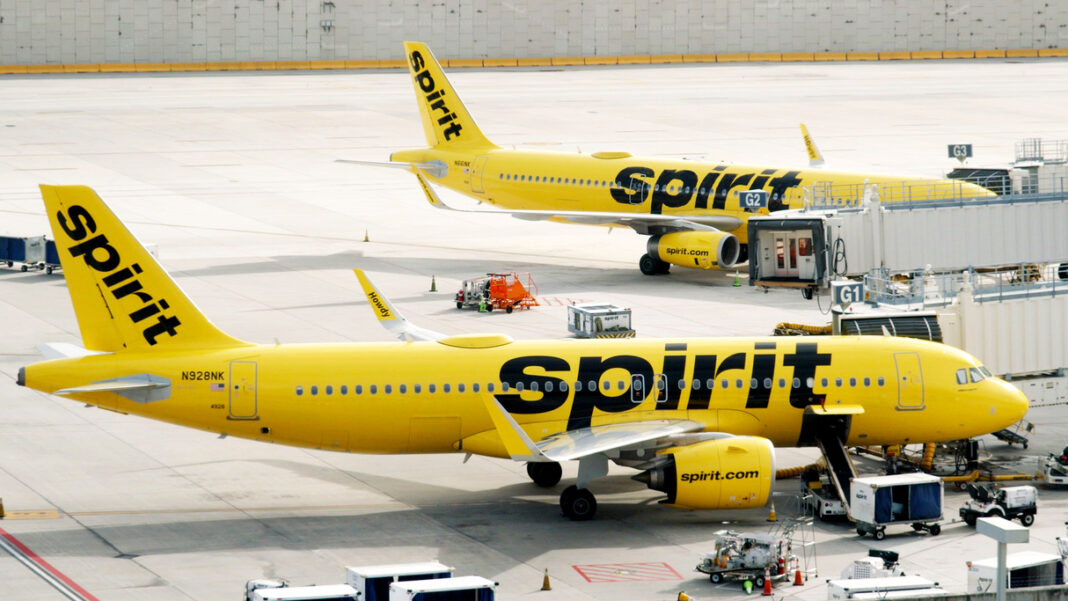


In the high-stakes world of aviation finance, where deals are typically brokered in hushed boardrooms by suits wielding spreadsheets and predatory acquisition strategies, a strange new player has entered the fray. It isn’t a private equity titan or a legacy carrier looking to consolidate market share; it’s a decentralized, fan-driven movement dubbed Spirit 2.0. Spearheaded by voice actor and self-proclaimed Spirit superfan Hunter Peterson, this grassroots initiative is attempting something that sounds more like a Silicon Valley crowdfunding experiment than a corporate takeover: a collective buy-out of Spirit Airlines by its own passengers and former employees.
The premise is as audacious as it is technically ambitious. As Spirit Airlines navigates a precarious financial landscape, the threat of a vulture-capitalist dismantling looms large. Peterson and his growing digital army are positioning this effort as a firewall against total liquidation. By leveraging the power of modern crowdsourcing, they aim to raise enough capital to secure a controlling stake, effectively turning the airline into a community-owned asset. Whether this is a viable business strategy or a masterclass in viral optimism, it’s a development that has sent shockwaves through both the airline industry and the startup community.
The Green Bay Model: A New Flight Path
At the heart of the Spirit 2.0 manifesto is a structural pivot that would be unprecedented in the commercial airline sector. Rather than seeking a traditional acquisition where a single entity assumes control, Peterson is proposing a model inspired by the Green Bay Packers. In this configuration, the airline would transition into a publicly owned, nonprofit-leaning structure. The goal is to strip away the influence of hedge funds and billionaire investors who, in the eyes of the movement’s supporters, prioritize short-term yield over the long-term health of the brand and its service to the public.
From a tech-savvy perspective, the logistics of this are staggering. Managing a decentralized ownership model for an entity as complex as a national airline requires more than just goodwill; it requires robust governance protocols and a legal framework capable of handling thousands, perhaps millions, of micro-investors. While the Packers’ model works for a professional sports team with a singular, localized fan base, scaling that to the operational complexity of an airline—complete with fleet maintenance, fuel hedging, and federal aviation regulations—is a massive hurdle. Still, the movement is banking on the idea that a “people’s airline” could create a brand loyalty so intense that it becomes a competitive advantage in itself.
Viral Velocity and the Infrastructure Crunch
If you’ve been tracking the sentiment on social media over the last 48 hours, you’ve likely seen the Spirit 2.0 campaign metrics. Peterson’s initial pitch hit a nerve, racking up millions of views across platforms in a matter of hours. This isn’t just a niche internet moment; it’s a case study in how quickly digital mobilization can translate into real-world market pressure. However, the rapid surge in interest has exposed the fragility of the movement’s current digital infrastructure. The initiative’s website has been intermittently offline, buckling under the weight of traffic that no one—not even the organizers—fully anticipated.
This “DDoS by enthusiasm” is a classic startup growing pain, but it highlights a deeper challenge for the Spirit 2.0 team. To pull off a move of this magnitude, they need to transition from a viral social media campaign to a sophisticated fintech platform. They aren’t just selling a dream; they are effectively trying to build a crowdfunding mechanism that can process high-volume, high-stakes financial commitments while maintaining transparency and regulatory compliance. The crash-prone website is a symptom of a movement that is currently moving at the speed of light, but needs to quickly pivot toward the stability of a serious investment vehicle if they have any hope of being taken seriously by the SEC or the current Spirit board.
The Technical Hurdles of Decentralized Equity
While the romanticism of a community-owned airline is compelling, the technical implementation of such a takeover is a logistical minefield. Moving from a viral crowdfunding campaign to a SEC-compliant acquisition requires more than just goodwill; it requires a sophisticated financial architecture. Under current federal regulations, pooling capital from thousands of disparate retail investors to purchase a controlling interest in a publicly traded entity triggers a cascade of compliance requirements. The Spirit 2.0 team isn’t just fighting market forces; they are navigating the complexities of the Securities Act of 1933, which governs how securities are offered and sold to the public.
To pull this off, the initiative would need to establish a Special Purpose Vehicle (SPV) or a similar legal entity capable of managing fiduciary responsibilities on a massive scale. The computational load alone—verifying identities, processing micro-investments, and maintaining a transparent ledger of ownership—is the kind of data-heavy operation usually reserved for fintech giants. If they move toward a blockchain-based governance model, they face the additional challenge of integrating decentralized autonomous organization (DAO) structures with traditional corporate governance. The table below highlights the comparative friction between traditional private equity and the proposed community model:
| Feature | Private Equity Acquisition | Spirit 2.0 Community Model |
|---|---|---|
| Capital Source | Institutional LPs/Debt | Retail Crowdsourcing |
| Decision Making | Centralized Board | Distributed Governance |
| Regulatory Burden | Standard M&A Filing | High-Volume Investor Compliance |
| Primary Goal | Return on Investment | Service Continuity/Utility |
Infrastructure and Operational Reality
Beyond the legal and financial frameworks, there is the brutal reality of airline operations. Spirit Airlines is not just a brand; it is a massive, real-time logistics engine. It manages a fleet of Airbus A320 family aircraft, complex pilot scheduling, and stringent FAA safety certifications. For Spirit 2.0 to succeed, the organizers must prove they can retain the institutional knowledge required to keep the planes in the sky. Aviation is a highly regulated environment where the cost of a single maintenance error or operational oversight can be catastrophic. For more on this topic, see: Breaking: Highguard Dev Takes Blame . For more on this topic, see: Breaking: World’s First Modular Controller .
The movement’s reliance on digital enthusiasm ignores the cold, hard hardware of the industry. Planes require constant cycles of maintenance, parts procurement, and fuel hedging—all of which are susceptible to supply chain volatility. If the community-led board lacks the experience to negotiate fuel contracts or manage MRO (Maintenance, Repair, and Overhaul) agreements, the “fan-owned” airline could find itself grounded within weeks. The transition from a fan-based movement to an operational airline requires a bridge between the digital enthusiasts and the seasoned aviation professionals who understand the nuances of Part 121 operations.
For those interested in the technical and regulatory standards governing these operations, the following official resources provide a baseline for what any entity—new or old—must maintain:
The Verdict: Innovation or Illusion?
The Spirit 2.0 bid is arguably the most fascinating stress test of the “creator economy” era. It challenges the assumption that complex, capital-intensive infrastructure must remain the exclusive domain of institutional investors. Even if the bid fails to materialize into a finalized acquisition, it serves as a harbinger of a shift in how stakeholders perceive their relationship with the brands they use. We are seeing a blurring of the lines between consumer and owner, a transition accelerated by the ease of digital transactions and the reach of global connectivity. For more on this topic, see: Breaking: Trump Crypto Firm Confirms .
Ultimately, the aviation industry is built on safety, precision, and massive capital reserves—three things that are notoriously difficult to crowdsource. However, the sheer audacity of Peterson’s effort forces a conversation about the fragility of our current corporate models. Whether or not Spirit 2.0 ever takes off, it has successfully highlighted a growing appetite for democratic control over essential services. We are witnessing the first real-world attempt to apply the ethos of open-source software development to the hardware-heavy world of commercial aviation. It is a messy, unlikely, and deeply technical experiment that will be studied by business analysts long after the current financial drama subsides.