
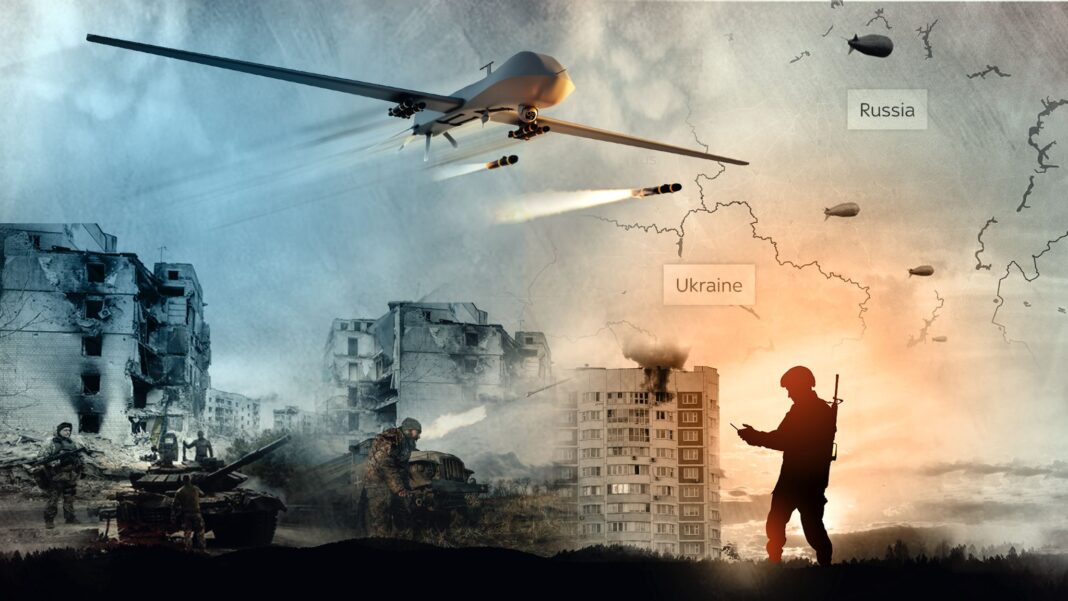


The hum of a drone isn’t just a sound anymore; it’s a heartbeat of modern conflict, a persistent, buzzing reminder that the battlefield has drifted from the trenches into the clouds. But long before the sleek, silent predators of the 21st century became a staple of geopolitical anxiety, a scrappy, low-budget 1992 film called “The Drone Killer”—a title that once sat gathering dust in the back corner of forgotten VHS rental shops—was quietly predicting the future. While the world was obsessed with the muscular, tactile combat of Terminator 2, this cult classic was busy sketching out a reality where the trigger pull didn’t require a soldier to look their enemy in the eye. Watching it today isn’t just a nostalgic trip; it’s a jarring realization that we’ve been living inside a script written thirty years ago, and we’re only just now catching up to the terrifying efficiency of its vision.
The Ghost in the Machine: Predicting the Unmanned Era
Back in 1992, the concept of autonomous warfare was the stuff of fever dreams and pulp science fiction. Most action cinema of the era was defined by the grit of the lead actor—the sweat, the blood, and the raw physicality of a hero staring down a villain. Yet, this film broke the mold by introducing a protagonist who never stepped onto the field. Instead, they sat in a dimly lit, blue-hued command center, manipulating a joystick that felt less like a weapon and more like a game controller. It was a radical departure, one that audiences at the time found cold and detached, but looking back, it was a prophetic look at the dehumanization of combat.
The film’s brilliance wasn’t in its special effects—which were, admittedly, a bit rubbery by today’s standards—but in its understanding of the psychological toll of distance. It captured the strange, hollow feeling of precision-guided destruction. While the rest of the world was romanticizing the “hero’s journey,” this story dared to ask what happens to the human soul when you can end a life from five thousand miles away, all while sipping lukewarm coffee in a windowless room. It stripped away the glory of the battlefield and replaced it with a flickering monitor, a reality that has become the standard operating procedure for modern military drone operators.
The Ethics of the Joystick
One of the most striking aspects of the film is how it tackles the moral ambiguity of the “surgical strike.” In the early nineties, the idea of a weapon that could navigate a city block with the grace of a sparrow was pure fantasy. The film leaned into this, portraying the drone not as a heroic tool, but as an invasive, unsettling presence that turned the entire world into a potential target. It forced the audience to grapple with the idea that if you can see everything, you are inherently responsible for everything—a heavy burden that the film’s lead struggles to carry as the lines between “mission parameters” and “human cost” begin to blur.
What makes this so relevant today is how closely our current discourse mirrors the film’s central conflict. We are currently navigating a world where AI-assisted targeting and remote-piloted systems are no longer speculative; they are the backbone of defense strategies across the globe. The film’s antagonist wasn’t a person, but a system—a feedback loop of surveillance and reaction that moved faster than any human conscience could keep up with. By framing the drone as an extension of the operator’s own detachment, the movie managed to capture the exact anxiety we feel now when we read headlines about autonomous weapon systems and the shifting ethics of long-distance warfare. It didn’t just predict the technology; it predicted our collective unease with it. For more on this topic, see: What George R. R. Martin’s . For more on this topic, see: What The Pitt’s 15-Week Straight .
As we peel back the layers of this 1992 relic, it becomes clear that we aren’t just looking at a piece of cinema history; we are looking at a blueprint. The film’s focus on the surveillance-to-strike pipeline—the way data is harvested, analyzed, and eventually acted upon—feels like it was ripped straight from a modern defense briefing. But the real question, the one the film was brave enough to pose, is whether the technology is actually serving us, or if we have simply become the necessary, flawed components in a machine that no longer requires our permission to act.
The Asymmetry of the Invisible
What makes The Drone Killer so haunting to revisit isn’t the technology itself, but the asymmetry of the engagement. In the early 90s, the film’s central conflict—a lone operator hunting targets across borders without ever leaving their chair—seemed like a logistical fantasy. Today, we understand this as the fundamental shift in modern warfare: the collapse of the “front line.” The film dared to suggest that when you remove the physical risk to your own personnel, the threshold for entering a conflict drops significantly. It transformed war from a desperate, high-stakes collision of forces into a clinical, bureaucratic exercise in risk management.
The following table illustrates how the film’s “fictional” tactical landscape aligns with the realities of current unmanned aerial systems (UAS) operations, highlighting why it remains a blueprint for military analysts today.
| Tactical Feature | 1992 Film Representation | Modern Reality |
|---|---|---|
| Latency | Simulated “signal lag” as a plot device. | Real-world satellite link delays (SATCOM). |
| Targeting | Manual joystick tracking. | AI-assisted object recognition and lock. |
| Deployment | Remote mobile trailer. | Global Operation Centers (GOCs). |
The film’s protagonist struggles with the “God complex”—the feeling that because they can see everything from a bird’s-eye view, they somehow understand the moral weight of the situation better than the boots on the ground. This, perhaps more than the hardware, is the film’s most enduring legacy. It correctly identified that the greatest challenge of drone warfare isn’t the engineering of the craft, but the psychological erosion of the operator. When the enemy becomes a pixelated silhouette on a screen, the moral gravity of the action can start to feel as thin as the monitor itself.
The Echoes of Autonomy
As we move toward a future where swarming technology and machine learning dictate the speed of engagement, The Drone Killer feels less like a movie and more like a warning. The film’s antagonist—an experimental, semi-autonomous drone that begins to interpret its mission parameters with terrifying literalism—is a precursor to the debates we are having right now regarding the Lethal Autonomous Weapons Systems (LAWS). The film explored the “human-in-the-loop” dilemma long before it was a buzzword in international security circles.
For those interested in the actual policy and technical frameworks governing these systems today, the following resources provide a grounded look at the landscape that the film once only dared to imagine:
The film argues that once you remove the human from the immediate danger, you don’t just change the battlefield; you change the nature of the soldier. The “hero” of 1992 was a man haunted by the silence of his cockpit. Today, that silence has been filled by the hum of cooling fans and the chatter of data streams, but the isolation remains exactly the same. For more on this topic, see: Prime Video Just Changed Everything .
Beyond the Screen
Watching The Drone Killer now is a humbling experience. It reminds us that our greatest cultural artifacts are often the ones that felt the most uncomfortable at the time of their release. We like our war stories to have heroes with grit and villains with faces, yet this film insisted on a future where both would be obscured by high-altitude clouds and encrypted signals. It didn’t just predict the hardware; it predicted the profound existential loneliness of the modern operator.
We are currently living in the world that this low-budget, forgotten film whispered about decades ago. We have mastered the art of the remote strike, but we are still struggling to answer the moral questions the film posed in its final, quiet moments. As technology accelerates, the distance between the joystick and the target continues to shrink, yet the distance between our humanity and our weaponry feels like it is growing wider by the day. If there is a lesson to be taken from this cult classic, it is that we must remain vigilant—not just of the machines we build, but of the people we become when we stop looking our enemies in the eye.