
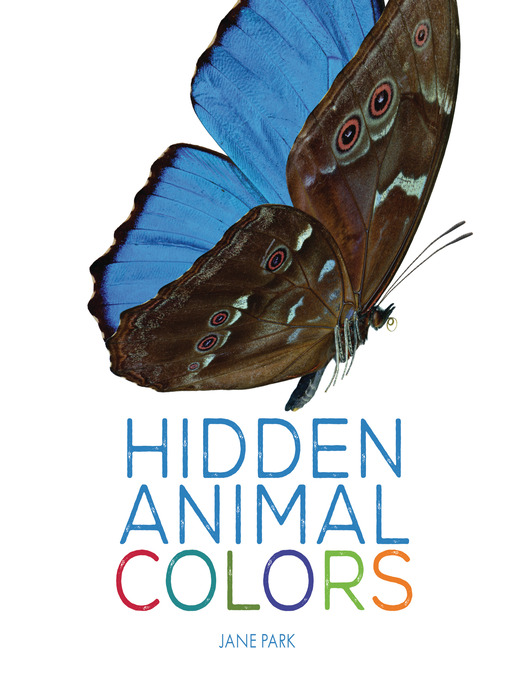


For most of human history, we’ve operated under the arrogant assumption that our visual spectrum is the gold standard. We build our screens, our color-coded interfaces, and our entire digital reality around the trichromatic limitations of the human eye. But out in the wild, animals are navigating a world painted in colors we literally lack the hardware to perceive. Thanks to a breakthrough in imaging technology, we are finally tearing down that biological wall. Researchers have developed a sophisticated camera system that translates the hidden, hyper-saturated realities of the animal kingdom into a format our puny primate brains can actually process. It’s a fascinating collision of optics and evolutionary biology, and it’s changing everything we thought we knew about how nature communicates.
The Ultraviolet Frontier: Seeing Beyond the Visible
To understand why this tech is such a game-changer, you have to look at the physics of the light spectrum. Humans are stuck in the visible light range—roughly 380 to 700 nanometers. Everything outside that, specifically the ultraviolet (UV) range, is functionally invisible to us. However, for a vast swathe of the animal kingdom, UV light is a primary data stream. Birds and bees possess tetrachromatic vision, an evolutionary superpower that allows them to perceive these shorter wavelengths as distinct colors. They aren’t just seeing “brighter” light; they are seeing an entirely different palette that we’ve been blind to for millennia.
The new camera systems are effectively bridging this gap by using specialized sensors and software to capture these UV wavelengths and map them onto the standard RGB spectrum we use for digital displays. When you look at footage captured through this gear, the results are jarring. A field of white flowers, which looks mundane to us, suddenly explodes with intricate, high-contrast patterns designed to guide pollinators directly to the nectar. It’s a masterclass in biological engineering. What we perceived as a simple landscape is, in reality, a complex, high-bandwidth communication network that has been operating right under our noses the entire time.
Survival Strategies and Biological Utility
This isn’t just about pretty patterns; it’s about the brutal, high-stakes efficiency of survival. For many species, the ability to perceive UV light is a critical evolutionary adaptation. Think of it as a biological HUD (Heads-Up Display). Birds, for instance, use UV vision to identify food sources, spot the specific UV-reflective markings on fruit, or even track the urine trails of small prey that would be invisible against the complex textures of a forest floor. It’s a level of sensory awareness that makes our reliance on standard visible light seem almost quaint.
The stakes are even higher when it comes to reproductive success. Many birds exhibit plumage that is highly UV-reflective, essentially acting as a beacon to potential mates. By mapping these signals, the new imaging tech reveals that what we see as a drab, monochromatic bird is actually a vibrant, neon-lit display of fitness and health. This biological utility extends to the insect world as well, where UV patterns act as landing strips for bees, ensuring the survival of the plant and the pollinator alike. We are finally seeing the “secret” language of the wild, and it turns out, nature has been using a much more advanced signaling system than we ever gave it credit for.
The Mammalian Gap: A Different Kind of Sight
While birds and insects are living in a high-definition UV world, our closest companions—dogs and cats—are dealing with a much more restricted experience. It’s a common misconception that our pets see in black and white, but the reality is more nuanced. Most common mammals are dichromats. They lack the specific photoreceptors required to distinguish between red and green light. In our terms, their world is a permanent, muted filter, dominated by blues and yellows. It’s a trade-off; while they may lack our depth of color perception, they often compensate with superior motion detection and low-light sensitivity, which are far more valuable for nocturnal hunters.
This stark contrast between the tetrachromatic world of birds and the dichromatic reality of mammals highlights just how subjective “reality” really is. Our new imaging tools aren’t just capturing light; they are mapping the cognitive architecture of other species. By placing these different visual profiles side-by-side, we’re beginning to understand that there is no “true” color. Color is simply a data interpretation, a tool built by evolution to solve specific problems in specific environments. As we refine these camera systems, we’re moving closer to a point where we can simulate not just the sight of an animal, but perhaps understand the specific survival pressures that shaped their unique window into the world. For more on this topic, see: What Fallout’s Mysterious Countdown Reveals .
The Dichromatic Disparity: Why Mammals See the World in Muted Tones
While birds and insects operate in a high-fidelity, multidimensional color space, the mammalian experience is surprisingly monochromatic by comparison. Most of our common companions—dogs and cats—are dichromatic. They lack the specific photoreceptor cells required to process the red-green spectrum. To them, the world isn’t just a different palette; it’s a filtered, flattened version of our own. When we use our new imaging hardware to simulate the vision of a house cat, the vibrant, high-contrast landscape of a garden collapses into shades of blue and yellow.
This technical disparity highlights a fascinating evolutionary trade-off. Mammals, historically nocturnal or crepuscular, traded color resolution for scotopic sensitivity—the ability to detect motion and navigate in near-total darkness. The following table summarizes the spectral capabilities of various species, illustrating the stark divide between those who prioritize color data and those who prioritize low-light performance:
| Species | Vision Type | Primary Spectral Range |
|---|---|---|
| Human | Trichromatic | 380–700 nm |
| Honeybee | Tetrachromatic | 300–650 nm (includes UV) |
| Domestic Dog | Dichromatic | 430–600 nm |
| Bird (Various) | Tetrachromatic | 300–700 nm (includes UV) |
Data Translation: How We “Fake” the Invisible
The engineering challenge here isn’t just about capturing light; it’s about data mapping. Because our digital displays are built on an RGB (Red, Green, Blue) architecture, we cannot simply “show” a human an ultraviolet color. It doesn’t exist in our sensory register. Instead, the software engineers behind these camera systems utilize a technique called false-color mapping. By shifting UV data into the blue-violet channel, the system creates a synthetic representation that preserves the relative contrast and intensity of the original scene.
This is essentially a form of signal processing. The camera acts as a transducer, taking an input signal (UV radiation) that would normally be discarded and re-encoding it into a format that triggers our existing neural pathways. This allows us to perform “visual forensics” on animal behavior. We can finally see the “landing strips” on flowers that guide bees, or the subtle, sexually dimorphic patterns on bird feathers that signal fitness to a potential mate—patterns that remain completely invisible to the naked eye. It’s a reminder that our perception is merely a user interface, and like any UI, it is optimized for specific tasks, not for capturing the absolute truth of the environment.
The Future of Bio-Optics
As we continue to refine these sensors, the implications for ecological research are profound. We are moving toward a future where “field biology” will be conducted with the same level of technical rigor as particle physics. By understanding how animals perceive their environment, we can better understand their navigation, their predator-prey dynamics, and their responses to environmental stressors. We are essentially building a universal translator for the visual language of nature. For more on this topic, see: What Nintendo’s New President’s First .
For those interested in the technical specifications and biological foundations of these vision systems, the following resources provide a deep dive into the underlying science:
- Wikipedia: Tetrachromacy – Understanding the biological basis of four-channel color vision.
- Nature: Research archives on sensory biology and evolutionary optics.
- National Science Foundation: Reports on advancements in bio-imaging and sensor development.
Ultimately, this technology serves as a humbling reminder of our own limitations. We have spent centuries constructing a digital world that reflects our own biological constraints, often forgetting that the environment around us is teeming with information we are physically incapable of accessing. By leveraging these new imaging tools, we aren’t just looking at animals; we are looking at the limitations of our own hardware and acknowledging that the world is far more complex than our eyes have led us to believe. We are finally stepping out of the narrow corridor of our own perception and into the wide, vibrant, and hidden spectrum of the natural world. For more on this topic, see: What George R. R. Martin’s .