
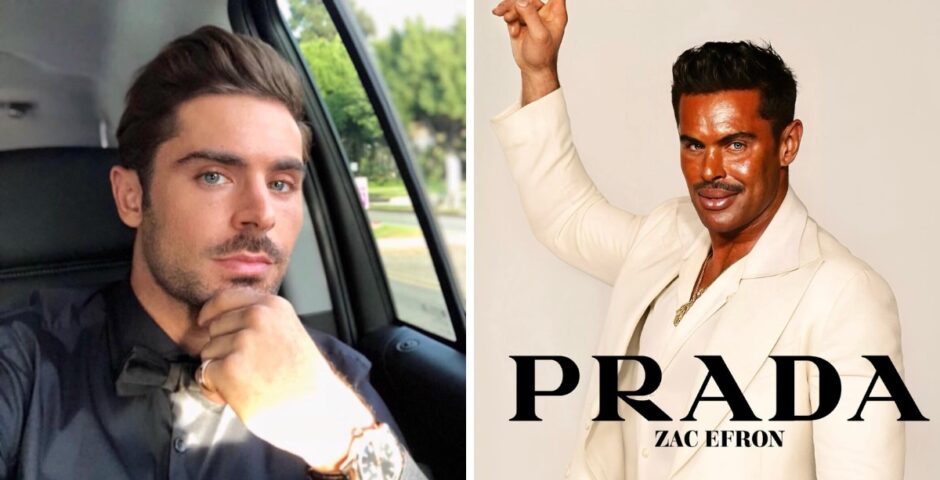


If you’ve spent more than five minutes scrolling through your FYP this week, you’ve undoubtedly been hit by the latest digital fever dream: the Prada 2 meme. It started with a whisper—a grainy, AI-generated image of a fictional, ultra-exclusive Prada collection that looks like something pulled from a Y2K sci-fi flick—and exploded into a full-blown cultural phenomenon. For a split second, I’ll admit, even I did a double-take. Is this the new runway direction? Are we entering the era of “Prada 2”? Spoiler alert: it’s not real, but the fact that we all wanted it to be says everything about where luxury marketing is currently sitting on the precipice of a massive identity crisis.
The Illusion of Exclusivity in the Age of Algorithms
The “Prada 2” trend isn’t just another fleeting internet joke; it’s a masterclass in how AI-generated content is beginning to outpace the actual creative output of major fashion houses. When users started flooding social media with these hyper-stylized, slightly uncanny visuals, the engagement was instantaneous. Why? Because the images tapped into a specific, high-gloss aesthetic that Prada has spent decades cultivating, but dialled up to an impossible, surrealist extreme. It’s the ultimate “if you know, you know” flex, rendered in high-definition pixels that don’t actually exist in any atelier in Milan.
What’s fascinating here is the role of parasocial luxury. We aren’t just consumers of products anymore; we are consumers of the idea of the brand. These AI memes are effectively doing the marketing team’s job for them, creating a sense of urgency and “cool” around a product that hasn’t even been manufactured. It reveals a hunger for innovation that luxury houses are struggling to feed. When a bot can generate a more “Prada-coded” image than a multimillion-dollar marketing campaign, it forces us to ask: are we falling in love with the brand’s heritage, or are we just addicted to the aesthetic dopamine hit of the algorithm?
When Viral Trends Outpace the Runway
Historically, the luxury hierarchy was a top-down affair. The Creative Director would drop a vision, the magazines would interpret it, and the public would eventually catch up. But the Prada 2 phenomenon proves that the democratization of design—or at least the simulation of it—has flipped the script. We are now in a cycle where the internet dictates the “vibe,” and brands are left scrambling to decide whether to lean into the chaos or ignore it entirely. It’s a precarious position for a house like Prada, which relies so heavily on its reputation for intellectual rigor and high-concept artistry.
There is a distinct tension between the curated legacy of a heritage brand and the raw, unpolished speed of viral trends. When AI creates a “Prada 2,” it’s essentially a remix of everything the brand has ever stood for, stripped of the human element. It’s efficient, it’s visually arresting, and it’s entirely hollow. Yet, the engagement metrics speak for themselves. The meme has generated more conversation than some actual runway shows this season, proving that in the attention economy, the perception of a collection is often more valuable than the physical garments themselves. We’re watching a tug-of-war between authentic craftsmanship and the infinite, frictionless possibilities of synthetic creativity.
This isn’t just about a few clever prompts on Midjourney; it’s about the shifting power dynamics of the luxury consumer base. The younger generation, raised on the rapid-fire cycle of TikTok trends, doesn’t necessarily care if the “Prada 2” bag is available for purchase today. They care about the cultural currency of being in on the joke. By participating in the meme, they feel like they are part of the inner circle, even if that circle is built on a foundation of digital smoke and mirrors. Luxury brands have always sold exclusivity, but now, they’re competing with an internet that can manufacture its own version of “exclusive” in seconds.
The Democratization of the “Aesthetic”
The “Prada 2” phenomenon highlights a seismic shift in the power dynamics of luxury fashion. Historically, fashion houses held an iron grip on their visual identity. They dictated the trends, the color palettes, and the silhouettes through controlled runway shows and high-gloss editorial spreads. Now, that top-down approach is being challenged by the democratization of design tools. Anyone with a prompt and a subscription to an image generator can now iterate on the “Prada” look, effectively crowdsourcing the future of the brand’s aesthetic.
This isn’t just about fan fiction; it’s about the commodification of style codes. When AI models are trained on decades of runway archives, they become experts in the “visual language” of a brand. They understand the specific interplay of Prada’s signature nylon, the subversive use of clashing prints, and the intellectual, slightly off-kilter silhouettes that define the Miuccia Prada era. By stripping away the physical product, these AI memes reveal that a luxury brand is essentially a set of repeatable design parameters. If an algorithm can synthesize these parameters so effectively, it forces us to consider the value of the physical garment versus the value of the brand signal itself.
| Feature | Traditional Luxury Marketing | AI-Driven Viral Trends |
|---|---|---|
| Control | High (Brand-led) | Low (Community-led) |
| Production | Physical/Tangible | Digital/Speculative |
| Engagement | Transactional | Experiential/Participatory |
| Authenticity | Heritage-based | Vibe-based |
The Uncanny Valley of Consumer Desire
There is a distinct psychological tension at play here. The “Prada 2” images are gorgeous, yet they possess that subtle, synthetic “wrongness” that characterizes modern AI art—the slightly too-smooth skin, the impossible fabric physics, the dreamlike lighting. For a long time, luxury was defined by craftsmanship and the human touch. We valued the hand-stitched seam and the weight of the silk. Now, we are seeing a strange pivot where consumers are actively engaging with—and even desiring—the synthetic.
This suggests that for the digital-native consumer, the “vibe” has officially superseded the “make.” We are entering an era where the digital twin of a luxury item—or even a completely imaginary one—carries as much cultural currency as the real thing. Luxury houses are currently in a race to claim this space, but they are finding that they no longer own the narrative. When the public can generate a more compelling version of your brand than your own creative directors, you aren’t just a fashion house anymore; you’re a cultural platform. The question is whether these brands can pivot to embrace this co-creation or if they will double down on the exclusivity that the internet is so rapidly eroding. For more on this topic, see: What Nintendo’s New President’s First .
For those interested in the evolving intersection of technology and intellectual property, you can explore the foundational concepts of digital design and brand identity through official resources:
- World Intellectual Property Organization (WIPO) – Understanding the protection of brand identity in the digital age.
- Prada Group Official Site – Reviewing the brand’s actual historical archive and current creative direction.
- Library of Congress – Researching the historical evolution of fashion and cultural trends.
The Final Stitch: Where Do We Go From Here?
At the end of the day, the “Prada 2” meme is a mirror. It reflects our collective obsession with status, our hunger for the “next big thing,” and our willingness to blur the lines between reality and simulation. It tells us that luxury is no longer just about owning a bag or a pair of loafers; it’s about participating in a discourse. The brands that win in this new landscape won’t be the ones that try to shut down the bots or sue the creators—they’ll be the ones that learn to speak the language of the algorithm. For more on this topic, see: What George R. R. Martin’s . For more on this topic, see: What Fallout’s Mysterious Countdown Reveals .
We are witnessing the death of the “exclusive” secret and the birth of the “viral” myth. Prada, with its long history of intellectual curiosity and subversion, is perhaps the best-positioned house to navigate this. They’ve always played with the idea of “ugly-chic” and challenged the traditional definitions of beauty. Perhaps “Prada 2” isn’t a threat to their legacy, but rather the ultimate validation of it. After all, if your brand is so iconic that it can be synthesized by a machine and still feel like a must-have, you’ve done more than build a business—you’ve built a permanent fixture in the collective human imagination. Whether the physical product ever hits the shelves or stays trapped in the digital ether, the impact is already here. And honestly? I’m here for the ride.