
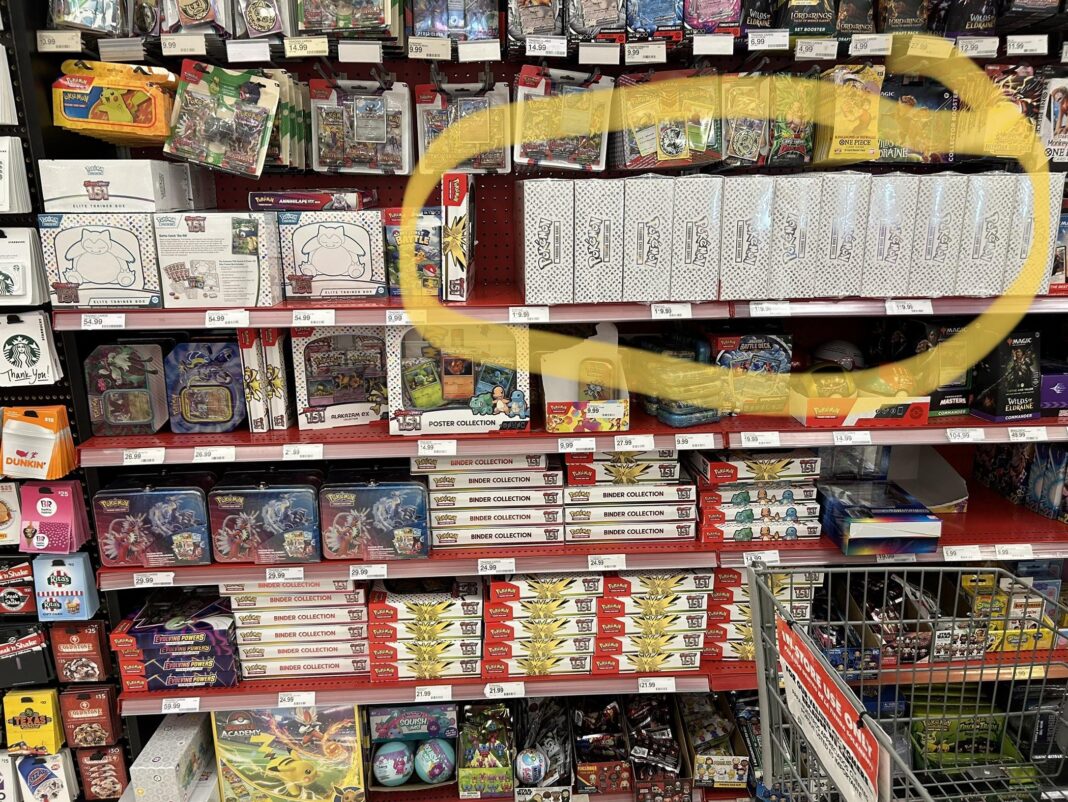


If you’ve spent any time on the retail beat, you know that the “Target Effect” is a very real, very chaotic phenomenon. It’s that precise intersection where supply chain logistics meet the sheer, unadulterated fervor of a fandom that hasn’t aged a day since 1996. The latest Pokémon collection hitting Target shelves isn’t just another merchandise drop; it’s a masterclass in artificial scarcity and the digital-age “hype cycle.” I’ve been tracking retail trends for years, and rarely do I see a brand manage to sustain this level of market dominance across three different generations of consumers simultaneously. But as we’re seeing this week, the shelves are clearing faster than the bots can refresh the API endpoints, and there’s a lot more going on here than just a few plushies and trading cards.
The Algorithmic Hunger: Why Scarcity Still Rules
When we talk about why these collections vanish in minutes, we have to look past the “Pokémon mania” narrative and start talking about inventory management software and the secondary market economy. Target, like many big-box retailers, has refined its digital storefronts to handle massive spikes in traffic, but they are constantly battling a sophisticated ecosystem of automated scrapers. These bots are programmed to identify specific SKUs the second they go live, bypassing the typical user journey of browsing and carting. For the average consumer, it feels like the items were never there to begin with—because, in a digital sense, they weren’t.
From a tech perspective, this is a fascinating arms race. Target has implemented various CAPTCHA layers and rate-limiting protocols to keep the playing field level, but the scalper community is moving just as fast, utilizing residential proxy networks to mimic human traffic patterns. It creates an environment where the perceived value of the product is artificially inflated by the sheer difficulty of acquisition. When a collection is “sold out” within three minutes of a midnight drop, it creates a FOMO-driven feedback loop that ensures the next drop will be even more intensely contested. It’s a brutal cycle for the casual fan, but for the data scientists watching the sell-through rates, it’s a goldmine of consumer behavior metrics.
Hardware Meets Nostalgia: The Tech Behind the Hype
It’s not just the trading cards; the hardware peripherals—custom-designed controllers, themed charging docks, and high-fidelity tabletop accessories—are seeing the highest velocity of sales. What’s interesting here is the shift in demographics. We aren’t just looking at kids asking their parents for a toy; we’re looking at tech-savvy adults who integrate these items into their battlestation setups. The aesthetic appeal of a limited-edition Pokémon-themed accessory is now being treated with the same level of collector’s prestige as a high-end mechanical keyboard or a custom GPU backplate.
This integration of “geek culture” into high-end hardware design is a deliberate move by The Pokémon Company. By partnering with manufacturers that understand the importance of build quality and ergonomic design, they’ve moved the needle from “cheap plastic tie-in” to “premium desk essential.” When you look at the build specs of these new peripherals, you’re seeing improved tactile switches and better material science, which justifies the price tag for the enthusiast crowd. However, this also means that the supply chain is more complex than it used to be. Manufacturing high-quality, branded electronics involves longer lead times and more points of failure in the global logistics chain, which inadvertently feeds back into that supply-side constraint that makes these items so elusive. For more on this topic, see: Breaking: Trump Crypto Firm Confirms .
As we dig deeper into the release strategy, it becomes clear that this isn’t just a haphazard rollout. There’s a sophisticated, tiered release strategy at play that keeps the consumer base in a constant state of anticipation. By staggering the availability of specific items—some exclusive to physical retail, others locked behind the Target app’s digital interface—the brand is essentially forcing a multi-channel engagement that keeps their app installed on millions of devices. We’re seeing a convergence of omnichannel retail strategy that leverages the physical store as a showroom while funneling the actual transaction volume through the digital pipe, where inventory can be tracked and manipulated with surgical precision.
The Logistics of the Last Mile: Distribution Bottlenecks
Beyond the digital skirmish at the point of sale, there is the physical reality of omnichannel distribution. Target’s current strategy relies heavily on a “hub-and-spoke” model where major distribution centers feed into local retail nodes. When a high-demand drop like this Pokémon collection occurs, the inventory isn’t just sitting in a warehouse; it is being dynamically allocated based on predictive analytics. This is where the “Target Effect” creates friction: the algorithm might prioritize stores in high-density urban areas, leaving suburban and rural locations with negligible stock, or worse, “phantom inventory” that shows as available in the app but is nowhere to be found on the floor.
This discrepancy between the Inventory Management System (IMS) and the physical shelf is a classic software-hardware synchronization failure. When an employee scans a barcode, the system updates in near real-time, but the lag between a customer grabbing an item, the item being scanned at checkout, and the database reflecting that change is often measured in minutes. In a high-velocity environment, those minutes are an eternity. Scalpers exploit this latency, using mobile inventory trackers to identify which stores have misaligned stock counts, effectively “mining” the retail floor for assets that the system hasn’t officially marked as depleted yet.
| Factor | Impact on Availability | Technical Mitigation |
|---|---|---|
| API Scraping | High (Instant depletion) | Rate-limiting & Behavioral Analysis |
| Latency (IMS) | Medium (Phantom stock) | Edge Computing & RFID Tracking |
| Geographic Allocation | High (Regional scarcity) | Predictive Demand Modeling |
The Evolution of the Collector: Data-Driven Fandom
We are witnessing a paradigm shift in how collectibles are valued. Historically, the value of a Pokémon card or plush was tied to its rarity within the game’s lore. Today, the value is increasingly tied to data-backed scarcity. Collectors are no longer just fans; they are amateur analysts. They monitor sites like the Tales Of Phantasia Cross Edition .
For those interested in the technical standards governing product identification and retail tracking, the following resources provide insight into the infrastructure behind these massive retail operations:
- National Institute of Standards and Technology (NIST): Provides the foundational research on digital security and cybersecurity frameworks used to protect e-commerce platforms.
The Future of Retail Friction
As we look forward, the tension between automated retail and human consumption will only intensify. We are moving toward a future where AI-driven retail environments might eventually prevent these sell-outs by implementing “verified human” checkouts, or perhaps by shifting to a pre-order model that eliminates the need for physical store drops entirely. However, as long as the “thrill of the hunt” remains a core component of the Pokémon brand identity, manufacturers and retailers will likely continue to lean into this manufactured scarcity.
The Pokémon collection at Target is a microcosm of the modern digital economy. It highlights the vulnerability of our retail infrastructure to automation while simultaneously showcasing the incredible, enduring power of a brand that has successfully digitized its own nostalgia. If you’re trying to secure these items, you’re not just fighting other shoppers—you’re fighting a complex, global network of code, logistics, and data analytics. My advice? Stop refreshing the browser. The bots have already won this round, and until the underlying architecture of retail changes to prioritize equitable access over velocity, the most effective strategy for the average fan is to accept that the digital shelf is, for now, a playground for the fastest algorithm. For more on this topic, see: What Google’s Sneaky Icon Size .