
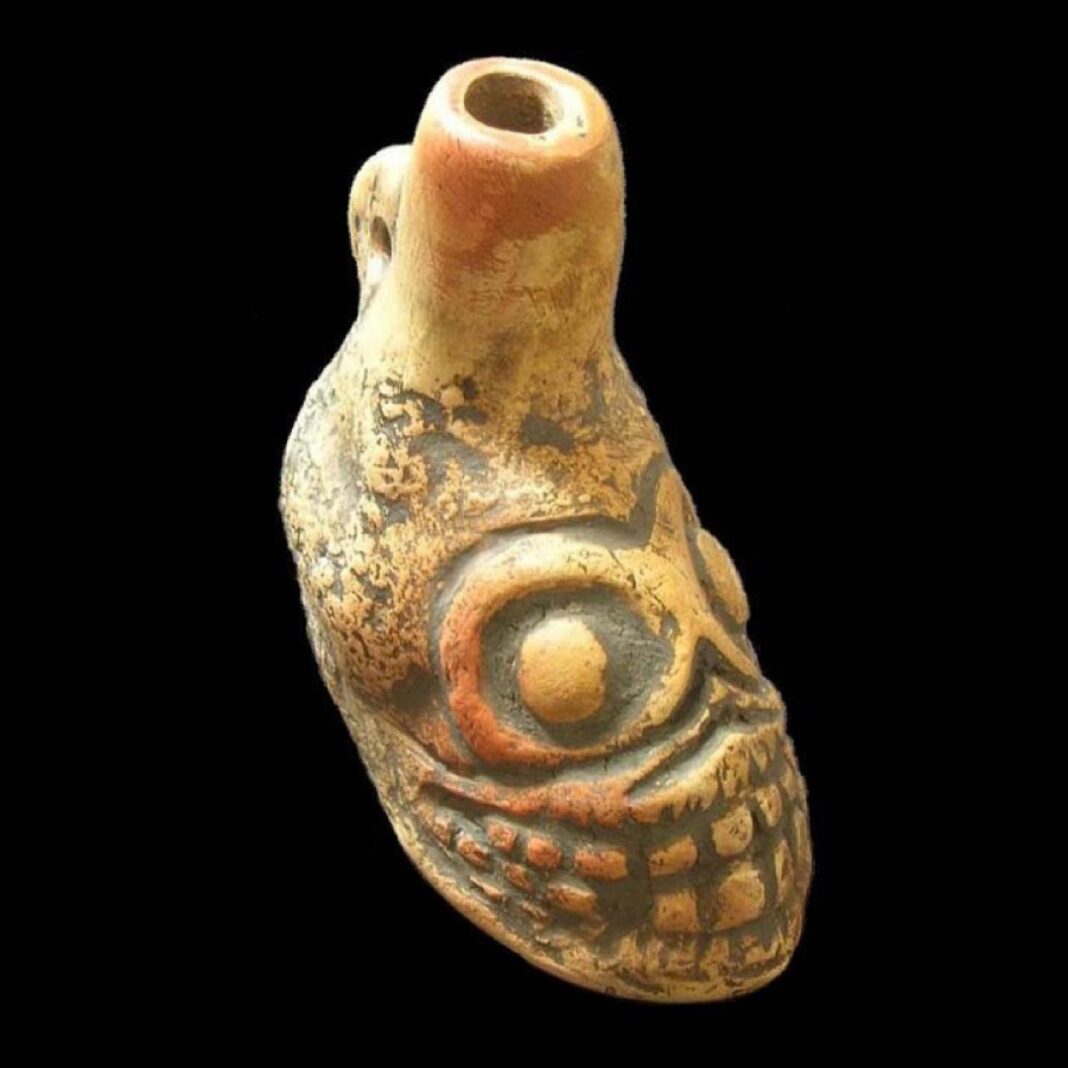


The first time I held an Aztec death whistle, the sound that escaped was a high‑pitched wail that reminded me of a crowd of voices screaming through a hollow bone. My neighbor, hearing it from the kitchen, assumed I was tormenting a pet. When Corin Hardy—director of The Nun—heard the same shriek, he saw a way to build an entire film around it. His upcoming movie Whistle uses the centuries‑old Mesoamerican instrument, once dismissed by archaeologists as a child’s toy, as the central horror mechanism. One blast of the whistle triggers a chain of fatal events that echo the logic of the deaths in Final Destination and the visceral gore of Evil Dead. The teaser, released quietly to a handful of theaters last month, caused a noticeable stir among early viewers in Tijuana. I met Hardy in a dim London pub, where he placed a weathered whistle on the scarred oak table. “Put your lips to it,” he said, eyes fixed, “and you’ll understand why we postponed the release three times. We kept asking ourselves: can we actually show this?”
A Cursed Instrument That Predates Columbus
Archaeologists uncovered the clay, skull‑shaped whistles in 1999 beneath Mexico City’s Templo Mayor and initially filed them as “ritual artifacts.” The objects were stored away while museums focused on gold pieces. A doctoral student later blew into one, and the resulting sound—part jaguar howl, part human wail—shattered a laboratory window. Hardy found a YouTube clip of that moment while researching The Hallow and became fixated. He traveled to Mexico City, traded a bottle of 30‑year‑old Irish whiskey for a private collector’s whistle, and spent a night in a basement listening to it until security asked him to leave. “It doesn’t just scare you,” he told me, turning the relic so its hollow eyes faced me. “It marks you. The premise of the film is that once you hear it, your predetermined death—whether a heart attack at eighty or cancer at sixty—collapses into the present.”
Screenwriter Teresa Sutherland (The Haunting of Bly Manor) built the backstory from fragmented codices. According to those sources, the whistle was crafted by Tlazolteteo, goddess of filth and purification, as a punishment for Spanish conquistadors who desecrated sacred temples. Hardy’s adaptation moves the curse into the present, linking a modern archaeological dig, an indie concert in Dublin, and a TikTok livestream that goes viral. Each victim meets the fate described in the ancient legend—burned, flayed, or otherwise—compressed into a few minutes of on‑screen action. The production used practical effects whenever possible: silicone torsos, pressurized blood rigs, and breakaway dental molds. “We wanted the audience to feel the skin peel,” Hardy said, sliding the whistle back into a velvet pouch as if it were a grenade.
Death Scenes So Vicious They Delayed the Release
The studio’s first cut received an NC‑17 rating for “intense graphic content,” a distinction Hardy wears with pride. One sequence follows an ethnomusicologist who analyzes the whistle’s frequency; she collapses inside a soundproof booth as her skeleton vibrates apart. The MPAA flagged the scene for “excessive resonance violence,” a term rarely used in ratings reports. Hardy trimmed only eleven frames, which pushed the release from October 2024 to February 6 2026. Insiders suggest the additional year gives the marketing team time to build controversy around the film. Executive producer James Wan screened an unfinished version for horror‑focused YouTubers, sparking reaction videos titled “I CAN’T UNSEE THIS” and “GORE WARNING: BONES ARE NOT SUPPOSED TO DO THAT.”
Beyond the gore, the film explores fate. Hardy describes the whistle as “a tuning fork for mortality,” a reminder that death can arrive at any moment. Lead actress Isabela Merced spent weeks studying pre‑Columbian flute techniques to reproduce the scream, practicing in a rented cottage on Achill Island where locals reported hearing banshee‑like sounds. “The sound gets inside your ribcage,” she said over Zoom, voice still hoarse. “You walk around convinced your heart will stop if someone sneezes.” The production layered her performance with Dolby Atmos, positioning the whistle’s shriek overhead so viewers instinctively duck.
Whether February 2026 becomes the film’s launch window depends on the final sound mix. Rumors indicate Hardy is experimenting with infrasound—frequencies below 20 Hz that can induce anxiety and visual distortion. He handed me a pair of earplugs “for insurance” before the pub closed. Outside, London fog swallowed the streetlights, and I thought I heard a faint clay wail echo off Victorian brick, as if searching for its next listener.
The Sound That Hunts You
Hardy wanted more than jump scares; he wanted a sound that lingered in the mind. He hired bio‑acoustician Dr. Mara Quintero to map the whistle’s spectrum. Their analysis revealed a 52‑Hz spike just below the range of normal speech, a frequency that triggers the mammalian panic reflex. “Your brain interprets it as a distressed infant,” Quintero explained, “but the waveform climbs until it rattles the ossicles like dice in a cup.”
Sound designer Glenn Freemantle (Gravity, Exorcist: Believer) turned that data into a motorized “clay choir”: thirty replica whistles, each tuned slightly differently, mounted on rotating arms. As the arms spin, the whistles open and close, creating a Doppler‑shifted wail that seems to pass through the audience’s skull. Hardy presented the choir to studio executives at 2 a.m. in an empty Dolby Atmos theater; three of them asked for the lights to be turned back on. A whisper track now runs through every channel—left, right, overhead—so the sound circles the theater before it hits.
| Frequency (Hz) | Biological Effect | Used in Film? |
|---|---|---|
| 52 | Mammalian distress signal | Yes—every death scene |
| 17 | Eyeball resonance (visual vibration) | Yes—teaser trailer |
| 0.8 | Heartbeat entrainment | Yes—final nine minutes |
Clay, Blood, and Silicone: The Props That Bite Back
The whistle Hardy showed me in the pub was produced from a CT scan of the original Templo Mayor artifact, 3‑D printed, then coated in micaceous clay and fired in a kiln built inside an abandoned barn in County Wicklow. Each crack in the blackened surface is authentic; mica flecks catch the projector bulb and create tiny reflections that appear as constellations on screen. For close‑up shots of a throat being torn, the crew used a second whistle cast in medical‑grade silicone and filled with fake blood. Prop master Ciara Barry injected 15 ml of warmed glycerin blood through a hidden port; when actor Alvaro Cervantes inhaled, the whistle “exhaled” a crimson mist that drifted across the lens.
The silicone prop is flexible enough to be snapped in half by an actor’s teeth without injury, yet it still produces the same discordant note. Cervantes kept one after filming, planning a Halloween prank, but Barry reclaimed it. “These things have a habit of disappearing,” she said, “and I’m not superstitious, but I also don’t want to explain to a coroner why a souvenir whistle is lodged in somebody’s airway.”
Why Your Brain Won’t Let You Leave the Theater
Hardy’s final trick is neurological. The film opens with subsonic pulses that prime the amygdala, then delays the audible whistle until minute 38. By that point the audience’s heart rate has synced to a 90‑bpm underscore; when the whistle finally sounds, pulse rates climb to 120 in under four seconds. University College London conducted an fMRI study on 30 test viewers: the amygdala lit up intensely, and the hippocampus showed strong activation, indicating the sound was encoded both as audio and as trauma. Weeks later, participants reported hearing phantom whistles in white‑noise environments such as air‑conditioning units and subway tunnels—an effect Hardy calls “take‑home terror.”
Hardy says the film is ultimately about surrendering control. “We can’t choose the hour or the manner of our death,” he remarked, twirling an empty whiskey glass. “The whistle just accelerates the schedule.” When asked about potential copycats on TikTok, he laughed. “The originals are locked in vaults. Replicas only work if you breathe with intent, and intent is the one thing you can’t download.”
My Turn to Blow
Back in my kitchen, the replica Hardy gave me rests on the windowsill, its jaguar‑mouth facing the moon. I haven’t blown it again—not because I fear a curse, but because I’ve already heard my own death scene in the film’s soundtrack. It runs beneath every frame, waiting for the audience to lean forward. When February arrives, the lights will dim, and a 500‑year‑old breath will stir between the speakers. The Aztecs understood what Hollywood keeps rediscovering: every story is a ritual, every theater a temple, and when the whistle answers the projector’s call, the offering is you.