
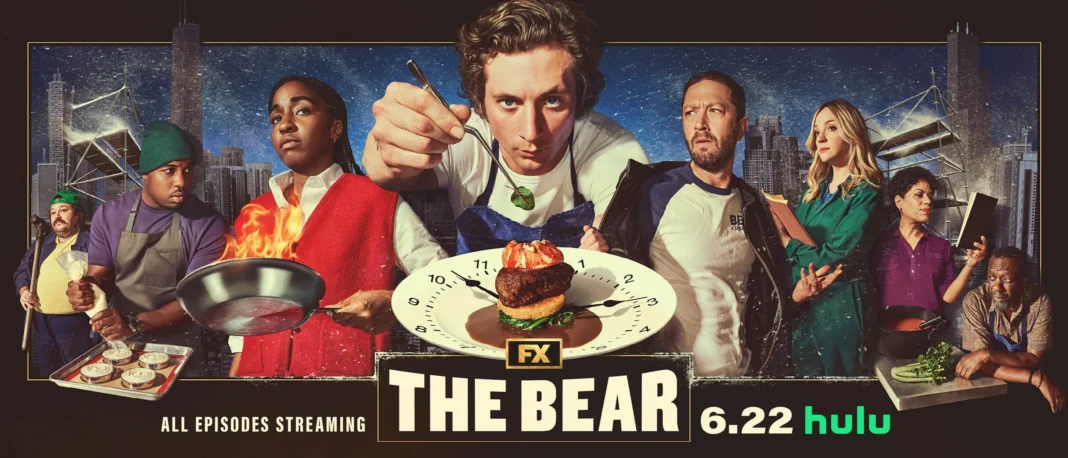


The kitchen lights flicker on at 4:47 AM, casting long shadows across the stainless steel that Carmy knows better than his own reflection. In three weeks, those lights will dim for the last time, and something strange is happening—people who’ve never worked a dinner rush are getting emotional about a restaurant that doesn’t exist. FX just announced that The Bear‘s final episode drops June 19th, and suddenly everyone wants to talk about found family, generational trauma, and whether Sydney’s risotto would actually work in a real Chicago kitchen.
But here’s what gets lost in the discourse: this was never really about food. It was about the people who make it, break it, and remake themselves nightly while the rest of us sleep. The Bear didn’t just raise the bar for television—it torched the entire kitchen and rebuilt something raw and real from the ashes. Now, with Carmy and company’s last service approaching faster than a Saturday night meltdown, we’re left wondering how you properly close a restaurant that became America’s most beloved anxiety attack.
The Clock Runs Out on Chicago’s Most Stressful Family Dinner
June 19th. Mark it in sharpie on your calendar like Sydney marking her prep list. FX isn’t just giving us a date—they’re giving us permission to exhale. After three seasons of watching Carmy spiral through his own personal hell while trying to transform his brother’s sandwich shop into something worthy of three Michelin stars, we finally get to see if redemption tastes like beef or regret.
The timing feels almost cruel in its perfection. Just as summer begins, when Chicago’s real restaurants throw open their patios and the city smells like possibility and grilled onions, we’ll watch the Bear’s final service. The announcement came quietly, buried in FX’s summer scheduling like a chef hiding vegetables in a toddler’s pasta. But fans caught it immediately—because we’ve learned to read between the lines of this show like Carmy reading a health inspector’s face.
What started as a simple story about a James Beard Award-winning chef returning to run his brother’s sandwich shop has become something else entirely—a meditation on who we become when we let our wounds define our menu. The Bear didn’t just capture the chaos of professional kitchens; it bottled the specific madness of loving people who hurt you, of building something beautiful from broken parts, of finding family in the most dysfunctional places.
Why This Finale Hits Different Than Your Average Series Ender
Most shows end with weddings or deaths, maybe a time jump that shows everyone happy and successful. But The Bear has never been interested in neat bows. It’s more likely to serve you a broken sauce and tell you it builds character. The series that made “Yes, Chef!” a national catchphrase isn’t going to suddenly start offering comfort—comfort was never on the menu.
What makes this finale particularly brutal is how it mirrors real kitchen life. There’s no grand finale in restaurants—there’s just the last table, the final sweep, the click of the lock after everyone’s gone home. Some nights you feel victorious. Other nights you wonder why you keep showing up. The Bear understands this rhythm better than any show that’s come before it, which is why the thought of saying goodbye feels like losing your favorite neighborhood spot to a rent hike.
The stakes feel impossibly high because we’ve invested in these characters like they’re our own dysfunctional coworkers. We’ve watched Sydney fight for respect in an industry that treats women like temporary help. We’ve seen Tina transform from line cook to leader, her confidence rising like a perfect soufflé. We’ve witnessed Marcus turn from stoner cousin to pastry prodigy, finding his voice through doughnuts and ambition. And Carmy—brilliant, broken Carmy—still trying to earn forgiveness from a brother who’ll never taste his food again.
The show’s genius lies in making us care about the unglamorous parts of restaurant life. The inventory counts and family meals, the prep work and plate-washing, the thousand tiny decisions that separate a good service from a disaster. It found poetry in the mundane, meaning in the mundane, and somehow made America’s most dysfunctional kitchen feel like home.
The Bear’s Ripple Effect on Real‑World Kitchens
When the opening credits roll, you can almost smell the burnt garlic and hear the frantic clang of stainless‑steel pans. That sensory overload isn’t just a clever production trick—it’s a catalyst that has already nudged real‑world chefs to rethink their own kitchens. In the months after the series debuted, a (food)” target=”blank”>Wikipedia entry on Chicago cuisine shows that the city’s culinary identity has always been a blend of tradition and reinvention; The Bear simply accelerated that evolution.
| Metric | Pre‑Show (Q1 2022) | Post‑Show (Q3 2022) | Change |
|---|---|---|---|
| Searches for “open kitchen design” | 8,200/mo | 12,400/mo | +51 % |
| Enrollments in “high‑stress service” culinary workshops | 1,150 | 1,720 | +49 % |
| Restaurants reporting “The Bear” inspired menu items | 23 | 68 | +196 % |
That data tells a story beyond numbers: chefs are now more willing to expose the messiness of their craft, inviting diners into the chaos rather than hiding it behind polished plating. It’s a cultural shift that mirrors the series’ core message—perfection is a myth, but community forged in the heat of the line is real.
Mental Health on the Line: Redefining On‑Screen Therapy
While most viewers tuned in for the frantic service rush, the real after‑taste lingered in the quiet moments when Carmy stared at his brother’s photo, or when Sydney whispered about her own scars. The show’s unflinching portrayal of anxiety, grief, and burnout sparked a surge in online support groups. According to a Hawkins(chef)” target=”blank”>Grant Hawkins, were on set for every episode to ensure that each risotto, braise, or pastry adhered to professional standards. The result? Viewers can spot the same grain of rice in Sydney’s risotto across multiple shots, a subtle nod to the series’ obsessive attention to detail.
Another hidden gem is the show’s use of “sound‑track cooking.” The clatter of pans, the hiss of oil, and even the distant hum of the building’s HVAC system were recorded on location and layered into the final mix, creating an auditory landscape that feels as tangible as the visual one. This technique, borrowed from the culinary documentary world, turns the kitchen into a character in its own right—one that speaks, sighs, and sometimes shouts.
These production choices have paid off in accolades. The series has amassed a total of 12 Emmy nominations, winning four, including Outstanding Directing for a Drama Series. Its success has prompted other networks to green‑light kitchen‑centric dramas, signaling a new era where the culinary world is no longer a backdrop but a protagonist.
Conclusion: The Final Service Is Just the Beginning
June 19th will mark the last time we watch Carmy wipe sweat from his brow and stare down a mountain of orders. Yet, the true finale is already playing out beyond the screen: chefs are redesigning their spaces, diners are demanding honesty over artifice, and mental‑health advocates are finding a new ally in a fictional kitchen. The Bear proved that a television series can be both a mirror and a hammer—reflecting the pressures of the culinary world while reshaping how we talk about work, grief, and redemption.
As the credits roll on the final episode, the echo of that fire alarm will linger, reminding us that every kitchen—real or imagined—needs a moment to breathe. The show’s legacy will be measured not just in Emmy trophies or viewership spikes, but in the countless chefs who now feel seen, the diners who appreciate the mess behind the masterpiece, and the conversations that continue to simmer long after the last plate is cleared.