
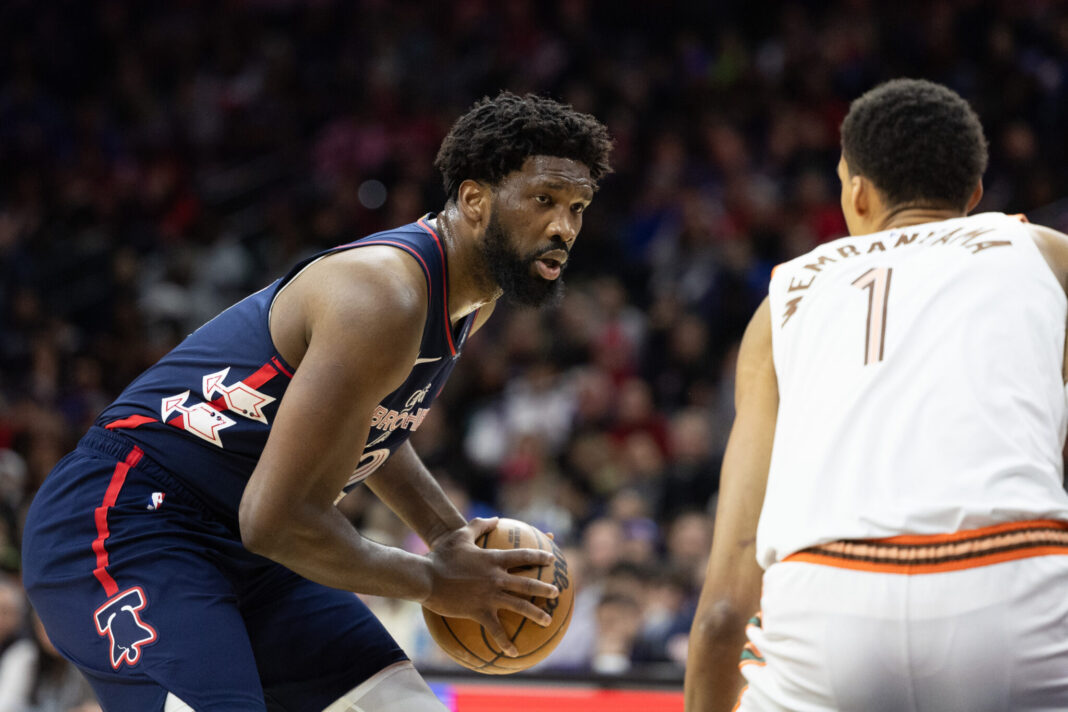


In the high-stakes world of professional sports, we often talk about “home-court advantage” in terms of crowd noise, travel fatigue, and familiar sightlines. But in Philadelphia this week, that advantage has hit a hard, physical ceiling—literally. The logistical nightmare unfolding at the Xfinity Mobile Arena is a masterclass in why modern arena management is less about basketball and hockey, and more about the precision of a Swiss watch combined with the brute force of a heavy-duty construction crew. With both the 76ers and the Flyers advancing to their respective Eastern Conference semifinals, the arena’s scheduling grid has officially collapsed under its own weight, forcing a high-profile casualty: Bruce Springsteen.
The Logistics of a Playoff Logjam
If you’ve ever wondered what it takes to flip a professional arena from a hardwood basketball court to an NHL-grade ice sheet, the answer is usually “a lot of sleep-deprived stagehands and a very tight window.” But what we are seeing this week at the Xfinity Mobile Arena isn’t just a standard changeover; it’s a logistical crisis that borders on the impossible. The arena is currently locked into a relentless cycle of back-to-back playoff games. The Flyers are slated to host the Carolina Hurricanes on Thursday and Saturday, while the 76ers are locked in for a Friday and Sunday run against the New York Knicks.
From an operations standpoint, this is a nightmare. Each transition requires stripping the floor, adjusting the lighting rigs, recalibrating the HVAC systems to manage the humidity for the ice, and ensuring the locker rooms are sanitized and re-branded for the incoming squad. When you compress that timeline into a 24-hour window, you’re not just talking about heavy lifting; you’re talking about a precision engineering operation. The arena management is essentially running a high-availability system where downtime is measured in minutes, not hours. There is simply no margin for error, and certainly no margin for a massive touring production like the E Street Band.
The Springsteen Casualty and the “Inflexibility” Factor
The headline-grabbing friction point here is the collision between the 76ers’ Game 3 and the scheduled performance of The Boss himself, Bruce Springsteen. It’s a classic case of an immovable object meeting an unstoppable force. In the world of touring mega-concerts, dates aren’t just penciled in; they are part of a multi-million-dollar logistical chain involving specialized transport, union labor contracts, and international routing. You can’t just “move” a Springsteen show like you’re rescheduling a Zoom call. The gear, the crew, and the artist’s own schedule are locked into a tour circuit that spans the country.
The arena’s management has made it clear: the schedule is inflexible. When you factor in the sheer volume of equipment required for a modern arena show—the massive LED arrays, the sound reinforcement systems, and the stage rigging—the setup time alone often requires a full day of “dark” time in the arena. Even if the crews worked around the clock, there is no physical space to house the concert production while simultaneously prepping the court for the Sixers. The operational overhead required to host a playoff game is so intense that the arena becomes a single-purpose facility the moment the postseason begins. It’s a sobering reminder that even a legendary performer like Springsteen is subject to the cold, hard reality of sports scheduling algorithms.
The fallout from this cancellation isn’t just about the disappointment of the fans or the optics of bumping a music icon for a basketball game; it’s a fascinating look at the resource contention that defines modern stadium management. We often view these venues as permanent structures, but in reality, they are modular, dynamic environments that must be completely reconfigured to meet the demands of the league schedule. As the playoffs progress, the arena isn’t just hosting games; it is becoming a battleground of scheduling priorities where the bottom line of ticket sales and the prestige of the postseason take absolute precedence over entertainment bookings. The question now remains: how will the arena handle the inevitable fallout from ticket holders and the broader implications for future concert bookings in a post-pandemic, high-demand touring market? For more on this topic, see: What George R. R. Martin’s .
The Engineering of Arena Versatility
To understand why a concert gets bumped, one must look at the thermal dynamics and structural requirements of a modern multipurpose venue. An NHL-grade ice surface is not merely a frozen floor; it is a complex, multi-layered system involving glycol-chilled piping, a concrete slab, and a precise humidity control environment. When a basketball court is laid over it, the arena’s HVAC system must work overtime to prevent the ice from sweating, which would create a dangerous, slick surface for players. Transitioning from a concert setup—which involves massive rigging loads hanging from the steel trusses—to a playoff-ready court requires a complete recalibration of the arena’s structural load-bearing sensors and acoustic dampening.
The following table outlines the operational overhead required for these rapid-fire transitions:
| Task | Complexity Level | Primary Constraint |
|---|---|---|
| Ice Surface Maintenance | High | Humidity/Dew Point |
| Hardwood Installation | Medium | Sub-floor leveling |
| Rigging/Lighting | Critical | Structural load limits |
| HVAC Re-balancing | High | Energy consumption |
Management is effectively running a distributed system where every component—from the telescopic seating to the digital scoreboard arrays—must be synchronized. When you introduce a concert, you add thousands of pounds of audio-visual gear that requires specific power distribution and floor space, often rendering the conversion process impossible within the 24-hour window demanded by the NBA and NHL playoff schedules. For more on this topic, see: Breaking: BlackRock Chief Demands Radical .
The Data-Driven Scheduling Dilemma
Professional sports leagues have shifted toward a data-driven approach to scheduling, utilizing algorithms that account for travel distance, broadcast windows, and historical viewership trends. However, these models often struggle to account for the “Black Swan” events of dual-postseason runs. While the 76ers and Flyers are technically separate entities, they exist within the same computational ecosystem of the arena’s master calendar. When both teams advance, the arena’s scheduling software hits a “resource contention” error.
For further technical insight into how these massive facilities are managed, you can consult the official documentation from the National Institute of Standards and Technology provides extensive research on structural engineering and facility safety protocols that inform how these arenas are built and maintained.
Ultimately, the displacement of a cultural icon for the sake of a playoff game highlights the hierarchy of the modern arena. The game is the primary process; everything else is a background task. When the primary process demands 100% of the system’s resources, the background tasks are terminated. It is a ruthless, efficient, and entirely predictable outcome of a system designed for high-stakes competition. For the fans, it’s a disappointment, but for the arena engineers, it’s simply the system working exactly as it was designed: prioritizing the game above all else. For more on this topic, see: Breaking: Paris Opera Names Semyon .