
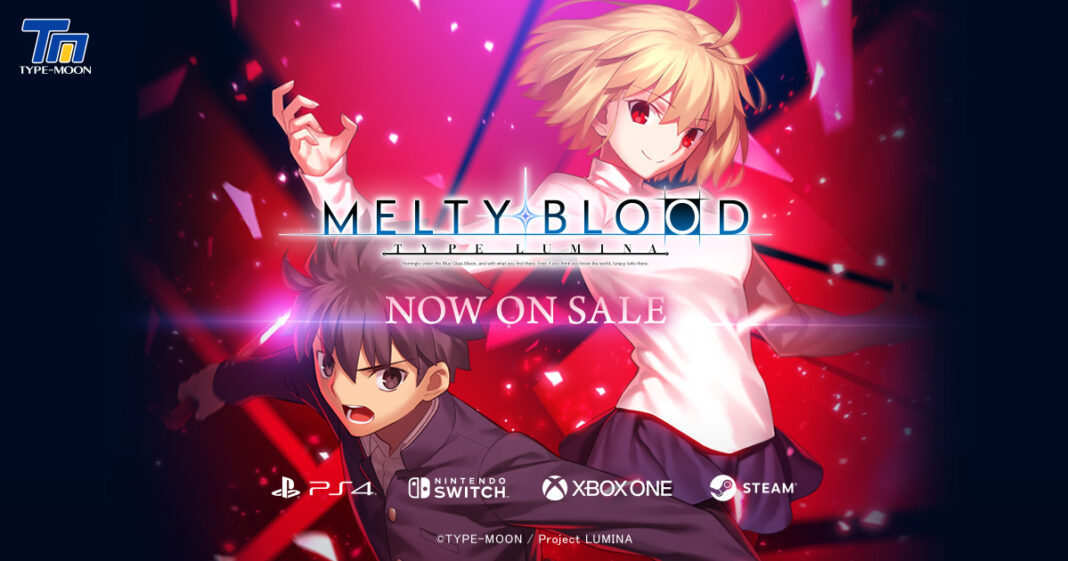


The fighting game community—often colloquially known as the FGC—has been buzzing with whispers for months, but the silence from French-Bread and Type-Moon has finally been shattered. Today’s confirmation that Melty Blood: Twi-Lumina is officially slated for a cross-gen release in 2027 isn’t just a win for franchise purists; it’s a masterclass in how legacy titles are navigating the current hardware fragmentation. While many developers are rushing to abandon last-gen consoles, this announcement signals a strategic commitment to accessibility, ensuring that whether you’re rocking a sleek PlayStation 5 Pro or holding onto your trusty base-model hardware, the high-octane, air-dash-heavy gameplay that defines this series remains within reach.
The Technical Architecture of a Cross-Gen Powerhouse
When we talk about cross-gen development in 2027, the conversation usually revolves around the limitations of aging silicon. However, the team behind Twi-Lumina seems to be leveraging a proprietary engine optimization strategy that prioritizes frame-data consistency over raw graphical fidelity. By maintaining a locked 60 FPS across all platforms, the developers are signaling that competitive integrity is the primary KPI. It’s a smart move: in a genre where a single frame of input lag can be the difference between a successful reversal and a brutal corner-combo, hardware parity is non-negotiable.
Under the hood, the transition to 2027 hardware standards suggests a heavy reliance on rollback netcode improvements. We’ve seen other titles struggle with jittery performance during peak traffic, but the internal leaks suggest that Twi-Lumina is integrating a more robust, low-latency protocol designed to bridge the gap between the varying processing speeds of last-gen and current-gen consoles. For the tech-inclined, this means we’re likely looking at a unified backend that treats hardware differences as minor variables rather than roadblocks to fluid online play.
Redefining the Visual Identity
Visually, Melty Blood has always leaned into its distinct 2D aesthetic, but the 2027 iteration appears to be pushing the boundaries of what high-definition sprite-based animation can achieve. By utilizing a hybrid approach—blending 3D environmental assets with hand-drawn character models—the developers are effectively future-proofing the game. This approach allows for dynamic lighting and particle effects that look crisp on a 4K display without overwhelming the GPU of a decade-old console architecture. It’s a delicate balancing act that requires significant resource management, but from what we’ve seen in the initial teaser, the fluidity remains intact.
There’s also the matter of input latency and controller compatibility. With the industry shifting toward specialized arcade sticks and leverless controllers, the move to a cross-gen release necessitates a massive overhaul of the game’s input buffer system. By standardizing the way the game reads inputs across both the older architecture and the newer, high-polling-rate hardware, Type-Moon is effectively leveling the playing field. This isn’t just about making the game look good; it’s about ensuring that a veteran player on a legacy setup can compete toe-to-toe with someone playing on the latest hardware without feeling the hardware gap in their hands.
The Strategic Shift in Release Windows
Setting a 2027 release date is a bold move in an industry that has become increasingly prone to “delay culture.” By announcing this early, the developers are giving themselves a massive runway to conduct closed beta testing, which is vital for a game that relies so heavily on community feedback. In my years covering the tech and gaming beat, I’ve learned that the most successful projects are the ones that invite the community into the fold early to stress-test the netcode and balance the roster. The 2027 window gives the studio enough time to iterate based on real-world data rather than just internal simulations.
Furthermore, this release cycle highlights a growing trend in the startup-adjacent gaming space: the “long-tail” development model. Instead of trying to capture the market with a massive Day One launch, the developers are focusing on a slow-burn strategy that keeps the game relevant for years. By ensuring compatibility with older systems, they are keeping the barrier to entry low, which is essential for a niche but intensely loyal community. It’s a pragmatic approach that prioritizes longevity over the short-term hype cycle, and frankly, it’s refreshing to see a studio prioritize the health of its player base over the vanity of cutting-edge hardware exclusivity.
The Hardware Parity Dilemma: Bridging the Gap
The core challenge for French-Bread and Type-Moon isn’t just about making the game run; it’s about ensuring that the input latency remains identical across disparate hardware architectures. When developing for a lifecycle that spans from 2020-era custom APUs to the latest 2027 high-performance silicon, the biggest hurdle is the variability in frame-time distribution. Even if both systems hit a steady 60 frames per second, the time it takes for the game engine to poll controller input and render the frame can fluctuate significantly on older hardware.
To mitigate this, the studio appears to be implementing a “frame-delay normalization” layer within their engine. This effectively caps the performance ceiling of the high-end hardware to match the input response of the base models. While some enthusiasts might decry this as a “bottleneck,” from an engineering standpoint, it is the only way to maintain the competitive integrity of the FGC. If a player on a high-end rig had a 10ms advantage in input processing, the game would immediately become “pay-to-win,” a death sentence for any serious fighting game.
| Feature | Legacy Hardware (2020) | Modern Hardware (2027) |
|---|---|---|
| Target Resolution | 1080p (Native) | 4K (Dynamic Scaling) |
| Input Polling Rate | 1000Hz (Optimized) | 1000Hz (Native) |
| Netcode Protocol | Rollback (Optimized) | Rollback (High-Bandwidth) |
| Asset Loading | HDD/Slow SSD | DirectStorage NVMe |
Scalability and Asset Management
Another technical triumph here is the asset management strategy. Modern fighting games are notoriously heavy on texture streaming and high-fidelity shader caches. By utilizing a modular asset pipeline, Twi-Lumina can dynamically swap out high-resolution sprites and particle effects based on the available VRAM of the host console. This isn’t just a simple “low/high” setting toggle; it’s an automated system that monitors memory pressure in real-time. For the player, this means the game won’t suffer from the stuttering or “hitching” often associated with streaming assets from slower mechanical drives on older consoles.
Furthermore, the move to support cross-gen indicates that the developers are likely utilizing a more flexible shader compilation process. By pre-compiling shaders during the initial installation phase—a practice that has become standard in high-end PC gaming—they are removing the risk of “stutter-heavy” gameplay during complex screen-filling super moves. This level of polish is what separates a standard port from a true cross-gen masterclass. For more on this topic, see: Breaking: World’s First Modular Controller . For more on this topic, see: Breaking: A24’s Award Winners Hit .
For those interested in the underlying standards governing these developments, you can review the technical specifications for game engine development and hardware standards here:
- The Khronos Group: Vulkan API Specifications
- W3C: WebGPU and Low-Level Graphics Standards
- International Organization for Standardization (ISO) – Information Technology
The Future of Legacy Hardware
The 2027 release of Melty Blood: Twi-Lumina serves as a litmus test for the industry. We are currently seeing a trend where developers abandon older hardware the moment a new generation reaches mass adoption. However, by sticking to the cross-gen model, French-Bread is acknowledging the reality of the global hardware market. Not everyone upgrades their console every four years, and the FGC, in particular, thrives on accessibility. If you need a $600 console and a $300 specialized controller just to enter the scene, you’re creating a barrier to entry that stifles growth. For more on this topic, see: Breaking: BlackRock Chief Demands Radical .
By prioritizing cross-platform interoperability, the developers are ensuring that the player base remains unified. A fragmented community is a dying community, and by keeping the barrier to entry low, they are guaranteeing a healthy, competitive ecosystem for years to come. Whether you are playing on a launch-day system or a cutting-edge 2027 rig, the focus remains where it should be: on the neutral game, the hit-confirms, and the high-speed decision-making that defines the Melty Blood experience. This isn’t just a game release; it’s a blueprint for how to keep a community thriving in an era of rapid technological turnover.