
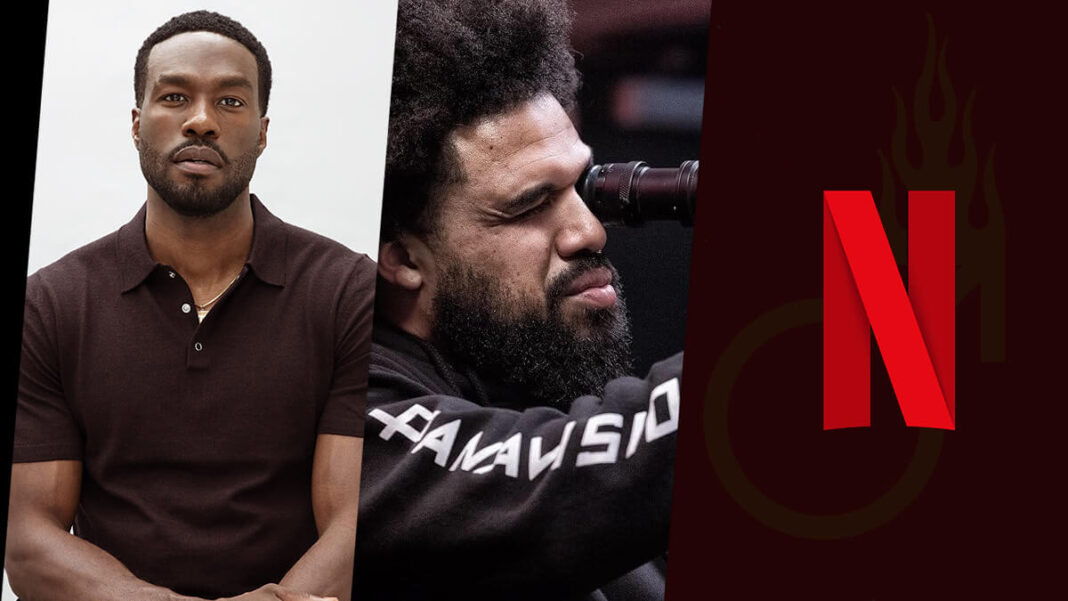


The entertainment industry is currently undergoing a massive, data-driven recalibration, and the latest news out of Hollywood regarding the upcoming Man on Fire series is the perfect case study for this seismic shift. For decades, the intellectual property (IP) playbook was rigid: find a successful novel, secure the rights, and produce a film that mirrors the source material as closely as possible. But as we’ve seen with the rise of streaming-first production models, the algorithm has changed. The announcement that Netflix is moving forward with a series adaptation of A.J. Quinnell’s iconic novel—previously immortalized by Tony Scott’s visceral 2004 film—isn’t just another reboot. It’s a strategic pivot toward long-form serialized storytelling that prioritizes character depth over the compressed, high-octane pacing that defined the cinematic era of the early 2000s.
The Death of the Two-Hour Constraint
If you look at the evolution of hardware and streaming infrastructure, it’s clear why we’ve reached this point. We’ve moved from a world of physical media and rigid theatrical windows to a bandwidth-heavy ecosystem where binge-watching is the primary consumption metric. In the 2004 film, Denzel Washington’s Creasy was a force of nature, but the film had to condense the complexities of Quinnell’s source material into a tight 146-minute runtime. While the film is a masterclass in kinetic editing, it inevitably traded the slower, methodical burn of the novel for rapid-fire action sequences.
The new series format changes the fundamental architecture of the adaptation. By expanding the narrative into a multi-episode arc, the production team is no longer beholden to the “ticking clock” of a theatrical cut. This shift mirrors what we’ve seen in the software world: the transition from monolithic, all-in-one applications to modular microservices. Instead of one massive, rigid block of content, the series can isolate specific character arcs, geopolitical subplots, and the internal psychological decay of the protagonist. It allows for a technical precision in storytelling that was simply impossible when you were limited by the physical constraints of a 35mm film reel or a two-hour theatrical slot.
Data-Informed Narrative Architecture
What’s fascinating from a tech-reporter’s perspective is how this series confirms the industry’s obsession with audience retention analytics. Hollywood isn’t just “remaking” a movie; they are mining existing IP to fill a specific niche in their content library that data shows performs exceptionally well: the “gritty, redemption-arc thriller.” By utilizing the Man on Fire brand, they are effectively deploying a “known entity” to lower the barrier to entry for subscribers, while using the series format to keep those same subscribers engaged for six to ten hours rather than two. For more on this topic, see: Breaking: Trump Crypto Firm Confirms .
This is a calculated play. The industry has realized that the modern viewer isn’t just looking for a spectacle; they are looking for serialized immersion. In the past, adaptations were often criticized for “dumbing down” the source material to appeal to the widest possible demographic. Now, however, the trend is moving toward “prestige expansion.” The production teams behind this series are likely leveraging deep-learning tools to analyze which narrative beats in the original novel—or even the previous film—kept audiences the most engaged. They’re essentially refactoring the story, keeping the core “code” of Quinnell’s world while optimizing the “user experience” for the modern streaming interface.
We are watching the transition from “adaptation as a translation” to “adaptation as a platform.” This isn’t just about retelling a story; it’s about creating a sandbox where the IP can be stretched, analyzed, and expanded upon in ways that were previously unthinkable. As we look toward how this series will be structured, it’s worth asking: are we losing the singular vision of the director in favor of a content-delivery system designed to maximize watch-time? For more on this topic, see: Breaking: BlackRock Chief Demands Radical .
The Algorithm of Character Fidelity
The move toward serializing Man on Fire isn’t merely a creative choice; it’s a calculated response to the way modern recommendation engines parse audience engagement. In the era of theatrical releases, success was binary: opening weekend box office receipts. Today, success is measured by retention metrics and completion rates. Data scientists at major streaming platforms have identified that character-driven “slow burns” actually yield higher long-term value than high-octane, two-hour adrenaline spikes. By spreading the narrative across eight to ten episodes, the production can lean into the granular details of John Creasy’s internal monologue—the psychological decay and the eventual redemption—which were often relegated to the cutting room floor in previous iterations.
This approach mirrors the shift in asynchronous data processing. Rather than forcing the viewer to ingest the entire narrative arc in a single, high-intensity burst, the series allows for a more distributed consumption model. It creates “hooks” at the end of each episode that function like API endpoints, ensuring the viewer remains connected to the ecosystem. Below is a comparison of how the cinematic and serialized models treat the same source material:
| Feature | 2004 Cinematic Model | Modern Serialized Model |
|---|---|---|
| Narrative Pacing | Compressed, high-velocity | Modular, character-focused |
| Source Utilization | Highlights/Action beats | Deep dive/World-building |
| Engagement Metric | Opening Weekend Box Office | Total Watch Time/Retention |
| Technical Constraint | 146-minute hard limit | Variable runtime per episode |
The Infrastructure of Modern IP Monetization
Beyond the creative shift, we have to look at the underlying computational infrastructure of modern content production. Streaming platforms are essentially massive, distributed databases of human attention. By reviving a property like Man on Fire, the studio isn’t just betting on brand recognition; they are leveraging the existing metadata associated with the IP. Because the 2004 film exists in the digital archives of millions of users, the platform’s recommendation algorithm already understands the target demographic’s preferences, viewing habits, and cross-genre interests.
This is a form of predictive programming. By feeding the algorithm new content that aligns with the established “fingerprint” of the original film, the studio minimizes the risk of a flop. It’s the same logic applied to cloud-native applications: you aren’t building from scratch; you are refactoring existing assets to run on a more efficient, scalable architecture. The series is effectively a “version 2.0” deployment of a legacy product, optimized for the current high-bandwidth, high-definition environment. For more on this topic, see: What Nintendo’s New President’s First .
For further insights into the history of these narratives and the evolution of the source material, consult the official records:
The Future of “Legacy Refactoring”
We are witnessing the end of the “reboot” as a lazy cash grab and the beginning of the “refactor” as a legitimate creative discipline. As Hollywood continues to integrate more robust analytics into its greenlighting process, I expect we will see fewer standalone films and more “narrative ecosystems.” The Man on Fire series will likely serve as a benchmark for how established, dark, and gritty intellectual property can be successfully ported to a streaming interface without losing the visceral impact that made it a classic in the first place.
The industry is finally treating storytelling with the same rigor we apply to software architecture: prioritizing modularity, scalability, and user-centric design. If the execution matches the ambition, we won’t just be getting a new take on a classic story; we’ll be seeing the blueprint for how all major IP will be handled in the coming decade. Whether you view this through the lens of a film critic or a systems engineer, one thing is certain: the content landscape is being permanently rewritten, and the “Man on Fire” is just the latest legacy system to get an upgrade.