
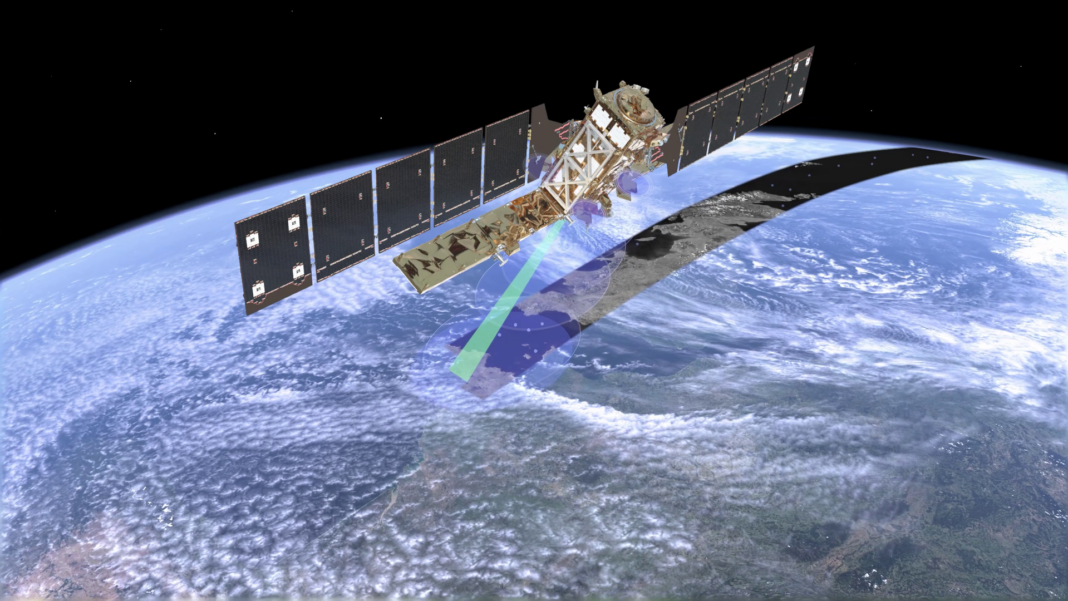


Listen up, stargazers and tech junkies—the game just changed, and no, it’s not another surprise celebrity drop or a leaked script from the next big blockbuster. We’re talking about the real-life sci-fi epic happening right above our heads. The Sentinel-1 satellite constellation has officially hit its stride, reaching full operational capacity, and honestly, the implications for how we track our ever-changing planet are nothing short of cinematic. It’s like upgrading from a grainy, handheld camcorder to a full-blown IMAX rig, and the data coming back is going to be the backbone of everything from climate reporting to global logistics.
The Eye in the Sky Gets a Major Upgrade
For those who haven’t been keeping up with the European Space Agency’s (ESA) heavy hitters, the Sentinel-1 mission is essentially the workhorse of Earth observation. We aren’t just talking about pretty pictures of the coastline here; these satellites use Synthetic Aperture Radar (SAR), which is the tech equivalent of having x-ray vision for the planet. It doesn’t matter if it’s pitch black at midnight or if there’s a thick, swirling hurricane blocking the view—Sentinel-1 cuts right through the noise to give us a crystal-clear look at what’s moving on the surface.
Now that the constellation has reached its full capacity, we’re looking at a massive uptick in the frequency and precision of data collection. It’s the kind of technical milestone that doesn’t always grab the front page of the tabloids, but for the scientists, urban planners, and environmentalists who rely on this intel, it’s effectively the “Avengers Assemble” moment of Earth tracking. We’re moving from sporadic snapshots to a near-constant, high-definition heartbeat of the globe, and that’s a massive win for anyone interested in how our world is evolving in real-time.
Data-Driven Drama: Why This Matters for the Big Picture
You might be asking yourself, “Jubilee, why should I care about a bunch of satellites orbiting 700 kilometers up?” Well, let’s talk about the climate narrative. We’re living in an era where environmental shifts are dominating the headlines, and having a reliable, high-capacity system to track ice sheet melting, deforestation, and urban sprawl is the only way we’re going to get an accurate read on the situation. Sentinel-1 is essentially the lead investigator in the biggest mystery of our time: the health of our home planet. By hitting full capacity, the mission is effectively closing the gap between “we think something is happening” and “we have the data to prove it.”
Beyond the serious environmental stakes, there’s also the sheer logistical power of this tech. Think about disaster response—when a natural disaster hits, every second counts. With the constellation at full strength, the latency between an event occurring and the data being processed for rescue teams is shrinking significantly. It’s the difference between a plot hole and a perfectly executed rescue scene. We’re talking about a level of global monitoring that makes previous efforts look like a low-budget indie production. Whether it’s tracking oil spills in the middle of the ocean or monitoring the structural integrity of critical infrastructure, Sentinel-1 is the silent, high-tech protagonist we didn’t know we needed.
The Technical Hustle Behind the Lens
Getting this hardware to work in perfect harmony is no small feat—it’s a logistical ballet that makes a stadium tour setup look like a backyard barbecue. The constellation relies on a sophisticated inter-satellite link, allowing the units to talk to each other and relay data back to Earth with lightning-fast efficiency. This isn’t just about having more satellites in orbit; it’s about the integration of the network. The ESA has essentially built a high-speed broadband network for Earth imaging, ensuring that the data stream is consistent, reliable, and incredibly dense. For more on this topic, see: Breaking: BlackRock Chief Demands Radical .
What’s fascinating to me as an observer of trends is how this mirrors the shift in our own media consumption. Just as we’ve moved from weekly episodic TV to binge-watching entire seasons in a single night, our approach to Earth observation has shifted from “check in when we can” to “constant, high-bandwidth streaming.” This shift allows for an unprecedented level of predictive modeling. We aren’t just watching the world; we’re starting to see the patterns before they even fully manifest. It’s a level of foresight that is going to change how industries—from agriculture to insurance—operate, and frankly, I’m here for the data-driven plot twists that are about to come our way. For more on this topic, see: Breaking: $350 Mega-Pen Lamp Drops . For more on this topic, see: What George R. R. Martin’s .
You might be asking yourself, “Jubilee, why should I care about radar pulses and orbital patterns when I’ve got a queue of streaming shows to get through?” Fair point. But here’s the tea: the data coming from Sentinel-1 is the ultimate “behind-the-scenes” footage of our planet. When you see a high-budget disaster flick or a gripping documentary about the changing Arctic, the scientists behind those projects are often leaning on this exact kind of satellite imagery to map the terrain.
The Tech Specs: SAR vs. Optical Imaging
To understand why this is a massive flex for the European Space Agency, you have to look at how this tech stacks up against the standard cameras we’re used to. Most satellites are like your smartphone—they need light to see. If it’s cloudy or dark, you’re essentially snapping a photo of a black void. Sentinel-1, however, uses Synthetic Aperture Radar. It’s active sensing, meaning it sends its own signal down to Earth and measures the “bounce back.”
Think of it like the difference between a tourist taking a photo with a flash and a professional filmmaker using a specialized lighting rig that can penetrate through fog and smoke. Here is how the capabilities break down:
| Feature | Traditional Optical Satellites | Sentinel-1 (SAR) |
|---|---|---|
| Light Dependency | Requires daylight | Day and night |
| Weather Impact | Blocked by clouds/rain | Sees through all weather |
| Data Type | Visual imagery | Surface texture and movement |
| Primary Use | Mapping/Land use | Disaster response/Ice monitoring |
This is a game-changer for industries that rely on geospatial intelligence. Whether it’s monitoring shipping lanes to prevent supply chain bottlenecks or tracking the rapid melting of polar ice caps, the ability to “see” regardless of the weather is the difference between being proactive and just reacting to a crisis after the fact.
From Orbit to Your Living Room: The Real-World Ripple Effect
Beyond the scientific community, the “full capacity” status of Sentinel-1 means that the data pipeline is officially wide open. This has huge implications for the tech industry and the apps you use every day. We’re talking about more accurate GPS navigation, better disaster risk assessment for insurance companies, and even more precise agricultural forecasting that keeps grocery prices stable.
When you look at the Copernicus Programme—the broader initiative that houses these satellites—you’re looking at one of the most ambitious open-data projects in history. They aren’t hoarding this info; they’re making it available for developers to build tools that could solve some of our most complex logistical headaches. It’s like the space version of an open-source software movement, and the potential for innovation is limitless.
For more information on the mission architecture and the specific technical parameters of the constellation, you can visit the official portals below:
European Space Agency (ESA) Official Site
Copernicus Programme Official Portal
The Final Orbit: Why This is a Win for Everyone
At the end of the day, we spend so much of our time looking at our screens—scrolling through feeds, streaming content, and losing ourselves in digital worlds—that we often forget the actual world is doing its own complex, high-stakes performance.
Sentinel-1 reaching full capacity is a reminder that we have the tools to understand the stage we’re standing on. It’s not just about cold, hard data; it’s about having the “receipts” on how our environment is behaving. As an entertainment enthusiast, I love a good plot twist, but when it comes to the planet, I’d much rather have the clarity that this kind of tech provides. We’re finally getting a high-definition, 24/7 look at the Earth, and frankly, it’s about time we paid attention to the most important show in town. Keep your eyes on the skies, because the data coming back is going to shape the narrative of our future for years to come.