
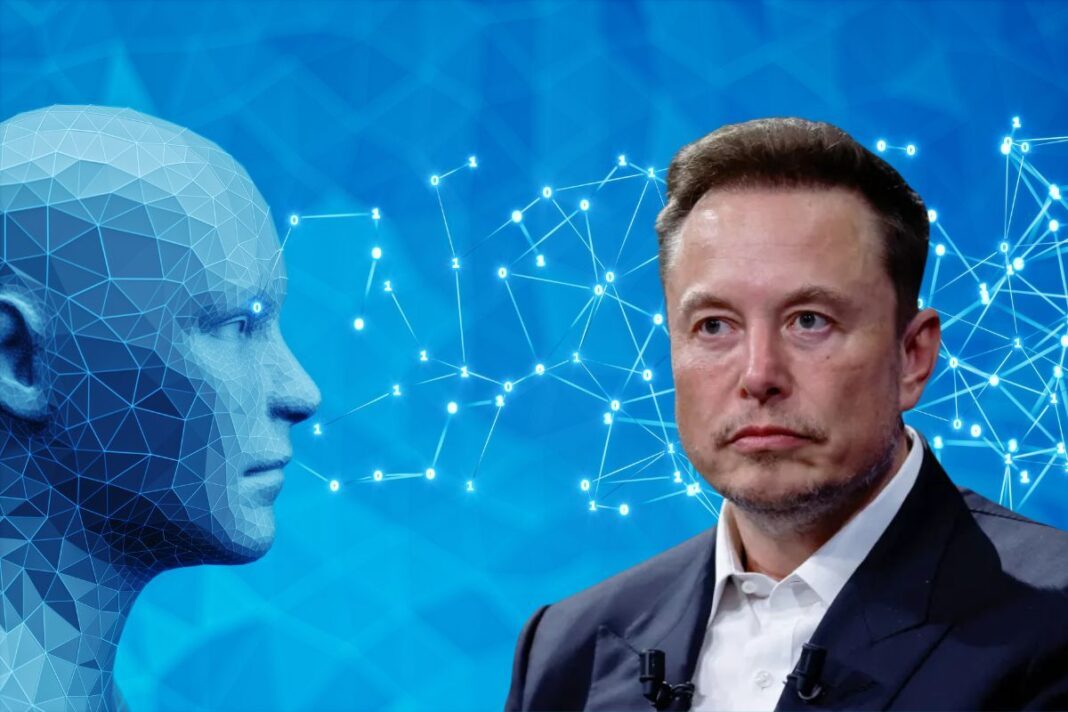


If there is one thing we’ve learned about Elon Musk over the last decade, it’s that he doesn’t just participate in the cultural conversation—he orchestrates the entire symphony. Lately, the billionaire tech mogul has been hitting a very specific, very haunting note: the existential threat of Artificial Intelligence. From cautionary tales about “digital superintelligence” to warnings that AI could potentially end civilization, Musk has been the loudest voice in the room demanding a pause, a regulation, and a rethink. But if you’ve been tracking his moves as closely as I have, you start to see the pattern. Is this genuine concern for the survival of the human race, or is this the ultimate masterclass in shaping the market to suit his own grand design? Grab your popcorn, because the intersection of Silicon Valley ego and global policy is getting messy.
The Great AI Paradox: Why Musk is Playing Both Sides
It’s almost comedic, isn’t it? Musk spent years warning us that AI is the “biggest risk we face as a civilization,” yet he is simultaneously pouring billions into his own AI venture, xAI. It’s the classic tech-insider maneuver: sound the alarm about a fire, wait for the panic to set in, and then conveniently show up with the only fire extinguisher you’re willing to sell. By positioning himself as the “responsible” steward of AI development, he’s effectively casting his competitors—like OpenAI, which he co-founded and then famously feuded with—as the reckless cowboys of the tech world.
This isn’t just about branding; it’s a strategic pivot. By constantly highlighting the dangers of AGI (Artificial General Intelligence), Musk is creating a regulatory environment where only the most well-funded, “safety-conscious” players can survive. If you look at the history of his ventures, from Tesla to SpaceX, the playbook is identical: define the problem, convince the public that the status quo is dangerous, and then position your own product as the inevitable, necessary solution. Whether it’s autonomous driving or humanoid robots, Musk isn’t just building tech; he’s building a narrative moat that makes it incredibly difficult for smaller, less-resourced players to compete.
The Regulatory Play: Controlling the Narrative from the Inside
Let’s talk about the AI Safety Summit and the various legislative meetings Musk has been popping into. While he’s publicly advocating for government oversight, one has to wonder: what kind of oversight? It’s no secret that Musk thrives when he’s the one holding the pen on the rules. By pushing for strict, centralized regulation, he’s essentially asking the government to build a barrier to entry that favors established titans. If the barrier is high enough, the “wild west” of AI startup innovation—the kind that threatens to disrupt his own dominance—starts to look a lot less appealing to investors.
There’s also the matter of data access. Musk has been very vocal about his platforms, particularly X (formerly Twitter), being the goldmine of human thought. By claiming that his platforms hold the key to training “truth-seeking” AI, he’s effectively positioning his own data hoard as the ethical alternative to the “woke” or “biased” datasets used by his rivals. It’s a brilliant, if slightly cynical, way to ensure that his flavor of AI is the one that gets the green light. He’s not just worried about AI taking over; he’s worried about someone else’s AI taking over the market share he feels entitled to. As we dig deeper into the actual architecture of his AI strategy, it becomes clear that the “danger” he speaks of is less about the robots and more about the power struggle behind the curtain.
The Regulatory Moat: Orchestrating the Rules of the Game
If you look closely at the legislative landscape, you’ll notice that Musk’s warnings aren’t just fodder for podcasts—they are blueprints for policy. By leaning into the narrative of “existential risk,” he is effectively lobbying for a regulatory environment that prioritizes safety standards, oversight committees, and stringent testing protocols. On the surface, this sounds like a noble pursuit for the betterment of humanity. However, in the brutal world of tech, this is what we call a regulatory moat. For more on this topic, see: What George R. R. Martin’s . For more on this topic, see: What Nintendo’s New President’s First .
When a billionaire calls for heavy government oversight, he isn’t just asking for safety; he is raising the barrier to entry. Startups and mid-sized competitors, who lack the massive capital reserves to navigate complex, Musk-approved compliance frameworks, will inevitably struggle. Meanwhile, organizations like xAI, backed by the deep pockets of the world’s richest man, can afford the legal teams and the compliance infrastructure required to operate within those tight parameters. It’s a genius, albeit cynical, way to ensure that the “AI revolution” happens on his terms, within his walled garden.
| Strategic Objective | Public Narrative | The “Insider” Reality |
|---|---|---|
| Market Positioning | “AI is an existential threat.” | Creating a premium on “safe” (his) AI. |
| Regulatory Influence | “We need government oversight.” | Raising the barrier to entry for smaller rivals. |
| Talent Acquisition | “Join us to save the world.” | Attracting top-tier talent to a “mission-driven” firm. |
The Cult of Personality as a Competitive Advantage
We have to talk about the Musk Brand. In the entertainment and tech industries, perception is reality, and nobody understands that better than Elon. His warnings about AI serve a dual purpose: they position him as the “Philosopher King” of the digital age. By framing himself as the one person brave enough to sound the alarm against his own peers, he cultivates a loyal following that views his AI ventures not as corporate products, but as necessary defenses against a dystopian future. For more on this topic, see: Tales Of Phantasia Cross Edition .
This isn’t just marketing; it’s a masterclass in psychological positioning. Whether he is tweeting about the dangers of Large Language Models or hosting live-streamed demos of his latest tech, he is constantly reinforcing the idea that he is the only one who can be trusted with the “kill switch.” For more information on the official framework of AI safety, you can explore the National Institute of Standards and Technology (NIST) AI Resource Center or review the foundational concepts of machine learning at the National Science Foundation.
Beyond the Hype: The Reality of the “Pause”
The most fascinating part of this saga is the “pause” that never really happened. Musk’s public calls for a six-month hiatus on training powerful AI models were met with a mix of awe and skepticism. While he was calling for the industry to hit the brakes, his own teams were arguably accelerating. This is the ultimate insider trope: tell the world to slow down so you can catch your breath, or perhaps, so you can finish your own project in secret.
We are witnessing a high-stakes game of 4D chess where the board is the future of human cognition. Musk knows that if he can control the narrative around AI—if he can define what is “safe” and what is “dangerous”—he effectively controls the public’s perception of the technology itself. By the time the general public realizes the full extent of his influence, the infrastructure for his version of AI will already be deeply embedded in our daily lives.
Ultimately, Musk’s strategy is a reminder that in Silicon Valley, the loudest alarmists are often the ones building the most powerful megaphones. He isn’t just predicting the future; he is actively engineering the conditions for his own dominance. Whether you view him as a savior or a puppet master, one thing is certain: he has successfully turned the existential dread of AI into the most effective marketing campaign of the century. As we watch this unfold, keep your eyes on the fine print. The “threat” he’s warning us about might just be the very thing he’s positioning himself to own, manage, and ultimately, monetize. It’s a wild ride, and if you’re paying attention, the plot twists are better than any summer blockbuster.