
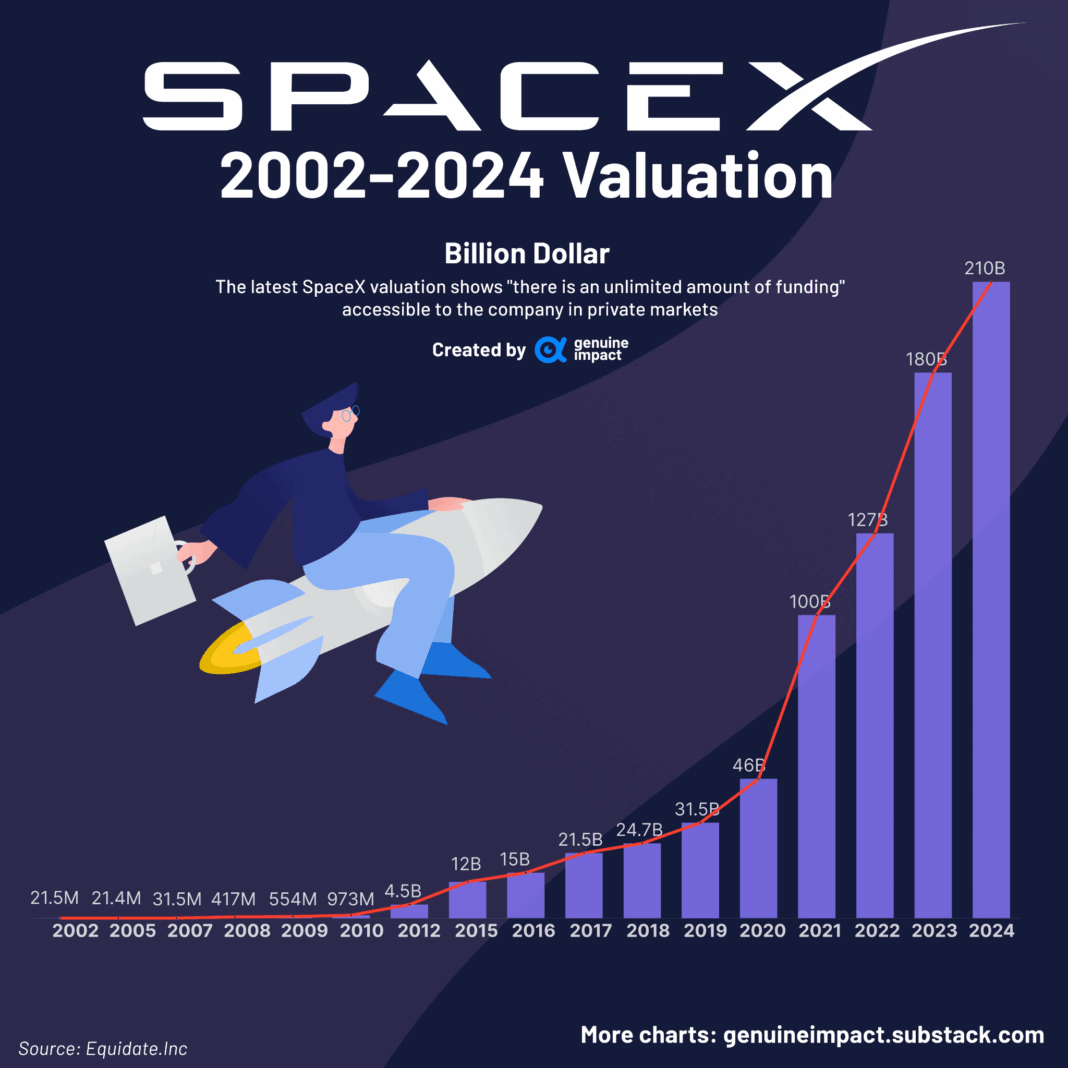


If you thought the tech world was already spinning out of control with the AI gold rush, buckle up—because Elon Musk is about to strap a rocket to the entire industry. We’ve been hearing the whispers for months, but the chatter in the boardrooms and the betting markets is hitting a fever pitch: SpaceX is reportedly prepping for an IPO that could make every other market debut in history look like a lemonade stand. We aren’t just talking about a public offering; we’re talking about a potential $2 trillion valuation that would fundamentally rewrite the rules of both aerospace and artificial intelligence. Whether you’re a retail investor hoping to snag a piece of the Starship dream or a tech analyst trying to wrap your head around the sheer scale of this, one thing is clear: the intersection of space exploration and the AI arms race is officially the hottest ticket in town.
The $2 Trillion Question: Is the Hype Actually Real?
Let’s talk numbers, because the figures being tossed around are, quite frankly, astronomical. While some analysts are keeping their feet on the ground—pointing out that the company’s $15 billion in annual revenue might make a $2 trillion price tag look a bit “priced to perfection”—the market doesn’t seem to care about traditional metrics. We’re looking at a scenario where SpaceX could raise anywhere from $50 billion to $75 billion in capital. To put that in perspective, that would absolutely shatter the record held by Saudi Aramco’s 2019 IPO. It’s a bold play, and it’s one that has wealth management firms scrambling to get their clients a seat at the table via special purpose vehicles (SPVs) before the public bell even rings.
The skepticism is valid, of course. When you’re dealing with a valuation that high, the margin for error is razor-thin. But this isn’t just a rocket company anymore. With Starlink already controlling roughly 70% of the world’s satellites, SpaceX has evolved into a global infrastructure giant. They’ve successfully turned space into a revenue-generating utility, and for the institutional “big fish” and the retail investors alike, that’s the real hook. Musk isn’t just selling launches; he’s selling a monopoly on the connectivity that will power the next decade of digital transformation.
From Low-Earth Orbit to the AI Data Center
Here is where the story gets really juicy for the tech crowd. Why does a company that builds massive stainless-steel rockets need to raise tens of billions of dollars? It’s not just for more fuel. The word on the street is that SpaceX is aggressively pivoting toward the artificial intelligence sector. We aren’t just talking about using AI to optimize flight paths; we’re talking about the development of space-based AI data centers. By leveraging their reduced launch costs, SpaceX is positioning itself to become the ultimate landlord for the next generation of computing power, potentially moving critical AI infrastructure off-planet where cooling and energy access could be radically reimagined.
This pivot is expected to trigger a massive spending spree that will send shockwaves through the hardware market. The primary beneficiary? Nvidia. As SpaceX looks to scale its AI ambitions, they are reportedly planning to pour a significant portion of that IPO capital into high-end processors. This creates a symbiotic relationship that could define the tech landscape for years: the more SpaceX succeeds in scaling its Starship program and its satellite network, the more it feeds the insatiable demand for AI compute. It’s a closed-loop ecosystem that effectively ties the future of space exploration to the future of the AI revolution, and it’s exactly the kind of high-stakes gamble that has defined Musk’s career.
The Retail Revolution and the Path Forward
Perhaps the most refreshing part of this upcoming saga is the talk of accessibility. In a move that feels like a direct nod to the “diamond hands” community, there are strong rumors that up to 30% of the shares could be allocated to retail investors. This is a massive departure from the standard “institutional-only” gatekeeping we’ve seen with other mega-IPOs. It’s a signal that SpaceX wants its user base—the people who rely on Starlink and follow the Starship launches with bated breath—to actually own a piece of the mission. It’s a populist approach to a trillion-dollar valuation, and it’s already fueling a frenzy among those who have been waiting for their chance to invest in the Musk-led empire.
As we look toward the rumored June timeline for an announcement, the market is bracing for a shift that goes beyond just tickers and stock prices. We’re watching a company transition from a private disruptor to a public juggernaut that will likely dictate the pace of global AI adoption. With the capital injection from this IPO, the company is poised to accelerate everything from lunar base development to the expansion of its orbital data centers, essentially turning the final frontier into the next great silicon valley.
…lite internet market, the infrastructure is already in place to support a massive, data-heavy AI ecosystem. The real value here isn’t just in the hardware—it’s in the latency-free connectivity that will allow AI models to be processed in orbit, far away from the cooling constraints and power limitations of terrestrial data centers. We are witnessing the birth of a space-based computing architecture that could render current AI development models obsolete. For more on this topic, see: What George R. R. Martin’s .
The Nvidia Connection: Powering the Orbital Brain
If you’re wondering where all that post-IPO capital is going to go, look no further than the hardware giants. Industry chatter suggests that SpaceX isn’t just looking to build rockets; they are looking to build the most advanced edge-computing network in existence. Reports indicate that a significant portion of the projected $75 billion capital raise is earmarked for a massive procurement of high-end processors from Nvidia. By integrating these chips directly into the next generation of Starlink satellites, SpaceX is effectively creating a distributed “orbital brain.”
This isn’t just about faster internet for your laptop; it’s about enabling real-time AI processing for autonomous logistics, deep-space exploration, and global surveillance. The following table highlights why this pivot to space-based AI is a potential game-changer compared to traditional ground-based infrastructure:
| Metric | Terrestrial Data Centers | SpaceX Orbital AI |
|---|---|---|
| Energy Source | Grid-dependent | Solar-powered |
| Cooling Efficiency | Requires massive HVAC | Passive vacuum cooling |
| Global Reach | Regional/Localized | Ubiquitous coverage |
| Strategic Utility | Standard Commercial | High-altitude/Secure |
Retail Investors: A Seat at the Table or a Trap?
Perhaps the most shocking rumor surrounding this IPO is the potential allocation for the “little guy.” In a massive departure from the standard Wall Street playbook—which usually reserves the best entry prices for institutional “big fish”—there is talk that up to 30% of the shares could be allocated directly to retail investors. This is a brilliant, albeit risky, populist move. By democratizing access to the IPO, SpaceX isn’t just raising capital; they are building a global army of brand evangelists. For more on this topic, see: What Nintendo’s New President’s First .
However, retail investors need to tread carefully. While the prospect of owning a piece of the company that is effectively colonizing the stars is intoxicating, the volatility of a $2 trillion debut is not for the faint of heart. Financial advisors are already split on the strategy. Some see the SPV-driven pre-IPO access as a golden ticket, while others warn that when the hype machine hits this level of intensity, the “priced to perfection” reality check is often just around the corner. For more information on the regulatory landscape regarding space commerce and international treaties, you can consult the U.S. Department of State’s Space Policy resources.
My Take: The Final Frontier of the AI Arms Race
As an entertainment insider, I’ve seen my fair share of “next big things,” but this feels different. We aren’t just talking about a new app or a slightly faster processor; we are talking about the total integration of the physical and digital heavens. SpaceX has successfully shifted the narrative from “cool rocket company” to “essential global infrastructure.” Whether the IPO hits that $2 trillion mark or settles slightly lower, the move signals that the next phase of the AI revolution will not be fought in Silicon Valley basements, but in low-Earth orbit. For more on this topic, see: What Ubisoft’s cryptic tweet revealed .
For those interested in the technical foundations of these satellite constellations, the Federal Communications Commission provides official filings regarding the licensing and spectrum usage that make this entire network possible. Additionally, you can track the broader scope of space exploration and its impact on scientific advancement through the official NASA website.
My advice? Watch the June timeline closely. If this goes through as planned, it won’t just be the largest IPO in history—it will be the moment the stock market finally catches up to the sci-fi future we’ve all been promised. Keep your eyes on the skies and your finger on the sell button, because when Musk puts a rocket on the market, the ride is going to be anything but smooth. It’s going to be absolutely electric.